
Key Takeaways
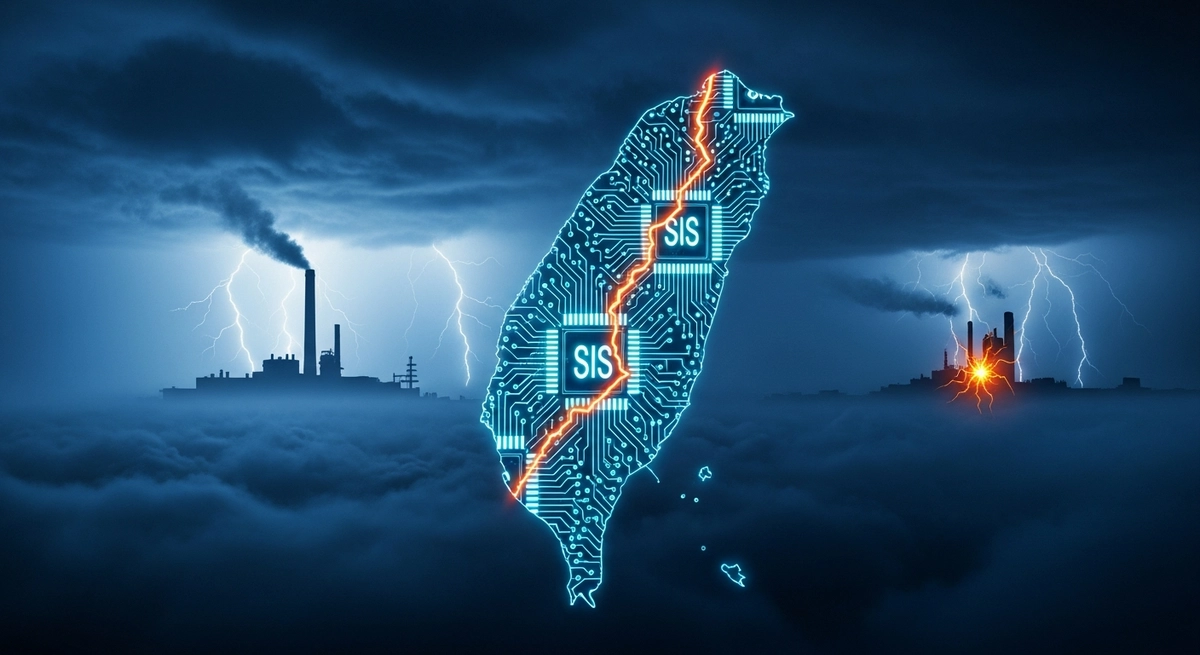
- 90% of advanced chips come from Taiwan: A single earthquake or invasion could trigger a global economic collapse rivaling the Great Depression
- April 2024 earthquake caused 20%+ memory price spikes: TSMC lost $92 million in Q2 alone, exposing the fragility of concentrated manufacturing
- $165 billion TSMC diversification underway: Arizona, Japan, and Germany fabs are racing to reduce Taiwan dependency—but won’t reach meaningful capacity until 2028+
- Micron’s 60% DRAM exposure: The memory giant produces the majority of its global DRAM wafers in Taiwan, with no immediate alternative
The Wake-Up Call Nobody Wanted
At 7:58 AM local time on April 3, 2024, a magnitude 7.4 earthquake struck near Hualien, Taiwan. Buildings swayed. Roads cracked. And in the climate-controlled clean rooms of the world’s most advanced semiconductor fabs, machines—some worth more than $150 million each—shuddered to a halt.
The earthquake lasted only seconds. The aftershocks in global markets lasted months.
Within hours, memory chip prices began climbing. DRAM prices spiked over 20%. GPU supply chains, already strained by insatiable AI demand, tightened further. Nvidia, AMD, and every hyperscaler building AI infrastructure watched nervously as the fundamental building blocks of their products came from an island that had just demonstrated—again—why concentration risk isn’t just a theoretical concern.
TSMC, the company that manufactures over 90% of the world’s most advanced semiconductors, reported direct losses of $92.44 million for Q2 2024 and projected a 50 basis point drop in gross margin. This was the best case scenario—a moderate earthquake with no critical equipment damage.
The question nobody wants to ask: What happens when the ground doesn’t stop shaking?
The Physics of Fragility: Why Taiwan Can’t Be Replaced
The Geological Reality
Taiwan sits at the collision point of the Philippine Sea Plate and the Eurasian Plate, one of the most seismically active regions on Earth. The island experiences approximately 18,000 earthquakes annually, with roughly 1,000 strong enough to be felt. Major earthquakes of magnitude 6.0 or higher occur several times per year.
This geological reality creates a paradox: the same tectonic forces that built Taiwan’s mountainous terrain have no regard for the $165 billion worth of semiconductor manufacturing equipment housed in its fabs.
Semiconductor fabrication is among the most precision-dependent manufacturing processes ever devised. Extreme ultraviolet lithography (EUV) machines—each costing over $150 million—pattern transistors at scales measured in nanometers. A human hair is approximately 80,000 nanometers wide. The latest 3nm process creates features smaller than 3 nanometers. Even microscopic vibrations can destroy a wafer in progress.
The April 2024 Damage Assessment
TSMC’s response to the April earthquake demonstrated both the industry’s resilience and its fragility:
- 70% of affected tools recovered within 10 hours
- No EUV machines sustained critical damage
- Some specialty equipment required extended recalibration
- Fab operations reached 80% capacity within 24 hours
This was considered a success story. The earthquake struck 100 kilometers from TSMC’s primary fab cluster in Hsinchu Science Park. The epicenter was offshore. The timing—early morning—meant fabs were in lower-risk production phases.
A magnitude 7.4 earthquake directly beneath Hsinchu would tell a different story entirely.
The Concentration Crisis: Understanding Taiwan’s Semiconductor Monopoly
The Numbers That Should Terrify You
Taiwan’s semiconductor dominance isn’t just significant—it’s unprecedented in modern manufacturing:
| Metric | Taiwan’s Share | Global Impact |
|---|---|---|
| Advanced semiconductors (<10nm) | 92% | Nearly all AI chips, smartphone processors, advanced GPUs |
| Total foundry market | 64% | Majority of chips requiring external manufacturing |
| EUV-enabled production | 90%+ | All cutting-edge logic chips |
| TSMC’s global foundry share | 61.7% | Single company controls majority of outsourced chip production |
Taiwan’s semiconductor output reached $165 billion in 2024, representing a 22% year-on-year increase driven by AI chip demand. This concentration didn’t happen by accident—it represents three decades of strategic investment, talent development, and manufacturing excellence.
But it also represents the single largest concentration risk in the global economy.
TSMC: The Company That Makes Everything
TSMC doesn’t just manufacture chips—it manufactures the chips that define modern technology:
- Apple’s A-series and M-series processors: Every iPhone, iPad, and Mac
- Nvidia’s H100 and B200 AI accelerators: The engines of the AI revolution
- AMD’s Ryzen and EPYC processors: Server and consumer computing
- Qualcomm’s Snapdragon processors: Android smartphones worldwide
- Broadcom, MediaTek, Marvell: Infrastructure chips across industries
When TSMC sneezes, the entire technology industry catches pneumonia.
Micron: The Memory Vulnerability
While TSMC dominates logic chips, memory manufacturing presents its own Taiwan-centric risk. Micron Technology, one of three major memory manufacturers globally, has made Taiwan the center of its DRAM production:
- Over 60% of Micron’s global DRAM wafers are manufactured in Taiwan
- NT$1 trillion ($32 billion) invested in Taiwan operations since 1994
- 10,500+ employees across Taichung and Taoyuan facilities
- Most advanced 1-gamma DRAM node in production at Taiwan fabs
The April 2024 earthquake disrupted memory production significantly enough to trigger immediate price increases. DRAM and LPDDR chips—essential for everything from smartphones to AI training servers—saw spot prices spike as buyers rushed to secure inventory.
High Bandwidth Memory (HBM), the specialized DRAM required for AI accelerators like Nvidia’s H100 and AMD’s MI300, is manufactured in Taiwan. Micron has committed to growing HBM capacity at its Taiwan facilities through 2026, deepening rather than reducing this exposure.
The $165 Billion Hedge: TSMC’s Global Diversification
Arizona: The American Bet
TSMC’s Arizona complex represents the largest single investment in U.S. semiconductor manufacturing history. The numbers are staggering:
Total Investment: $165 billion committed for the full buildout Direct CHIPS Act Funding: $6.6 billion from U.S. government Employment: 6,000+ direct manufacturing jobs; 40,000+ construction jobs Facility Size: 1,100 acres; up to six fabs at full buildout
Timeline:
- Fab 1 (4nm/5nm): Pilot production began late 2024; high-volume production started H1 2025
- Fab 2 (3nm): Structural completion February 2024; production expected 2028
- Fab 3 (2nm/A16): Groundbreaking expected late 2025; production by decade’s end
The Arizona investment addresses multiple strategic objectives: U.S. national security concerns, customer proximity (Apple is the site’s anchor customer), and CHIPS Act incentive capture.
But even at full buildout, Arizona will represent a fraction of TSMC’s Taiwan capacity. And the most critical constraint isn’t capital—it’s talent.
The Talent Gap
Semiconductor manufacturing requires expertise that takes years to develop. TSMC’s Taiwan operations benefit from:
- Proximity to leading engineering universities producing specialized graduates
- Three decades of institutional knowledge embedded in the workforce
- Supply chain ecosystem of equipment vendors, materials suppliers, and service providers
Arizona lacks this ecosystem. Early construction delays stemmed partly from challenges training American workers in Taiwanese manufacturing processes. TSMC has relocated thousands of Taiwanese engineers to Arizona—a stopgap that doesn’t address long-term talent development.
Japan and Germany: Secondary Hedges
Japan (Kumamoto):
- First fab achieved mass production at end of 2024
- Second fab construction underway; timeline demand-dependent
- Focus on specialty processes rather than cutting-edge logic
Germany:
- European Chips Act incentives driving investment
- Focus on automotive and industrial semiconductors
- Earlier-stage planning than Arizona or Japan buildouts
The Unthinkable Scenario: What If China Moves?
Two Catastrophic Outcomes
Military analysts model two primary scenarios for a China-Taiwan conflict, each with different but equally devastating outcomes:
Scenario One: Chinese Control of Facilities
If China seized Taiwan’s fabs intact, it would theoretically control the global advanced chip supply. The practical implications:
- China could restrict chip sales to the United States and allies
- International sanctions would cripple facility operations regardless
- Mass exodus of skilled engineers would render fabs inoperable
- Even “intact” facilities require constant equipment maintenance from Western suppliers
This scenario, while strategically valuable to China on paper, faces insurmountable operational obstacles. ASML’s EUV machines require constant service from Dutch technicians. Lam Research and Applied Materials equipment need American support. An isolated Taiwan chip industry would decay rapidly.
Scenario Two: Destruction of Facilities
The alternative—destruction of Taiwan’s manufacturing infrastructure during conflict—would trigger economic devastation “comparable to the Great Depression,” according to supply chain analysts at Resilinc.
The cascading effects:
- Consumer electronics production: Near-complete halt
- Automotive manufacturing: Severe constraints (modern vehicles contain 1,500+ chips)
- AI development: Immediate hardware freeze
- Defense systems: Critical component shortages
- Medical devices: Supply disruption for essential equipment
Economists estimate the global GDP impact of a Taiwan chip production loss would exceed $1 trillion annually, with recovery requiring a decade or more.
The Silicon Shield Paradox
Taiwan’s semiconductor dominance creates what analysts call the “silicon shield”—the strategic protection derived from global economic dependence on its chips. The logic: no rational actor would risk the economic apocalypse of destroying Taiwan’s fabs.
But this shield cuts both ways. China’s awareness of Taiwan’s strategic value could increase rather than decrease its motivation to control the island. And the shield offers no protection against earthquakes, which operate on geological rather than geopolitical logic.
The Real Contingency Plan: Is It Enough?
What’s Being Done
Global efforts to reduce Taiwan dependency have accelerated dramatically since 2020:
U.S. CHIPS and Science Act: $52 billion in semiconductor manufacturing incentives, including $6.6 billion for TSMC Arizona
European Chips Act: €43 billion in targeted investment through 2030
Japan CHIPS Initiative: Government subsidies for TSMC Kumamoto and domestic fab projects
South Korea K-Chips Act: Tax incentives for Samsung and SK Hynix domestic expansion
Strategic Stockpiling: Some companies and governments building chip inventories (specific levels classified)
Why It’s Not Enough
Despite billions in investment, the fundamental reality remains:
Timeline Mismatch: New fabs take 3-5 years from groundbreaking to high-volume production. Taiwan’s capacity can’t be replicated quickly.
Technology Gap: TSMC’s Arizona fabs will initially produce trailing-edge nodes (4nm/5nm) compared to Taiwan’s cutting-edge 2nm production.
Volume Disparity: Even at full buildout, diversification facilities represent a small fraction of Taiwan’s output.
Supply Chain Dependency: U.S.-based production still relies on Taiwanese inputs, equipment maintenance expertise, and materials.
The mathematical truth: matching Taiwan’s semiconductor output sophistication and volume is a decade-long project, minimum.
What This Means For Investors
Immediate Exposures
Any Taiwan disruption—whether seismic or geopolitical—creates immediate repricing:
Direct Exposures:
- TSMC (TSM)
- Micron (MU) via Taiwan DRAM production
- Equipment suppliers: ASML, Lam Research, Applied Materials
Indirect Exposures:
- Nvidia (NVDA): Entire GPU production at TSMC
- Apple (AAPL): All silicon at TSMC
- AMD (AMD): All advanced processors at TSMC
- Qualcomm (QCOM): All mobile processors at TSMC
The Hedge Question
How do you hedge against an event that would simultaneously crash global markets? Traditional diversification fails when the disruption is systemic.
Some institutional approaches:
- Direct competitors: Intel (internal manufacturing) gains from TSMC disruption
- Materials plays: Upstream companies benefit from shortage pricing
- Insurance derivatives: Specialized catastrophe instruments (limited availability)
- Geographic diversification: Companies with non-Taiwan manufacturing (limited options)
The honest answer: there is no clean hedge against the Taiwan scenario. The risk is systemic precisely because the concentration is systemic.
The Bottom Line
The April 2024 Taiwan earthquake was a warning shot. A magnitude 7.4 earthquake, centered 100 kilometers from the critical fab clusters, caused 20%+ memory price spikes and nearly $100 million in direct losses to TSMC alone.
The real earthquake—the one that hits Hsinchu directly, or the geopolitical earthquake that interrupts years rather than hours of production—would reshape the global economy.
The world is spending over $200 billion to build alternatives. But the timeline doesn’t work. The technology gap doesn’t close quickly enough. The talent can’t be relocated fast enough.
Taiwan remains the single most fragile critical link in the global technology supply chain. Every AI breakthrough, every new smartphone, every electric vehicle depends on it. And every year, an island sitting on tectonic collision zone experiences thousands of earthquakes.
The contingency plan exists. Whether it’s sufficient is the $trillion question nobody can answer until the ground moves.
The semiconductor supply chain concentration in Taiwan represents one of the most significant systemic risks in the global economy. Investors, policymakers, and technology companies are racing to build alternatives, but the timeline for meaningful diversification extends well into the 2030s. Until then, the world’s digital infrastructure remains dependent on an island 180 miles from China, sitting atop one of Earth’s most active fault zones.
Sources
- Manufacturing Dive: Taiwan Earthquake Impact on Semiconductor Supply Chain
- Resilinc: Assessing Taiwan Earthquake's Supply Chain Impacts
- NIST: TSMC Arizona Phoenix Facility Details
- Vision of Humanity: World's Dependency on Taiwan Semiconductor Industry
- Stimson: Why Taiwan Fears America First Risks
- AmCham Taiwan: Micron Taiwan Operations


🦋 Discussion on Bluesky
Discuss on Bluesky