
Key Takeaways
- Production Begins: Toyota and Samsung SDI have started “pilot mass production” lines in late 2025, marking the official transition from lab to factory.
- The Specs: 700+ mile range, 10-minute charge times (10-80%), and near-zero fire risk due to non-flammable electrolytes.
- The Catch: They are incredibly expensive. Expect them only in $100k+ supercars for now, with mass adoption still 3-5 years away.
For a decade, “Solid-State Batteries” (SSBs) have been the vaporware of the auto industry. Always “five years away.” Always “promising.”
In late 2025, the promise became a product.
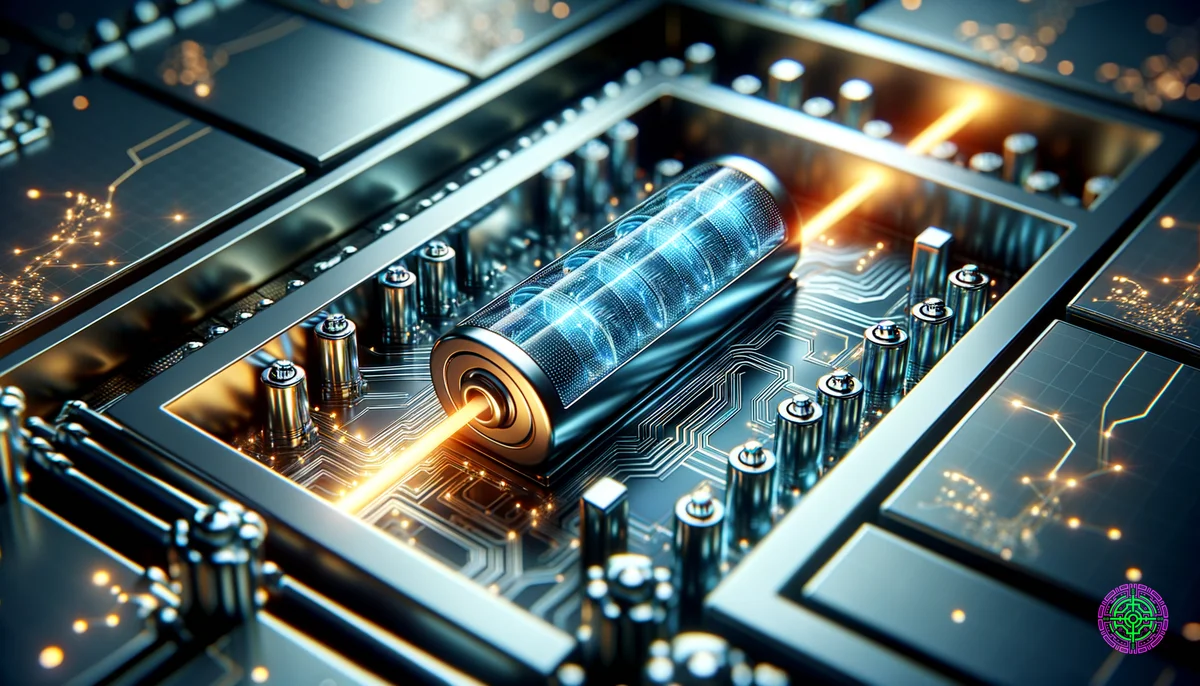
Unlike traditional Lithium-Ion batteries that use a liquid electrolyte (which is flammable, heavy, and degrades over time), SSBs use a solid ceramic or polymer electrolyte. This fundamental shift in chemistry allows for higher energy density, faster charging, and vastly improved safety.
The Technology: Why It’s a Game Changer
To understand why this matters, you have to look inside the cell.
- Energy Density: Because the solid electrolyte is thinner and lighter than liquid, you can pack more energy into the same space. We are seeing densities of 500 Wh/kg, nearly double that of the best Tesla 4680 cells (approx. 270-296 Wh/kg).
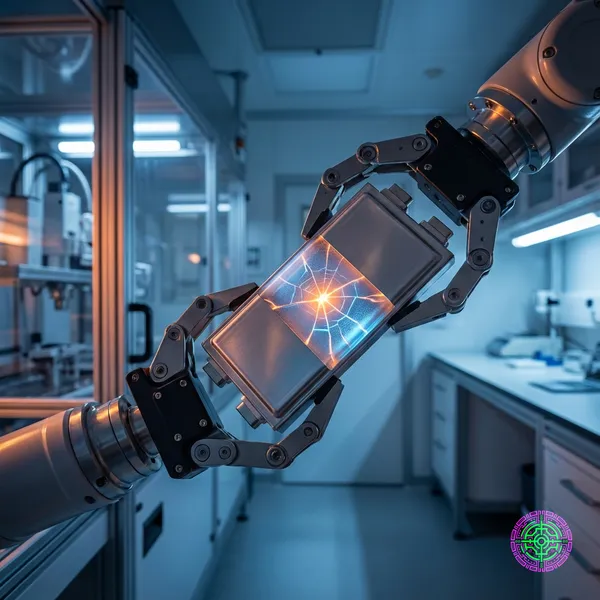
- Safety: Liquid electrolytes are essentially gasoline. If they get too hot, they burn. Solid electrolytes are non-flammable ceramics. You can drive a nail through these batteries, and they won’t catch fire.
- Longevity: SSBs degrade much slower. Early tests show they can retain 90% capacity after 5,000 cycles—equivalent to driving a car for 1.5 million miles.
Who is Winning the Race?
The competition is fierce, with two distinct approaches emerging.
Toyota: The Patent King
Toyota has been the loudest proponent of SSBs, holding over 1,000 patents. They played the long game, skipping the early EV rush to focus on this tech.
- Status: In late 2025, they unveiled their first working prototype vehicle slated for a 2027 consumer launch.
- Target: A staggering 745 miles (1,200 km) on a single charge, with a “Performance” version targeting 900 miles.
Samsung SDI: The Manufacturer
While Toyota focused on patents, Samsung focused on production. They have beaten everyone to the punch with a pilot line that is already shipping cells to premium automakers (rumored to be BMW and Lucid) for validation.
- Strategy: Samsung is focusing on “anode-less” technology, which removes the graphite anode entirely to save even more weight.
QuantumScape & The Startups
US-based QuantumScape (backed by VW) has finally shipped its “Alpha-2” samples. While they are behind Samsung in volume, their proprietary ceramic separator claims to solve the “dendrite” problem (metal spikes that short-circuit batteries) better than anyone else.
The “Range Anxiety” Killer
The impact of this technology cannot be overstated. It solves every complaint consumers have about EVs.
- Current EV: 300 miles range, 30 min charge, degrades in winter.
- Solid-State EV: 700 miles range, 10 min charge, performs better in extreme temperatures.
At that point, an EV is not just “as good” as a gas car; it is objectively better in every metric. You could drive from San Francisco to Los Angeles on a single charge with 300 miles to spare.
The Cost Barrier: The Final Boss
The only problem left is cost. Manufacturing these solid electrolytes is difficult. They are brittle and hard to produce in continuous “roll-to-roll” processes used for current batteries.
- The Price Tag: Analysts predict SSBs will cost $800 per kWh initially, compared to $100 per kWh for Lithium-Ion.
- The Rollout: This means the first SSB cars will be $150,000+ luxury vehicles (think Lexus LFA successor or BMW i7).
So, while the revolution is here, it’s currently reserved for the 1%. But like all tech, it will trickle down. By 2030, your affordable crossover might just drive across the country on a single charge.
🦋 Discussion on Bluesky
Discuss on Bluesky