
The Hook: Beijing to Nvidia: “Thanks, But No Thanks”
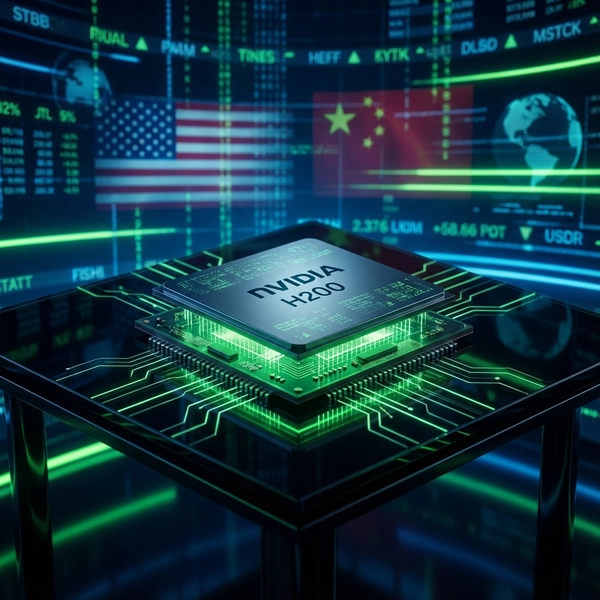
The “compliant chip” strategy might be dead. Reports indicate that Chinese regulators are now advising domestic AI companies to stop purchasing Nvidia’s H20 chips—the very processors Nvidia specifically crippled to comply with U.S. export controls. Instead, the directive is clear: buy local.
This isn’t just a suggestion; it’s a strategic pivot. After years of relying on watered-down American silicon, Beijing is seemingly deciding that “good enough” domestic chips are better than “compliant” foreign ones that could be cut off at any moment.
The Data: The H20 Predicament
Nvidia’s H20 was supposed to be the bridge. It offered:
- Performance: Below the U.S. export control threshold.
- Compatibility: Full support for Nvidia’s CUDA ecosystem (the real moat).
- Availability: Legally purchasable in China.
But the winds have changed. With the U.S. threatening even tighter restrictions via the proposed SAFE CHIPS Act, which could freeze even these lower-end exports, China is preemptively cutting the cord.
Meanwhile, domestic alternatives are surging:
- Huawei: Their Ascend series is becoming the de facto standard for state-linked projects.
- Moore Threads: Fresh off a massive $1.1B IPO, their GPUs are being touted as the “Chinese Nvidia.”
- Cambricon: Another key player benefitting from the forced localization.
Economic Impact: A Structural Divorce
This move represents a structural barrier rather than a temporary tariff spat. If Chinese companies migrate their software stacks away from CUDA and onto domestic platforms like Huawei’s CANN or Moore Threads’ MUSA, Nvidia loses more than just hardware sales—they lose the ecosystem lock-in.
For Nvidia ($NVDA)
- Short Term: Potential revenue hit. China has historically been 20-25% of Nvidia’s data center revenue. Even with the H20, it was a multi-billion dollar market.
- Long Term: Loss of the world’s largest semiconductor market creates a permanent revenue ceiling.
For Chinese Tech
- The Struggle: Initial efficiency losses. Domestic chips are estimated to be generations behind in raw throughput and yield.
- The Gain: Sovereignty. No more fear of Washington pulling the plug.
The Verdict: The Iron Curtain of Tech
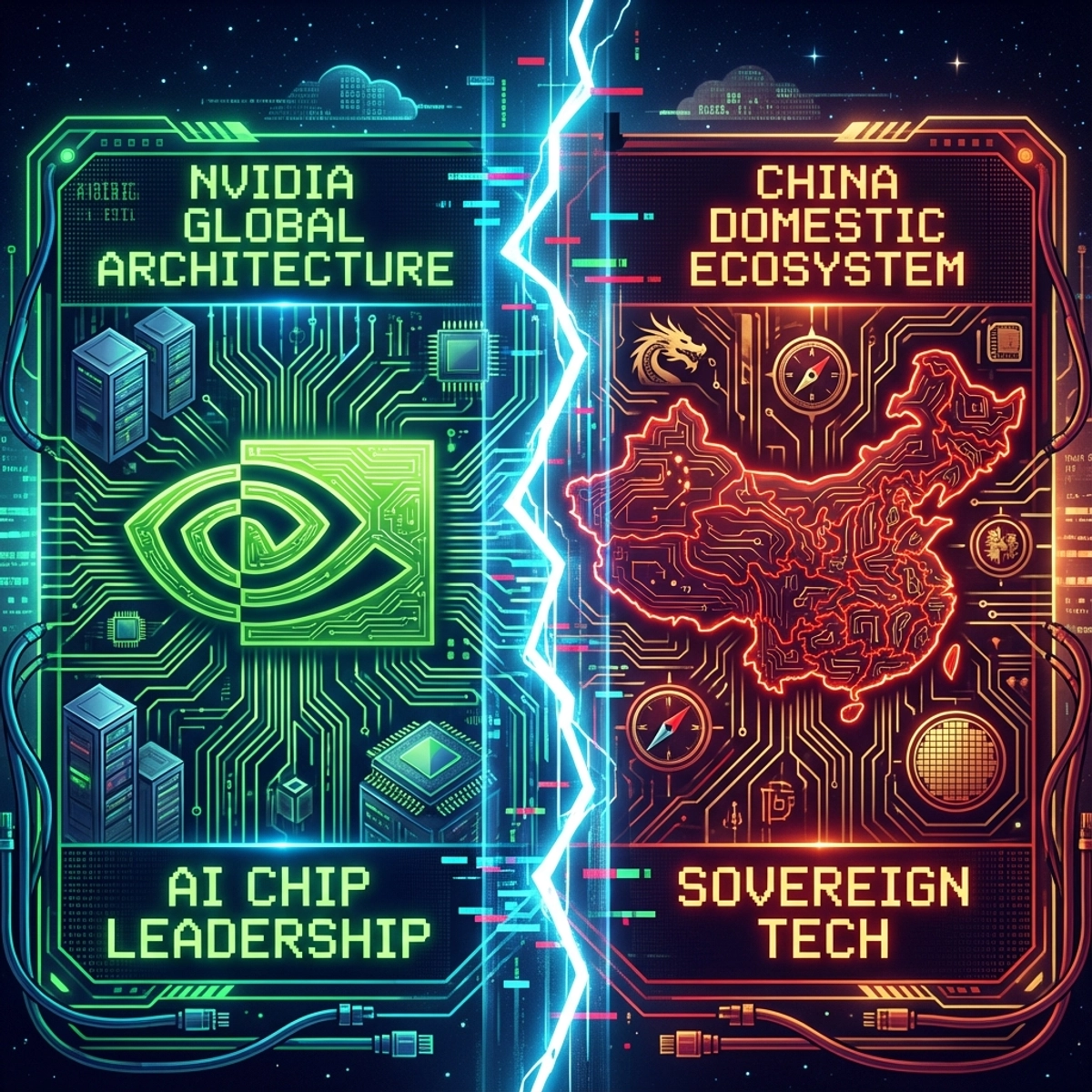
The era of global semiconductor supply chains is effectively over for high-end AI. We are seeing the solidification of two distinct spheres: the US-led alliance (Nvidia, AMD, Intel) and the China-led autarky (Huawei, SMIC, Moore Threads).
Investors take note: The “China growth story” for US chipmakers is officially a closed chapter. The real growth for Nvidia now lies in how fast the rest of the world (Sovereign AI in Europe, Middle East, Japan) can make up the difference.
For China, the pain will be acute but temporary. For Nvidia, the cutoff is likely permanent.

🦋 Discussion on Bluesky
Discuss on Bluesky