


Which air purifier brands can you trust? This is one product category where that question has a paper trail. One brand settled a class action for $2.7 million over claims its purifiers could eradicate indoor pollutants. Another had roughly 191,000 units recalled in February 2026 because they could overheat and catch fire; they had been sold through Amazon, Temu, and TikTok. And the Environmental Protection Agency (EPA) says plainly that ozone generators, sold as air cleaners, can damage the lungs when inhaled, and that no federal agency has approved them for use in occupied spaces.
If you’re shopping in a hurry because the sky is orange, skip straight to the quick picks below: July through September is wildfire smoke season across the American West, and the picks here are ranked on independent lab measurements, not marketing numbers, except two new models flagged in the scoreboard as not yet tested. Those measurements come mostly from HouseFresh, which buys every device with its own money and has tested 134 air purifiers since 2020 in the same room, and from Air Purifier First, which also purchases every unit it tests. Every price is the maker’s own list price as of mid-July 2026; prices move, so check the live one before buying. Fair warning: the lab numbers are rude to famous names, including a Dyson that listed at $1,100 ($899.99 on Dyson’s site as of September 3, 2026) and moves roughly the same volume of clean air as a $190 Levoit.
Quick Picks
- Best overall: Levoit Vital 200S-P, the only machine topping both major independent test labs
- Best clean air per dollar: AirFanta 3Pro, a $165 box that out-flows $500 machines
- Best around $100: Winix A231
- The new one: Coway Airmega Mighty2, successor to the decade-long default AP-1512HH
- Big-brand value: Winix 5520
- Best for large rooms: Levoit Core 600S-P
- Whole-floor flagship: Coway Airmega ProX
- Quietest per unit of clean air: CleanAirKits Luggable XL Ultra (sold direct, no Amazon)
- Wildfire smoke specialist: Austin Air HealthMate
The Room-Size Number Is the New Suction Number
Every purifier listing leads with a square-footage claim, and the game being played with it is worth two minutes of your attention. Clean Air Delivery Rate (CADR) is the industry’s standardized output measurement: the volume of filtered air a machine delivers, measured in cubic feet per minute (cfm), with separate scores for smoke, dust, and pollen. A machine’s honest room rating follows from its CADR and how many times per hour the room’s air should pass through the filter, called air changes per hour (ACH). Marketing departments get their big numbers by assuming one air change per hour, which is close to useless during a smoke event, while serious ratings assume roughly five.
The gap is not subtle. PuroAir advertised that its 240 model cleans rooms up to 1,115 square feet, while the company’s own certification report recommends 284 square feet; HouseFresh’s review concluded that “PuroAir is knowingly overstating the capabilities of this air purifier.” The same one-air-change trick shows up in most listings, including honest brands’ marketing pages, which is why this guide’s scoreboard uses measured CADR and the manufacturers’ own high-ACH room ratings where published.
Two rules of thumb from the Association of Home Appliance Manufacturers (AHAM), whose Verifide program independently tests manufacturers’ CADR claims at a third-party lab: for ordinary use, your purifier’s CADR should be at least two-thirds of the room’s square footage, and “for wild fire smoke, AHAM recommends a Smoke CADR equal to the size of the room in square feet.” A 300-square-foot living room in smoke season wants a smoke CADR of 300, which immediately disqualifies most of what a marketplace search returns.
One more definition, because it separates real machines from decorative ones: a true High Efficiency Particulate Air (HEPA) filter captures at least 99.97 percent of particles at 0.3 microns, the hardest size to catch. Filters marketed as “HEPA-type” or “HEPA-like” carry no such certification and can perform far worse. Treat those two words as a warning label.
The Scoreboard
Lab figures are HouseFresh measurements (PM1 CADR is their measured output on the smallest particle class; clear time is minutes to fully clean their 728-cubic-foot test room at top speed) unless noted. Prices are manufacturer list prices as of mid-July 2026. MSRP means manufacturer’s suggested retail price.
| Pick | Maker’s price | Measured PM1 CADR | Clear time | Noise (top speed) | Filter life |
|---|---|---|---|---|---|
| Levoit Vital 200S-P | $189.99 | 249 cfm | 24 min | 57.7 dBA | 12 months |
| AirFanta 3Pro | $164.99 | 353 cfm | not published | 56.3 dB | 6–12 months |
| Winix A231 | $129.99 | 147–154 cfm (AHAM CADR) | 35 min | 57.9 dB | 12 months |
| Coway Airmega Mighty2 | $269.99 | too new | too new | 19–50 dB (claimed) | 12 months |
| Winix 5520 | $259.99 | not yet tested | not yet tested | 23.5 dB floor (claimed) | 12 months |
| Levoit Core 600S-P | $299.99 | 375 cfm (600S) | 16 min (600S) | 62.3 dBA (600S) | 12 months |
| Coway Airmega ProX | $999.00 | 462 cfm | 13 min | 53.6 dBA | 12 months |
| CleanAirKits Luggable XL Ultra | $310.00 | 315 cfm | 19 min | 47.2 dBA | standard furnace filters |
| Austin Air HealthMate | $845.00 | 113 cfm | not published | 61.5 dBA | 5 years |
Where a cell says “not published,” the cited pages do not state that measurement; “too new” or “not yet tested” means the current hardware revision has no independent test record yet, and the sections below say exactly what is and is not known.
Best Overall: Levoit Vital 200S-P
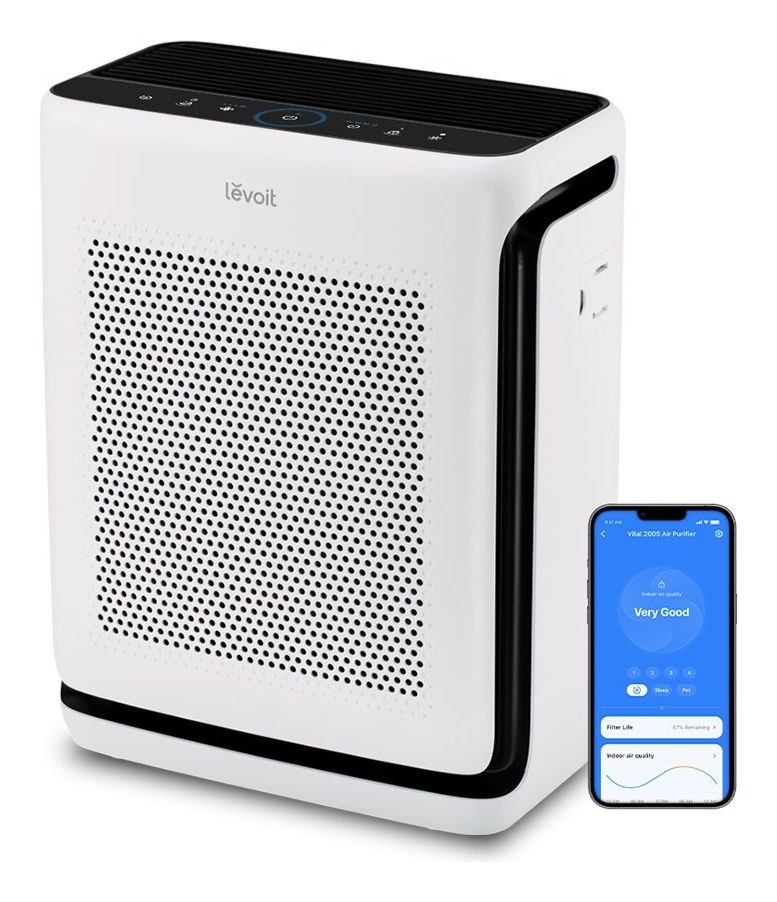
The Vital 200S-P is the only purifier that currently sits at the top of both major buy-their-own-units test labs. HouseFresh’s June 2026 rankings name it best for most people, with a measured top-speed PM1 CADR of 249 cfm and a 24-minute clear of their test room. Air Purifier First’s testing found it “improved air quality by about 96%” in a 320-square-foot room and named it best overall. Levoit lists it at $189.99, was showing a $169.99 sale price in mid-July 2026, and rates it for 388 square feet at 4.8 air changes per hour with a roughly 12-month filter.
What the awards reward: an honest ratio of performance to running cost. The filter is a single annual replacement, the noise floor sits low enough for bedrooms, and the washable pre-filter catches pet hair before it clogs the HEPA layer. HouseFresh’s bedroom guide put it this way: “Despite boasting the perks of more expensive models and having an incredibly reasonable price tag, none of this compromises the unit’s cleaning power.”
One naming note: Levoit refreshed its lineup in the past year and current stock carries the “-P” suffix. The lab results above were run on the Vital 200S; Levoit sells the 200S-P as the same model line, and the replacement filters are cross-compatible. Match the exact name at checkout.
Best Clean Air per Dollar: AirFanta 3Pro
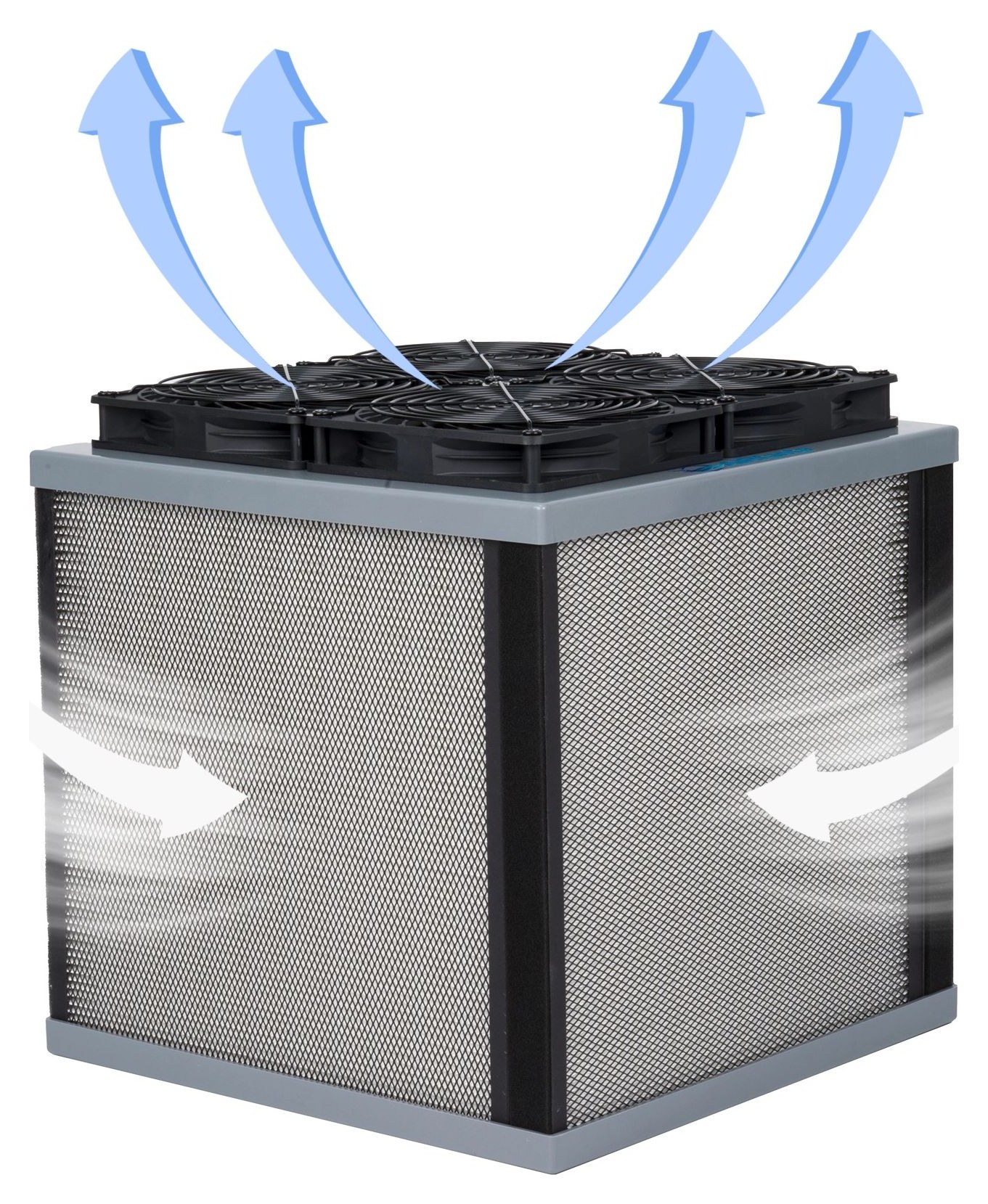
The 3Pro looks like what it is: a cube of computer fans strapped to four HEPA panels. That design, descended from the do-it-yourself Corsi-Rosenthal box, is why it embarrasses conventional machines on output per dollar. HouseFresh measured 353 cfm of PM1 CADR, more than any conventional purifier under $300 in its rankings, and named it the best value pick; AirFanta lists it at $164.99. Run at lower voltage it becomes a quiet-room machine: HouseFresh’s quiet-purifier guide measured 213 cfm at 43.3 decibels, calling it “the only high-CADR air purifier you can fit in a backpack.”
The tradeoffs are cosmetic and logistical rather than functional. It is a plastic-framed utility object, not furniture; there is no app, no auto mode, no air-quality display. As of mid-July 2026 AirFanta’s own site showed the 3Pro sold out, with Amazon listings still live. If you want maximum smoke-season airflow for the money and can live with a gadget that looks like lab equipment, this is the pick.
Best Around $100: Winix A231
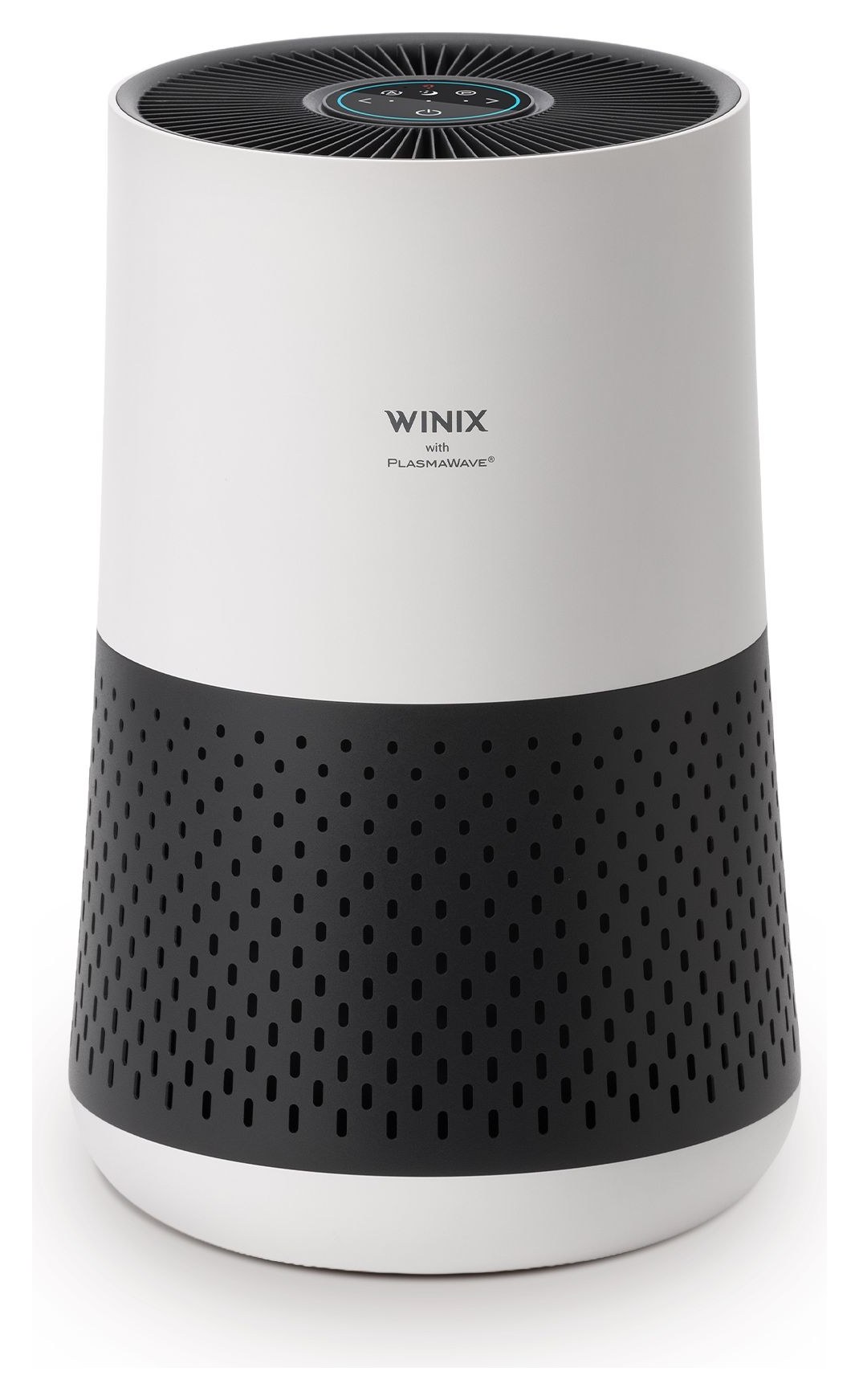
Below roughly $100, most of what Amazon returns is either a “HEPA-type” toy or an unknown brand with an inflated room claim. The A231 is the documented exception. Winix lists it at $129.99 and had it on sale for $99.99 in mid-July 2026, with AHAM-verified CADR scores of 149 for dust, 154 for pollen, and 147 for smoke, rated for 246 square feet. HouseFresh’s bedroom guide made it the best pick under $100, measuring a 35.2-decibel low speed and a 35-minute clear of the test room, and Air Purifier First’s budget testing found it “improved air quality by 95%” in a 194-square-foot room.
The 12-month filter keeps running costs adult, and the brand history matters at this price point: Winix has built purifiers since 1973 in South Korea, and HouseFresh’s brand guide notes it commits to producing replacement filters for discontinued models for at least eight years. A no-name $80 machine that loses its filter supply next year is a paperweight with a cord; this one will not be.
Availability note, added early August 2026: the A231-branded Amazon listing has gone out of stock, so the link below goes to the Winix A230, the sibling model number for the same purifier. The A230 listing carries identical coverage and filter specs, and replacement filters are sold for the A230 and A231 interchangeably.
The New One: Coway Airmega Mighty2
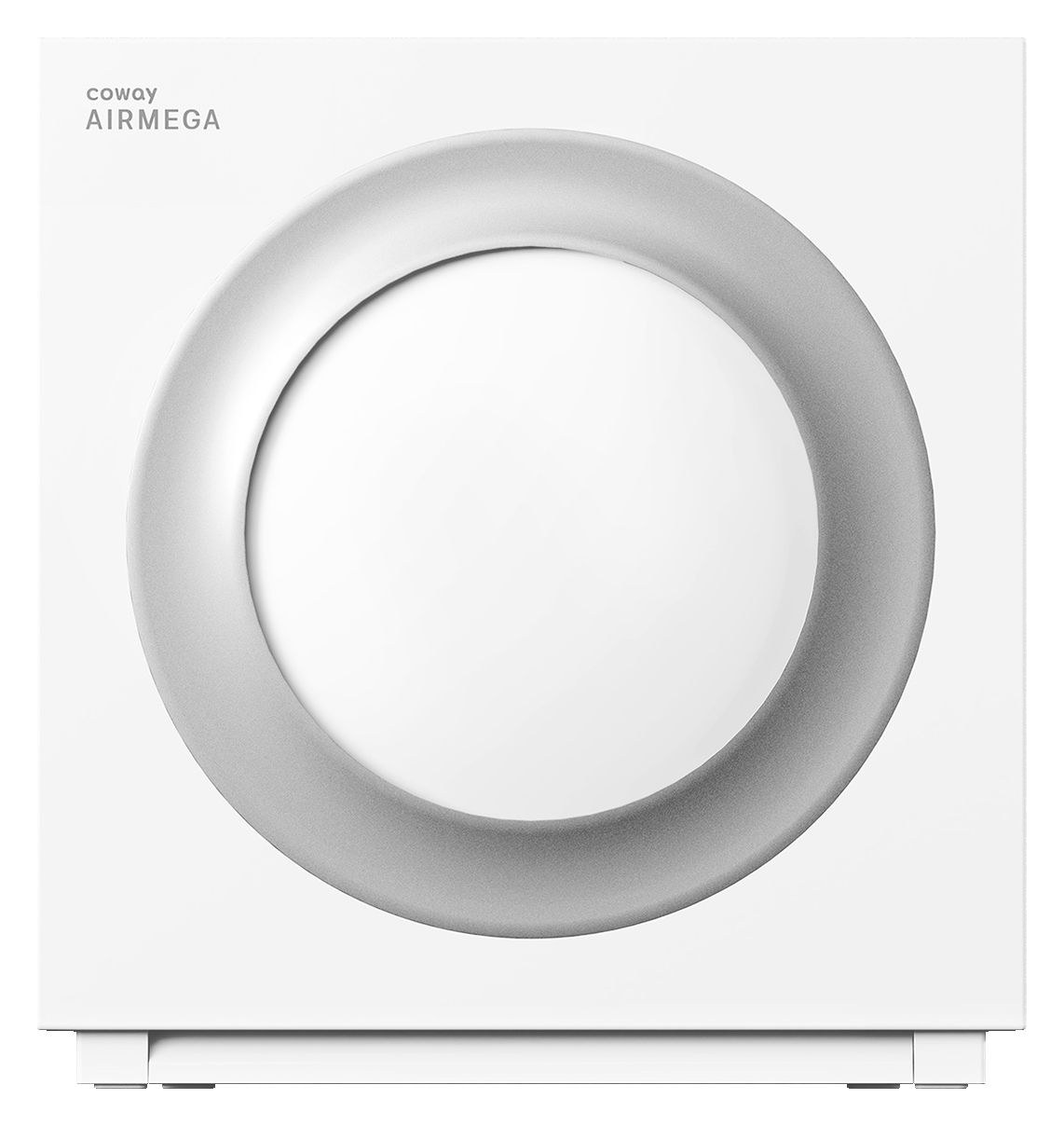
For roughly a decade, the boring correct answer to “which air purifier should I buy” was the Coway AP-1512HH Mighty, which Coway says has been a Wirecutter top pick for ten years running. Coway introduced its true successor, the Airmega Mighty2 (model AP-1512N), in March 2026 at $269.99, with CADR scores of 240 for smoke, 242 for dust, and 249 for pollen, a 19-to-50-decibel range, a 12-month filter, and a laser particle sensor with a real-time air quality display. According to Coway’s July 2026 announcement, the Mighty2 is also named a top pick in Wirecutter’s 2026 air purifier guide.
The honest caveat is the same one that applies to any hardware this new: the independent labs have not yet published test data on the Mighty2 specifically. Its spec sheet is a straightforward modernization of the most-recommended purifier of the past decade, from the same company, and the original AP-1512HH remains on sale at $239.99 if you want the version with ten years of third-party test history behind it. Buying the Mighty2 this early is a small bet on Coway’s track record rather than on published measurements. Given that track record, it is the most defensible new-hardware bet in the category.
Big-Brand Value: Winix 5520
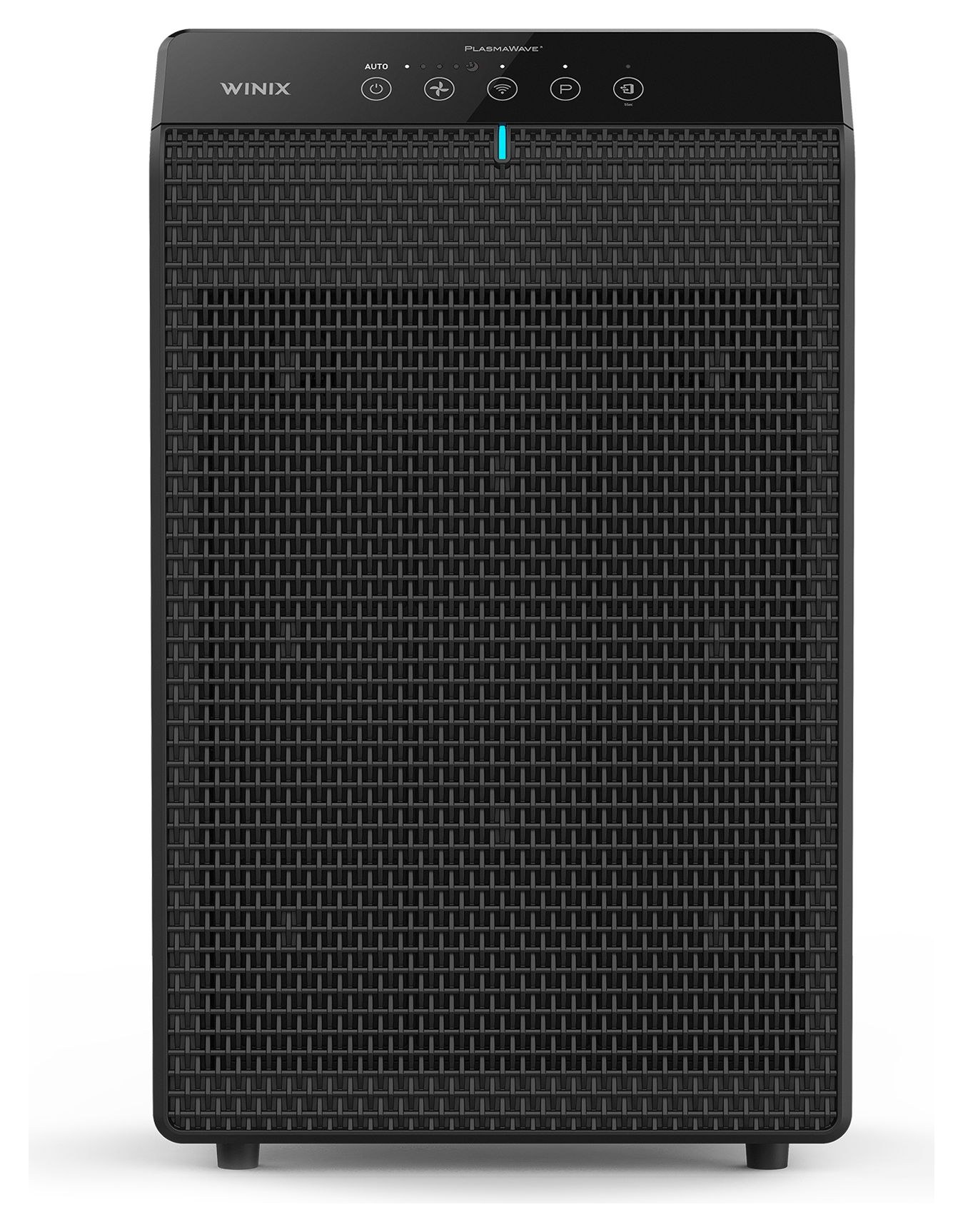
If you searched for the Winix 5500-2, the budget legend of a thousand Reddit threads, it is gone: Winix’s site has removed the 5500-2’s product page and the 5510’s page now returns an error. The replacement is the 5520 (and a cosmetically different 5530), listed at $259.99 and on sale for $199.99 in mid-July 2026. The verified numbers are the point: AHAM-verified for 392 square feet, with CADR scores of 252 for dust, 247 for pollen, and 253 for smoke, a true HEPA filter on a 12-month cycle, a 23.5-decibel lowest speed, WiFi, and dual particle sensors.
That 253 smoke CADR is the quiet headline for wildfire country: by AHAM’s smoke rule, this $200-street-price machine honestly covers a 253-square-foot room during a smoke event, which is more real smoke capacity than machines costing twice as much. The 5520 itself is new enough that the independent labs have not published measurements on it yet; its AHAM numbers are third-party-verified rather than manufacturer-claimed, which is exactly the kind of number this guide trusts while waiting for lab reviews. Winix’s PlasmaWave ionization feature can be switched off, which is how most cautious buyers should run any ionizer-adjacent feature.
Best for Large Rooms: Levoit Core 600S-P
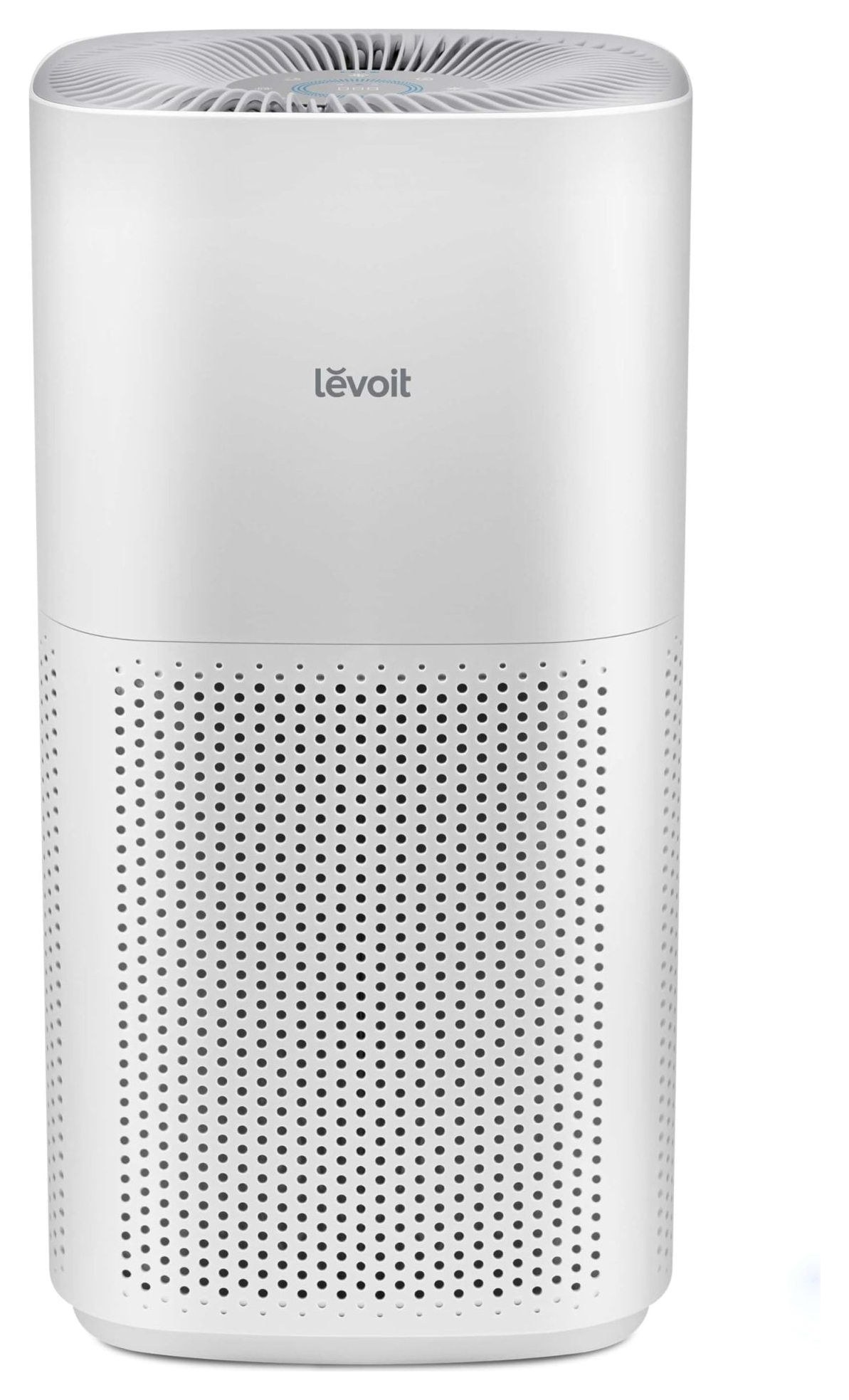
Open-plan living rooms need output, and the Core 600S-P delivers the most measured airflow under $300 in a conventional package. Levoit lists it at $299.99 with a claimed 391 cfm CADR and a rating of 606 square feet at 4.8 air changes per hour. HouseFresh’s review of the Core 600S, the model this “-P” revision updates, measured 375 cfm of PM1 CADR at top speed and a 16-minute clear of the test room, with a usefully quiet 44.4-decibel first speed still moving 156 cfm. Air Purifier First tested it in a 730-square-foot space and found it “improved the air quality by about 93%.”
Top speed is loud, as every high-output machine is; the play is running it on auto so it sprints only when the sensor sees smoke or cooking. Same naming caveat as the Vital: labs tested the 600S, current stock is the 600S-P revision of the same line. If your space runs past 600 square feet or you want faster smoke recovery, the step up is the ProX below; if this is for a bedroom, step down to the Vital 200S-P and pocket the difference.
Whole-Floor Flagship: Coway Airmega ProX
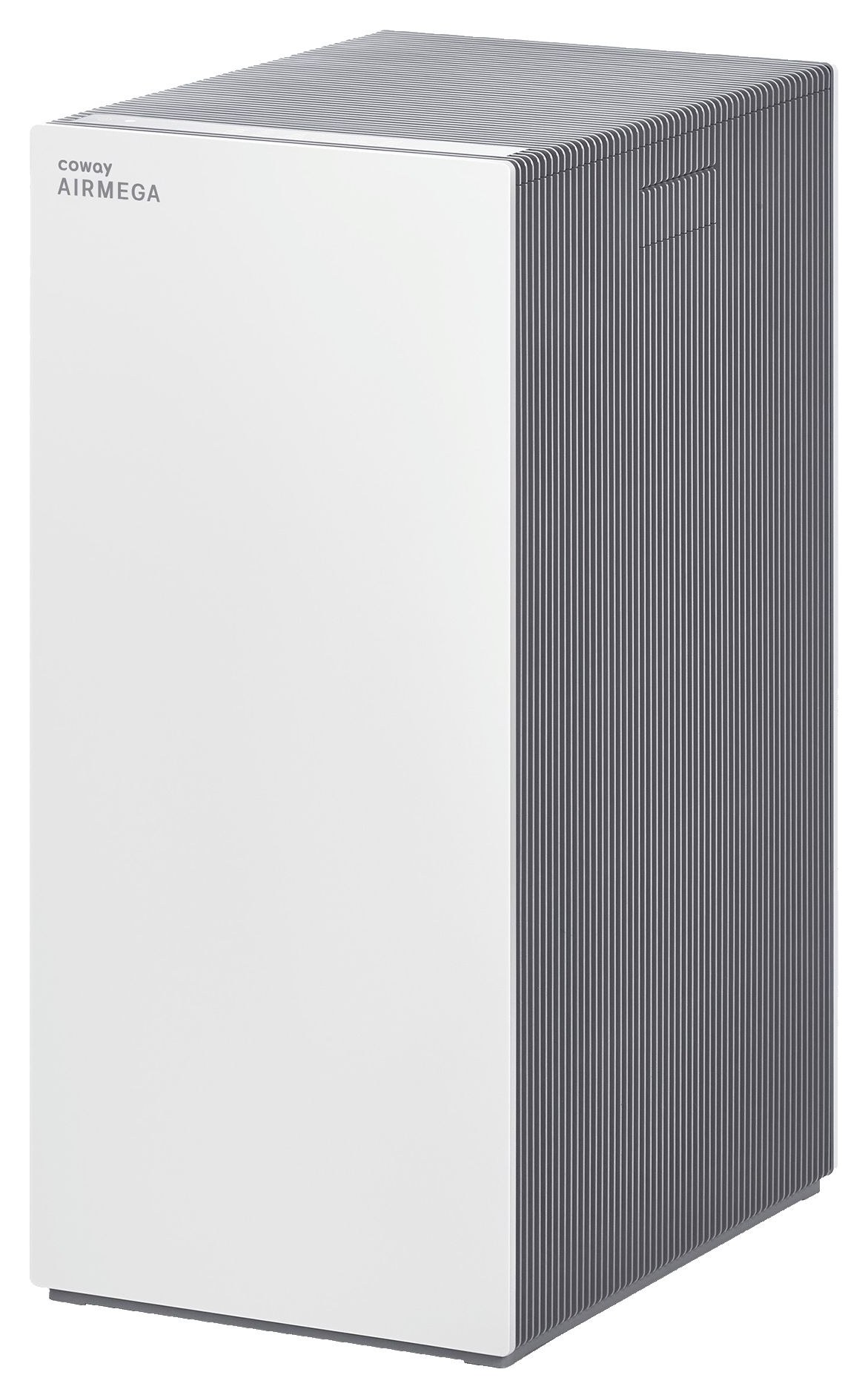
The ProX is what happens when a trusted brand builds for output instead of price. Coway lists it at $999.00 with CADR scores of 568 for smoke, 580 for dust, and 450 for pollen, and rates it for 2,126 square feet at two air changes per hour. HouseFresh measured 462 cfm of PM1 CADR and watched it clear the 728-cubic-foot test room in 13 minutes, the fastest conventional purifier in its rankings, and named it the best large-space pick; Consumer Reports also lists it among its extra-large-room recommendations for 2026.
It is a 50-pound appliance the size of a mini fridge, and its $199 annual filter set is real money. The case for it is consolidation: one ProX in a central great room can do the work of three mid-size machines with one filter subscription and one noise source. HouseFresh’s verdict captures the type: “The ProX isn’t cheap, is heavy and takes up a lot of space… but I have to say I’m a big fan.”
Quietest Real Output: CleanAirKits Luggable XL Ultra
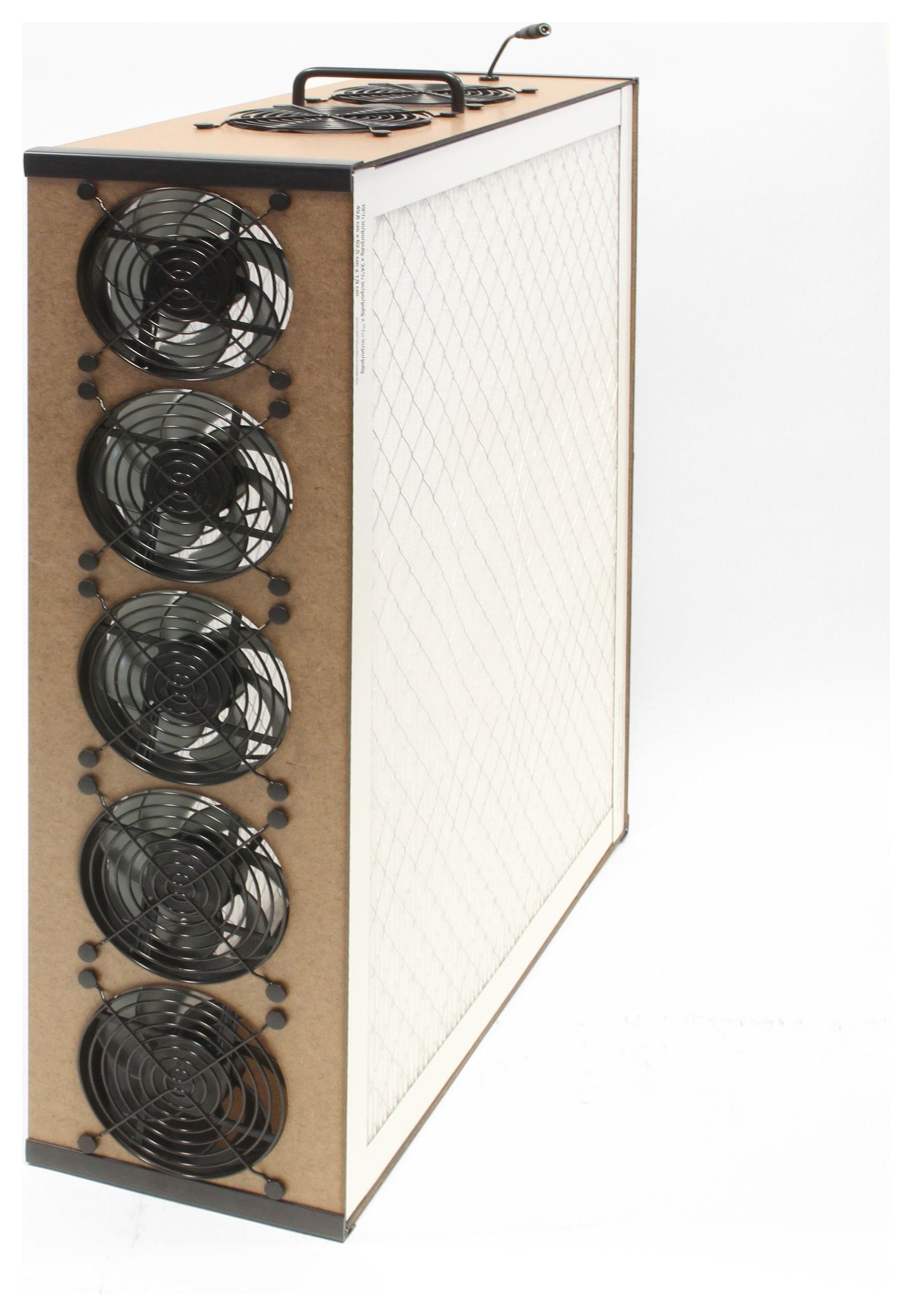
Noise is the reason people turn purifiers off, which makes decibels-per-cfm the most underrated spec in the category. The Luggable XL Ultra, a seven-fan array built by a small US company, is the current champion: HouseFresh measured 315 cfm of PM1 CADR at just 47.2 decibels and a 19-minute test-room clear, naming it the best quiet purifier it has tested. CleanAirKits sells it direct for $310.00 as a kit without filters; it takes standard 20-by-25-inch furnace filters, which is a feature, since commodity filters cost a fraction of proprietary cartridges.
Two practical notes. First, buy the assembled version, which CleanAirKits sells built to the UL 507 electric-fan safety standard, or budget a half hour with a screwdriver for the kit, and remember the kit price excludes the two filters. Second, this is a direct-sale product with no Amazon listing, so the link below goes to the manufacturer (not an affiliate link). For bedrooms, home offices, and anyone who has ever turned a purifier off to hear the television, nothing else measured comes close per decibel.
Wildfire Smoke Specialist: Austin Air HealthMate
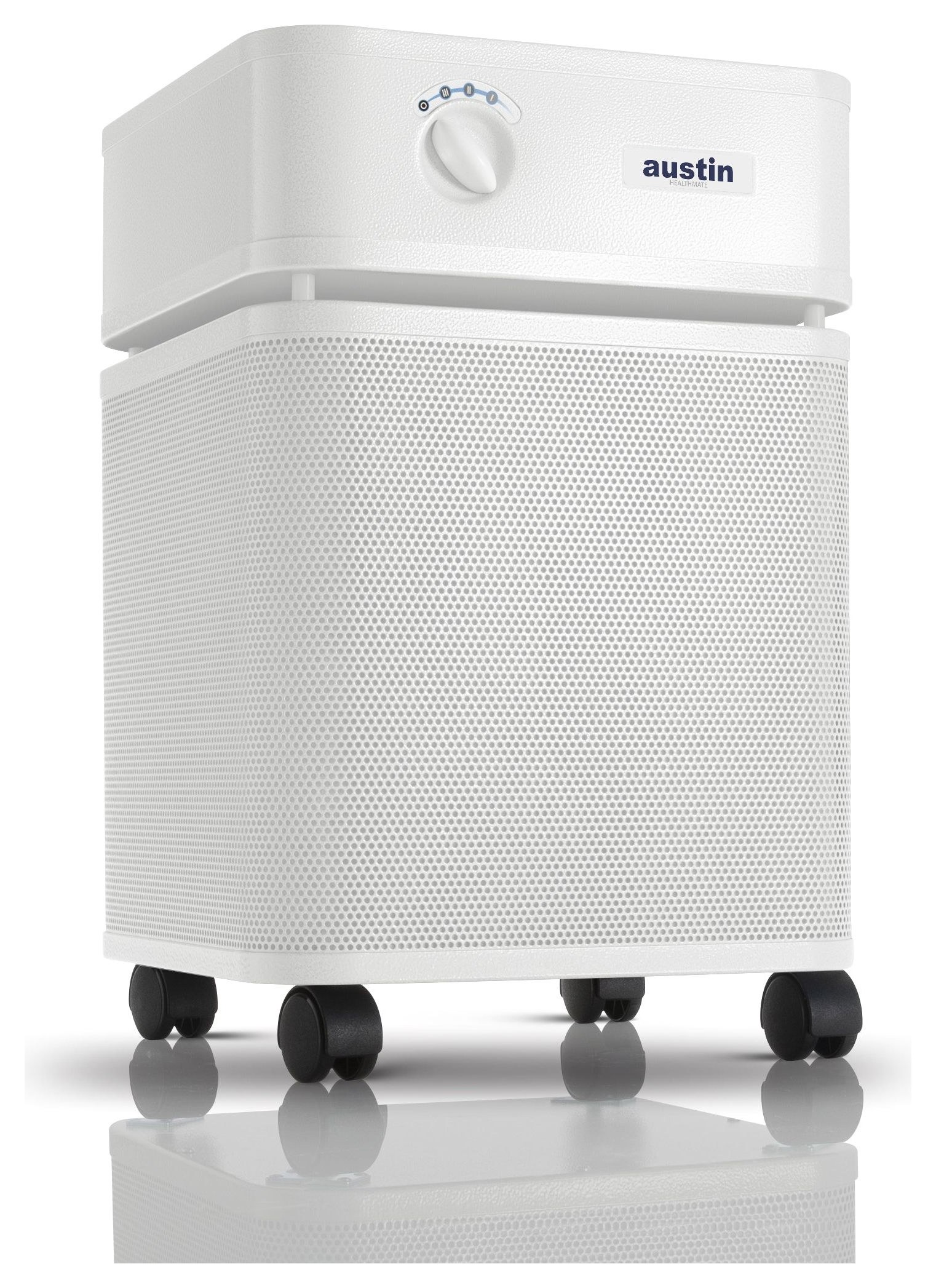
Smoke is particles plus gases, and everything above this section fights mostly the particles. The HealthMate’s argument is its filter: a 4-stage system wrapping about 15 pounds of activated carbon and zeolite around a true HEPA core, built into a steel cabinet in Buffalo, New York, with a filter Austin Air rates for five years. That carbon bed is what adsorbs the gas-phase part of smoke, the volatile organic compounds (VOCs) that give a smoke event its smell and its headache, and it is why HouseFresh names the HealthMate its best pick for smoke and odors despite a modest measured particle CADR of 113 cfm.
Austin Air lists it at $845.00, and on pure particle math that is a bad deal; a $165 AirFanta moves three times the air. The HealthMate is the specialist you buy when the smell and the gases are the problem: recurring smoke seasons, a home near a highway, chemical sensitivity. For everyone else, the rational smoke setup is a high-CADR particle machine from the picks above plus open-window discipline. If the specialist case fits, the five-year filter means its running cost eventually undercuts the machines it loses to on sticker price.
The $90 DIY Option Nobody Sells
The cheapest defensible high-output purifier in America is not a product. A Corsi-Rosenthal box, a 20-inch box fan taped to four furnace filters, delivered 462 cfm of PM1 CADR in HouseFresh’s testing and cleared its test room in 13 minutes, matching the $999 Coway ProX, for about $90 in hardware-store parts. It is loud at 62.4 decibels, it looks like a middle-school science project, and it works better than almost everything sold on Amazon. During a smoke emergency, when purifiers sell out regionally within hours, knowing this design exists is itself a preparedness item. Build instructions are one search away; the name to search is Corsi-Rosenthal.
The Dyson Question
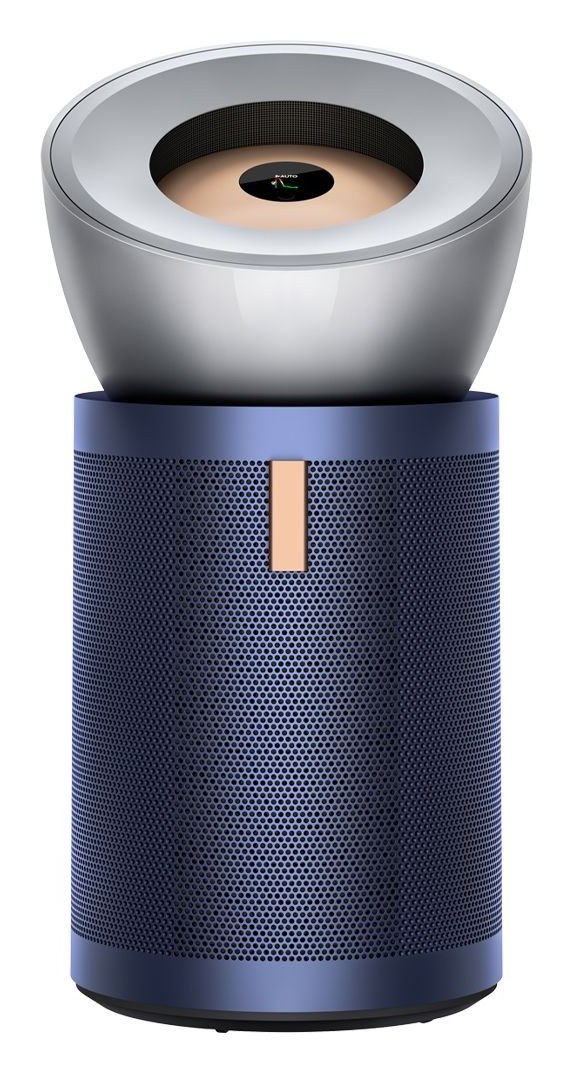
PCMag currently ranks the Dyson Purifier Big+Quiet Formaldehyde BP03 as its best smart air purifier overall, an Editors’ Choice pick, praising its “wide coverage range, long filter life, detailed air pollution data, and useful app and voice controls.” Dyson listed it at $1,099.99 and had cut it to $899.99 by September 3, 2026. Whether it belongs in your house depends entirely on which verdict you weight: the features verdict or the measurements verdict.
This is the measurements verdict. Reviewed.com’s sealed-chamber lab test of the Big+Quiet put its smoke CADR at roughly 200 cfm while crowning it “the best for removing chemical pollution.” HouseFresh tested the BP06, the $600 version of the same machine without the app and sensors, and measured 198 cfm of PM1 CADR with a 30-minute room clear at a genuinely impressive 51.4 decibels, concluding “the BP06 is a much better air purifier than every Dyson combination units I have tested before.” Meanwhile PCMag’s own hands-on review evaluated air cleaning using the machine’s onboard particle display in a 110-square-foot room. And Dyson’s own product page now rates the machine for spaces “up to 264 sq ft,” a figure worth comparing against the four-digit price and the 1,076-square-foot number that circulates in coverage of it.
So: roughly the measured output of a $190 Levoit, at $1,099.99, delivered very, very beautifully, with best-in-class chemical and formaldehyde filtration, a five-year HEPA filter, and the best app in the business. PCMag’s ranking is a features verdict, and as a features verdict it is defensible. As a clean-air-per-dollar verdict it is not close. If the Dyson experience is what you want, the BP06 buys the same airflow for $500 less; if you want the smart version anyway, at least buy it knowing exactly what the labs measured.
As of late September 2026, Amazon’s BP03 listing was selling only used units through Amazon Resale; for a new unit, Dyson’s own store is the source.
The Companies That Got Caught
The skip list is not vibes; it is documentation.
Molekule marketed its photoelectrochemical oxidation (PECO) purifiers as replacements for HEPA, with claims they could destroy pollutants outright. The BBB’s National Advertising Division recommended the company stop dozens of advertising claims in 2019, and its appeals board rejected Molekule’s appeal almost entirely, including the slogan “Finally, an air purifier that works.” A class action over claims the purifiers could “eradicate indoor air pollutants” and “destroy” allergens and viruses settled for $2.7 million, with final approval in January 2022. Consumer Reports tested two models and reported that “both struggled in our tests,” and HouseFresh’s founder called the Air Mini “the worst air purifier I have tested,” measuring a 53-minute room clear that a sub-$100 Levoit beat by 40 minutes. Molekule filed for Chapter 11 bankruptcy in October 2023, emerged in 2024, and as of mid-July 2026 continues selling with marketing built around FDA clearance as a medical device. Worth knowing: FDA 510(k) clearance is a pathway for marketing a device, not a government endorsement of how well it cleans your air.
Ozone generators and ionizers are the older version of the same story. The EPA’s guidance is unambiguous: ozone “can damage the lungs,” concentrations that meet health standards do “little” to remove indoor contaminants, and vendors’ safety claims mislead the public. The cautionary tale is the Sharper Image Ionic Breeze, once America’s best-selling air purifier: after Consumer Reports found it ineffective, the company settled a class action in 2007 by offering $19 credits to roughly 3.2 million buyers. California now requires every indoor air cleaner sold in the state to carry an ozone-emissions certification label reading “Meets California ozone emissions limit. CARB certified,” and devices that fail the requirement legally cannot be shipped to California at all. That certification database, run by the California Air Resources Board (CARB), is a free national sanity check: if a purifier is not on it, do not put it in your bedroom, whatever state you live in.
No-name marketplace brands fail differently: not exotic technology, just numbers nobody verified and companies nobody can find. The Aroeve MK04, a bestseller sold on Amazon, Shopify, Temu, and TikTok for $80 to $134, was recalled in February 2026, roughly 191,390 units, after 37 reports of overheating including one fire. HouseFresh’s current guide separately warns readers not to “blindly repeat manufacturers’ specifications” and maintains its own avoid list, including the bankrupt Okaysou, whose warranties are now worthless. Even famous names have paid for health claims: Oreck settled with the Federal Trade Commission (FTC) for $750,000 in 2011 over claims its purifier could prevent flu and other ailments. The pattern to internalize: in this category, health-benefit marketing is a red flag, and boring airflow numbers are the trust signal.
Frequently asked questions
What is the best air purifier for most people?
The Levoit Vital 200S-P. HouseFresh’s June 2026 rankings name it best for most people, with a measured PM1 CADR of 249 cfm and a 24-minute clear of the test room, and Air Purifier First found it “improved air quality by about 96%” in a 320-square-foot room. Levoit lists it at $189.99 and rates it for 388 square feet at 4.8 air changes per hour on a roughly 12-month filter.
What size air purifier do I need?
Match the CADR to the room, not the box’s square-footage claim. AHAM’s rule for ordinary use is a CADR of at least two-thirds of the room’s square footage, and “for wild fire smoke, AHAM recommends a Smoke CADR equal to the size of the room in square feet.” A 300-square-foot living room in smoke season wants a smoke CADR of 300.
What does CADR mean?
Clean Air Delivery Rate: the volume of filtered air a machine delivers, in cubic feet per minute, with separate scores for smoke, dust, and pollen, verified at a third-party lab under AHAM’s Verifide program. Room-size claims are derived from it, and marketing gets big numbers by assuming one air change per hour: PuroAir advertised 1,115 square feet for a model whose own certification report recommends 284.
Is a “HEPA-type” filter the same as true HEPA?
No. A true HEPA filter captures at least 99.97 percent of particles at 0.3 microns, the hardest size to catch. “HEPA-type” and “HEPA-like” carry no such certification and can perform far worse; treat the words as a warning label.
Are Dyson air purifiers worth it?
Only for the features. Dyson listed the Big+Quiet Formaldehyde BP03 at $1,099.99 and had cut it to $899.99 by September 3, 2026, and rates it for spaces “up to 264 sq ft.” Reviewed.com’s chamber test put its smoke CADR at roughly 200 cfm, and HouseFresh measured the sensor-free BP06 version at 198 cfm with a 30-minute room clear. That is roughly the output of the $189.99 Levoit above, with best-in-class chemical filtration and the best app in the business attached.
What is the best air purifier for wildfire smoke?
For the particles, a machine whose smoke CADR matches the room: the Winix 5520’s AHAM-verified smoke CADR of 253 honestly covers a 253-square-foot room, at a $259.99 list price that was $199.99 on sale in mid-July 2026. For the smell and the gases, HouseFresh names the Austin Air HealthMate its best pick for smoke and odors, on the strength of about 15 pounds of activated carbon and zeolite around its HEPA core, at $845.00.
How to Vet Any Brand in Two Minutes
The good news buried in all of the above: this category has real, free verification infrastructure, and the trustworthy brands opt into it.
- Look it up in the AHAM Verifide directory. Every certified model’s smoke, dust, and pollen CADR has been independently verified at a third-party lab, searchable by brand at ahamverifide.org’s directory. No listing is not automatically disqualifying (some legitimate niche makers skip it), but a listing means the headline numbers survived someone else’s test rig.
- Check the CARB certified-devices list. It exists to screen out ozone emitters, and legitimate brands are on it because they could not sell in California otherwise.
- Demand the words “true HEPA” and a real CADR. “HEPA-type” is a warning, and a listing that leads with square footage but never states CADR is hiding the number that matters. Dyson, notably, does not publish CADR figures for its purifiers, which is part of why the lab measurements in the section above are worth seeking out.
- Price the filters before the machine. A purifier is a subscription. The picks above run $40 to $200 a year in filters, stated up front; a brand with no filter supply chain, or one that goes bankrupt, turns the machine into furniture. Winix’s eight-year filter commitment for discontinued models is what good looks like.
- Know who makes it. “Honeywell” purifiers, for instance, are made under license by consumer-products company Helen of Troy, not by the aerospace conglomerate, and the long-running default HPA300 is now listed as discontinued at Honeywell’s own store. Licensed brands are not automatically worse, but the name on the box is telling you less than you think.
Before smoke season arrives, the buying math takes one minute: measure the room where your household spends smoke days, and match it to a smoke CADR at least equal to the square footage, per AHAM’s wildfire rule. For a bedroom that is the $100 Winix; for a living room, the Levoit pair or the Winix 5520; for a whole floor, the ProX or two cheap high-flow boxes. The same verified-numbers method applies to the rest of the house too: the companion guide to robot vacuums ranks that category by published lab measurements instead of marketing specs, and comes to equally uncomfortable conclusions about the price-performance relationship.
Sources (42)
- housefresh.com Best Air Purifiers, tested (June 2026 rankings)
- housefresh.com Best Budget Air Purifiers
- housefresh.com Best Air Purifiers for Bedrooms
- housefresh.com Quietest Air Purifiers
- housefresh.com Dyson BP06 review
- housefresh.com Coway Airmega ProX review
- housefresh.com Levoit Core 600S review
- housefresh.com Molekule Air Mini review
- housefresh.com PuroAir HEPA 14 240 review
- housefresh.com Air Purifiers Made in the USA
- housefresh.com Winix brand guide
- airpurifierfirst.com Best Air Purifiers We Tested
- consumerreports.org Best Air Purifiers of 2026
- consumerreports.org Molekule air purifier review
- ahamverifide.org Air Filtration Standards
- ahamverifide.org Directory of Air Cleaners
- epa.gov Ozone Generators that are Sold as Air Cleaners
- law.cornell.edu Cornell Law: California air cleaner certification label, 17 CCR 94806
- levoit.com Vital 200S-P product page
- levoit.com Core 600S-P product page
- air-fanta.com 3Pro product page
- winixamerica.com Winix: A231 product page
- winixamerica.com Winix: 5520 product page
- cowaymega.com Coway: Airmega Mighty2 product page
- prnewswire.com Coway: Airmega Mighty2 launch press release
- cowaymega.com Coway: Airmega AP-1512HH Mighty product page
- cowaymega.com Coway: Airmega ProX product page
- austinairsystems.com Austin Air: HealthMate product page
- cleanairkits.com Luggable XL Ultra product page
- dyson.com Big+Quiet Formaldehyde BP03 product page
- pcmag.com The Best Smart Air Purifiers
- pcmag.com Dyson Big+Quiet Formaldehyde BP03 review
- reviewed.com Dyson Big+Quiet Formaldehyde review
- truthinadvertising.org Molekule class action
- topclassactions.com Molekule settlement
- en.wikipedia.org Wikipedia: Molekule
- cbsnews.com Sharper Image settles air purifier suit
- foxbusiness.com Aroeve air purifier recall
- kelleydrye.com FTC settlement with Oreck
- molekule.com official site
- prnewswire.com Helen of Troy: Honeywell InSight series press release
- honeywellstore.com HPA300 product page



🦋 Discussion on Bluesky
Discuss on Bluesky