
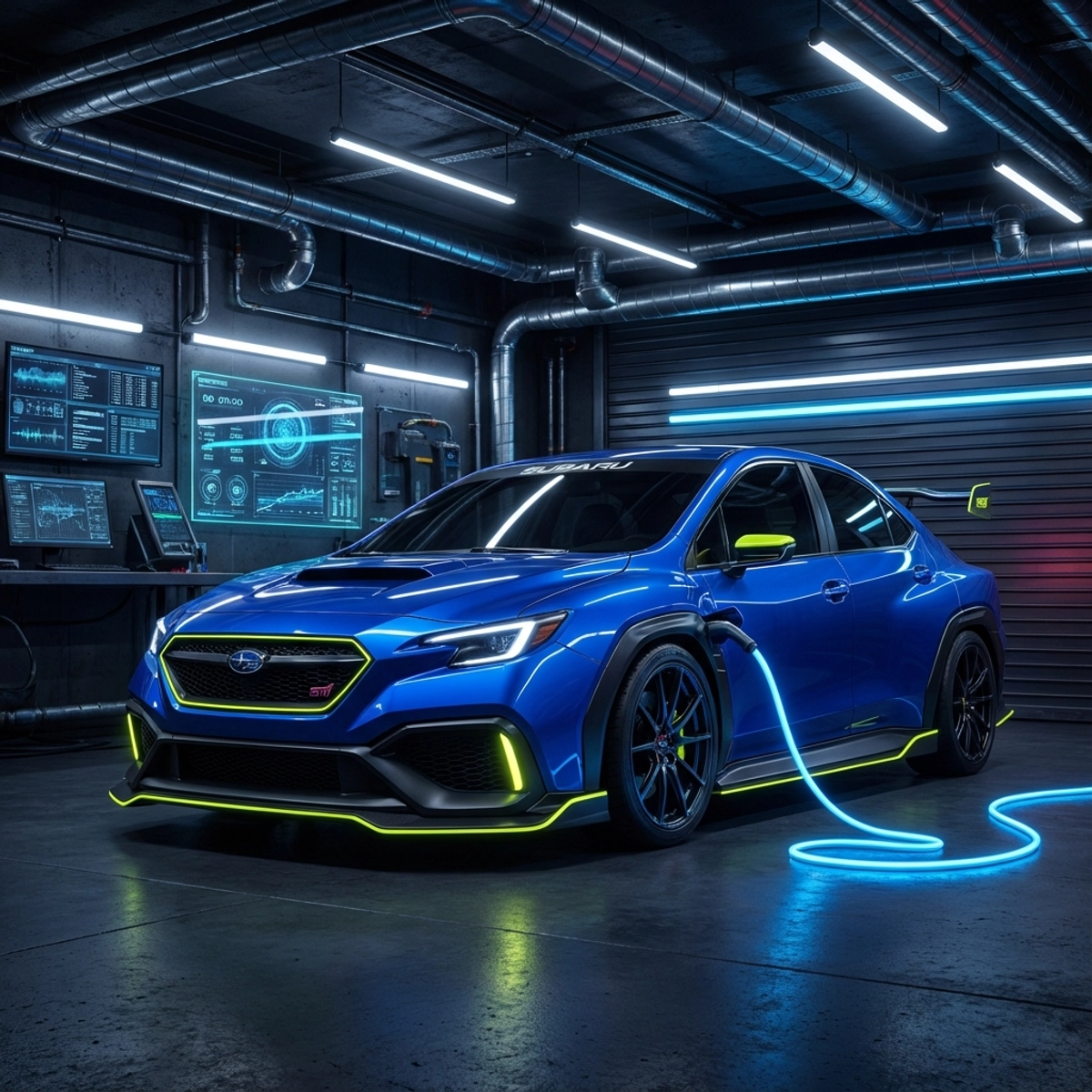
Key Takeaways
- The Comeback: Subaru is actively teasing a return of the STI nameplate and soliciting fan feedback on powertrain choices.
- The EV Mandate: While an ICE version is possible, an electric STI is almost inevitable given market trends.
- The Benchmark: To succeed, an EV STI must match or exceed the Tesla Model 3 Performance in range, charging, and reliability.
- The Risk: A “half-assed” effort like the Solterra would destroy the STI brand’s credibility.
Introduction
The Subaru WRX STI is a legend. It defined a generation of rally-inspired performance, bringing turbocharged all-wheel-drive madness to the masses. But when Subaru killed the internal combustion STI in 2022, they promised a return in an electrified future. Now, that future is knocking. Subaru is teasing new STI concepts—likely one internal combustion engine (ICE) and one electric vehicle (EV)—and they are reportedly asking fans for feedback on which direction to take.
This is a critical moment. Electrification could be amazing for the STI. The instant torque and precise vectoring of electric motors could create the ultimate rally weapon. But there is a massive elephant in the room: the Subaru Solterra. If Subaru approaches the STI revival with the same “half-assed” compliance-car energy as the Solterra, they shouldn’t even bother. For the electric STI to exist, it needs to be actually good. In fact, it needs to be a Tesla Model 3 Performance slayer.
Background: The Legacy & The Solterra Misstep
The STI Legacy
For decades, “STI” stood for uncompromised performance. It meant a robust AWD system that could handle snow, dirt, and tarmac. It meant a raw, mechanical connection to the road. It meant reliability (head gaskets aside) in harsh conditions. Fans didn’t just buy an STI; they joined a cult of capability.
The Solterra Problem
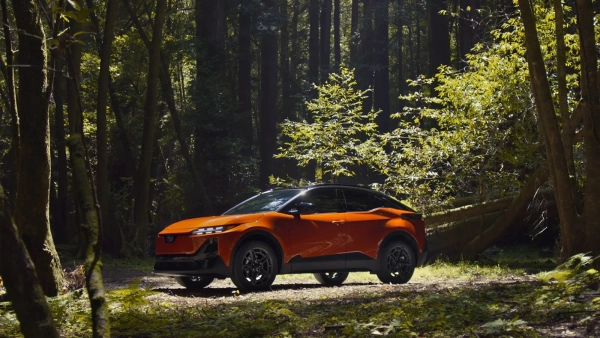
Then came the Solterra (and its twin, the Toyota bZ4X). It was Subaru’s first global EV, and to put it bluntly, it was a disappointment for enthusiasts.
- Range Anxiety: Real-world range often fell well below 250 miles, especially in the cold—a cardinal sin for a “winter warrior” brand.
- Charging Woes: Slow DC fast charging speeds made road trips a chore.
- Reliability Glitches: Issues like wheels famously falling off (for Toyota) and general software sluggishness didn’t help.
The Solterra felt like a compliance car, a vehicle built because they had to, not because they wanted to make the best Subaru possible.
Understanding the Requirement: What an Electric STI Needs
If Subaru wants to stick an STI badge on an EV, it cannot just be a slightly faster crossover. It needs to be a dedicated performance machine that justifies its existence against the current king of the segment: the Tesla Model 3 Performance.
1. Range: The 300+ Mile Standard
New EV owners and die-hard petrolheads alike share one fear: running out of juice.
- The Requirement: A minimum of 300 miles (EPA) of real-world range.
- Why: STI owners drive their cars. They go to track days, they go camping, they drive through blizzards. A 220-mile range toy that drops to 150 miles in the winter is useless to the core demographic.
- The Competition: A Tesla Model 3 Long Range pushes well past 300 miles. An STI cannot offer less and cost more.
2. Performance: Beyond 0-60
The Solterra does 0-60 in about 6.5 seconds. That’s fine for a grocery getter, but an STI needs to be violent.
- The Benchmark: The Model 3 Performance hits 60 mph in 2.9 seconds.
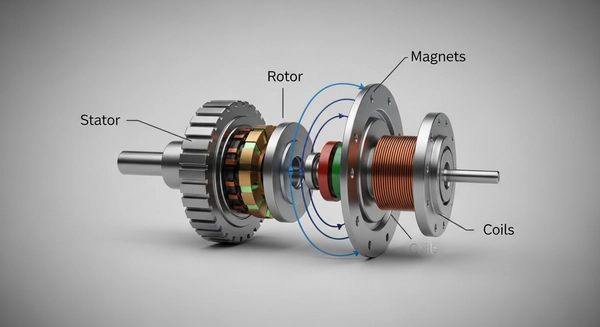
- The STI Twist: Subaru doesn’t need to chase 1.9-second times. Instead, they should focus on handling. An EV STI needs a tri-motor setup (or a very advanced dual-motor) capable of true torque vectoring that mimics the Differential Controlled Center Differential (DCCD) of old. It needs to dance on gravel, not just launch at a stoplight.
3. Reliability: The 12V and Software
One of the most embarrassing issues for legacy interactions with EVs has been basic reliability.
- 12V Batteries: Many modern EVs, including those from big legacy brands, have been plagued by 12V battery failures that leave the car bricked.
- Software: The infotainment needs to work. It needs to be snappy. Glitchy screens and failed OTA updates are unacceptable in 2026.
- Subaru Ruggedness: An STI is expected to be thrashed. The battery thermal management system must be robust enough to handle 20 minutes of track abuse without overheating—something many non-Porsche/Hyundai EVs struggle with.
Industry Impact: Legacy Auto vs. The Disruptors
Subaru’s dilemma highlights a broader trend. Legacy automakers—Ford, GM, Toyota/Subaru—have often struggled to match the vertical integration and software prowess of Tesla.
The “Half-Assed” Approach
Many legacy EVs feel like internal combustion cars retrofitted with batteries. They share platforms, compromise on packaging (frunks are often non-existent), and rely on third-party charging networks (though NACS adoption is fixing this). The Solterra is the poster child for this approach. It checks the boxes but fails to inspire.
The Tesla Standard
Love him or hate him, Elon Musk’s Tesla proved that an EV could be better than a gas car. The Model 3 isn’t just “good for an electric car”; it’s a dynamic, fun, practical sports sedan. It set the bar incredibly high. If Subaru releases an STI EV with 240 miles of range, 150kW charging, and a 0-60 of 4.5 seconds for $60,000, they will be laughed out of the showroom.
Opportunities & Potential
Despite the skepticism, Subaru has a unique opportunity here.
- Rally Heritage: No other EV maker has truly claimed the “electric rally car” niche. A lifted, rugged, high-power EV STI could be distinct from the low-slung Model 3.
- Brand Loyalty: Subaru owners are fiercely loyal. If Subaru builds a good EV, the fans will buy it. They want to stay in the family.
- Mechanical Feel: If Subaru can engineer some “soul” into the EV—maybe simulated gears like the Hyundai Ioniq 5 N, or just incredible chassis feedback—they can win over the purists.
What This Means for You
If you’re a Subaru Fan:
- Make Your Voice Heard: Subaru is asking for feedback. Tell them you want range, reliability, and performance. Tell them “No” to a rebadged Toyota crossover.
- Be Skeptical: Don’t pre-order until you see the specs. The “STI” badge has been diluted before (remember the Forester STI appearing only in Japan?).
If you’re an EV Shopper:
- Watch the Space: More competition is good. A serious EV attempt from Subaru forces Tesla and Hyundai to keep innovating.
- Consider the Alternatives: Right now, the Hyundai Ioniq 5 N is the closest thing to an “electric STI” spirit. Subaru has a lot of catching up to do.
Conclusion
Subaru is at a crossroads. Reviving the STI is a chance to redefine what a performance Subaru means in the 21st century. But the margin for error is zero. The market is too competitive, and the fans are too knowledgeable, for a half-hearted effort. Subaru, we love you. But please, if you can’t give us 300+ miles of range, rock-solid reliability, and a car that rips, just let the STI legend rest in peace. Don’t build another Solterra with a wing.
Research Notes:
- References to Solterra range and charging issues are based on widespread reviews and owner feedback.
- Benchmark performance metrics (Model 3) are based on current production specs.
- The core argument reflects the sentiment of the “Subie” community regarding the future of the brand.
🦋 Discussion on Bluesky
Discuss on Bluesky