


Every smart thermostat on this page advertises a savings number, and every one of those numbers has an asterisk doing heavy lifting. ecobee’s flagship promises savings of “up to 26%,” and the footnote reveals the comparison point: a house that holds 72°F all year and never touches the dial. Google publishes an “up to 31%” figure for Nest computed the same way, and to its credit, says out loud that this industry-standard baseline “may not represent the typical customer experience.”
The number that survives independent certification is smaller and more useful. The Environmental Protection Agency (EPA), which runs the ENERGY STAR program, requires certified smart thermostats to prove their savings with field data from real homes, and its own answer to “how much will the average one save?” is this: “On average, savings are approximately 8% of heating and cooling bills or $50 per year.”
Hold on to both halves of that sentence, because the dollar half is stale in your favor. That $50 figure comes from program documents drafted in 2017. ENERGY STAR’s current buying guidance says that for the average American household, “almost half of the annual energy bill goes to heating and cooling – that’s more than $900 a year.” Eight percent of more than $900 is more than $72 a year, every year, for a one-time purchase of $80 to $280. That is the pitch for this product category, and it is good enough that nobody needed to invent the 31% version.
Quick picks
| Pick | Model | List price (Aug 2026) | Why it wins |
|---|---|---|---|
| Fastest payback | Amazon Smart Thermostat | $79.99 | Certified savings at a third of flagship prices |
| Best overall | ecobee Smart Thermostat Premium | $259.99 | Room sensor, air-quality monitor, no-C-wire kit in the box |
| The famous learner | Google Nest Learning Thermostat (4th gen) | $279.99 | Learns your schedule; works without a C-wire in most homes |
| Best touchscreen value | Sensi Touch 2 | $209.99 | Big display, privacy pledge, but a C-wire is mandatory |
| Best for uneven rooms | Honeywell Home T9 | $209.99 | Room sensors steer comfort to where people are |
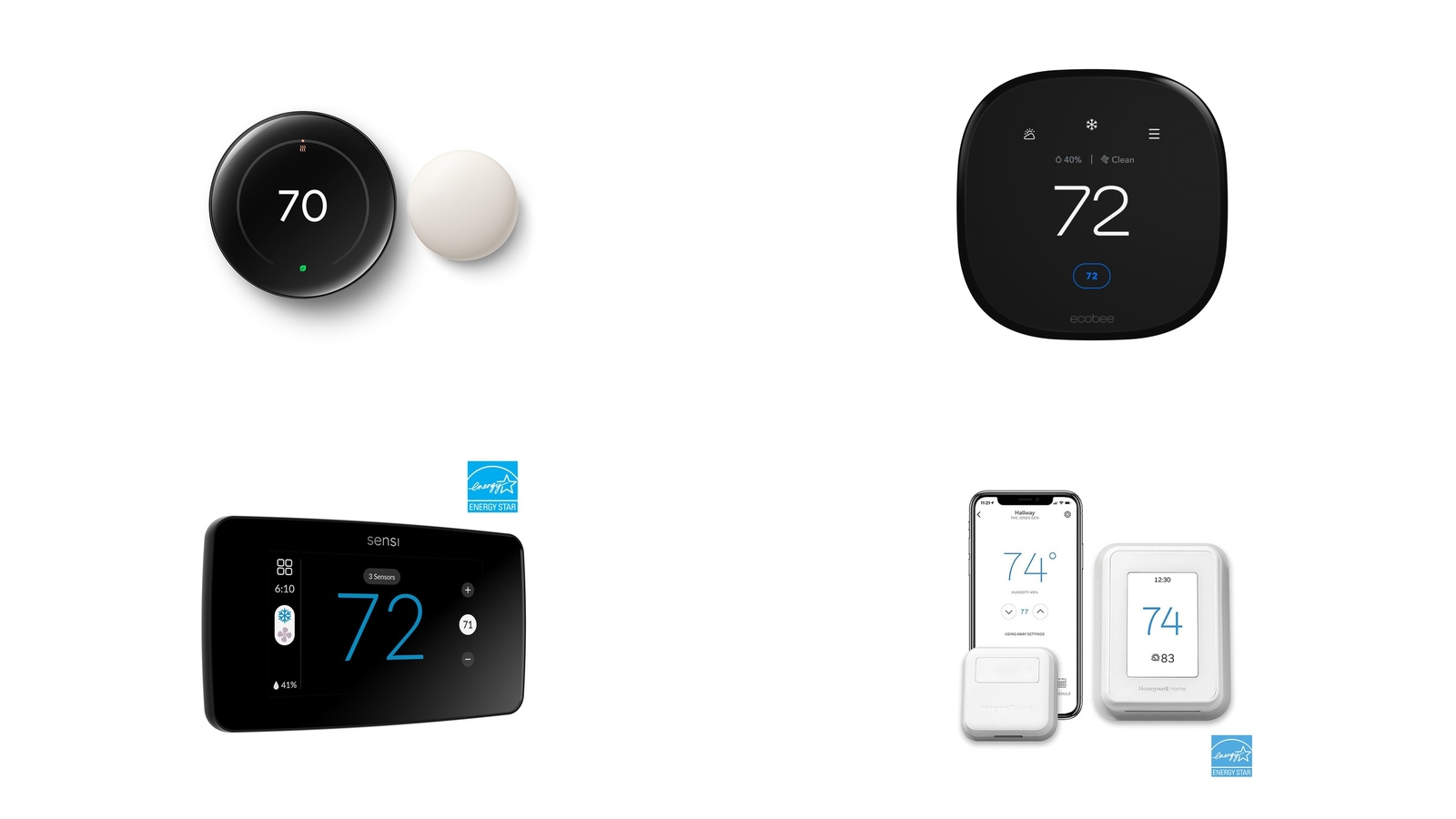
Prices are the manufacturers’ own list prices as of August 2026; all five models are ENERGY STAR certified, and street prices dip below list often enough that paying full sticker is optional.
The payback table: your energy bill decides, not the thermostat
The savings rate is roughly fixed by the certification data, so the only variable that matters is the size of your heating and cooling spend. Multiply your annual heating plus cooling cost by 8 percent, then divide the thermostat’s price by the result. That is the whole calculation, and it produces very different answers for a mild-climate condo and a four-bedroom house fighting a Minnesota winter.
| Your annual heating + cooling spend | Yearly savings at 8% | $79.99 Amazon | $139.99 ecobee Essential | $209.99 Sensi / T9 | $259.99 ecobee Premium | $279.99 Nest Learning |
|---|---|---|---|---|---|---|
| $600 | $48 | 1.7 yrs | 2.9 yrs | 4.4 yrs | 5.4 yrs | 5.8 yrs |
| $900 (US average, low end) | $72 | 1.1 yrs | 1.9 yrs | 2.9 yrs | 3.6 yrs | 3.9 yrs |
| $1,500 | $120 | 0.7 yrs | 1.2 yrs | 1.7 yrs | 2.2 yrs | 2.3 yrs |
| $2,400 | $192 | 0.4 yrs | 0.7 yrs | 1.1 yrs | 1.4 yrs | 1.5 yrs |
Three things jump out of that table. First, the $79.99 Amazon Smart Thermostat pays for itself in about a year for a typical household, which makes it one of the rare gadgets where the finance case is boring and airtight. Second, the flagship models need either a big house or a long attention span: at an average bill, the Nest Learning Thermostat takes roughly four years to earn its sticker back on energy alone. Third, if your heating and cooling runs $2,000 or more a year, every thermostat on this page pays for itself before its second winter at the certified 8 percent rate.
Two honest caveats on the 8 percent. It is an average across certified homes, and EPA notes savings “may be greater depending on climate, personal comfort preferences, occupancy, and/or heating/cooling (HVAC) equipment.” And Google’s own measured studies of the Nest Learning Thermostat found it “saved an average of 12% on heating bills and 15% on cooling bills,” so the table above is closer to a floor than a ceiling for people who leave the automatic features on. One equipment-specific warning is worth flagging before you copy any schedule: if a heat pump with electric resistance backup heats your home, aggressive setbacks can backfire, and the section near the end explains why.
Rebates can make the cost silly
Before comparing models, check what your utility pays you, because thermostat rebates are among the most generous in home tech. In Washington State, Puget Sound Energy offers a “$75 rebate” on qualifying smart thermostats, rising to a “$175 Efficiency Boost rebate based on your income” for income-qualified customers, for equipment purchased and connected by December 31, 2026, with the application due “within 60 days of equipment purchase date.” PSE’s conditions are typical of these programs: you must be a current residential customer heating primarily with PSE electricity or natural gas, and the thermostat must be ENERGY STAR certified, motion-sensor equipped, and registered with the manufacturer over Wi-Fi.
Set that against the quick-picks table: a $75 rebate covers nearly the entire price of an $80 budget model, and knocks the mid-tier picks into instant-payback territory for bigger homes, provided the model you choose is on your utility’s qualifying list. Utilities across the country run similar programs, many through their own online marketplaces that apply the discount at checkout. Program terms change and budgets run out, so treat the numbers above as a snapshot of one utility in August 2026 and confirm your own utility’s current offer before you buy. There is a reason the power company is this eager: fleets of connected thermostats can shift demand during grid crunches, the same mechanism behind the virtual power plants utilities are now building out of home batteries, and a useful lever as data-center growth pushes up power bills.
Fastest payback: Amazon Smart Thermostat
The cheapest ENERGY STAR certified smart thermostat from a major brand is Amazon’s, listed by Amazon at $79.99 as of August 2026. It is built on Honeywell Home thermostat technology, and the trade-offs that keep it at 80 dollars are easy to name: no dedicated room sensors (though compatible Echo devices can stand in as remote temperature sensors), a minimal display, and the smarter automation leans on Alexa routines rather than an onboard learning brain.
None of those omissions touch the savings mechanism, which is scheduling plus away-detection, and that is why the payback table is so lopsided in its favor. If your goal is cutting the bill rather than decorating the hallway, this is the rational default. Its one real catch is power: in homes without a spare common wire in the wall (the “C-wire” that continuously powers the display and radio), Amazon points buyers to a separately sold power adapter kit, which adds cost and installation time to the headline price.
Best overall: ecobee Smart Thermostat Premium
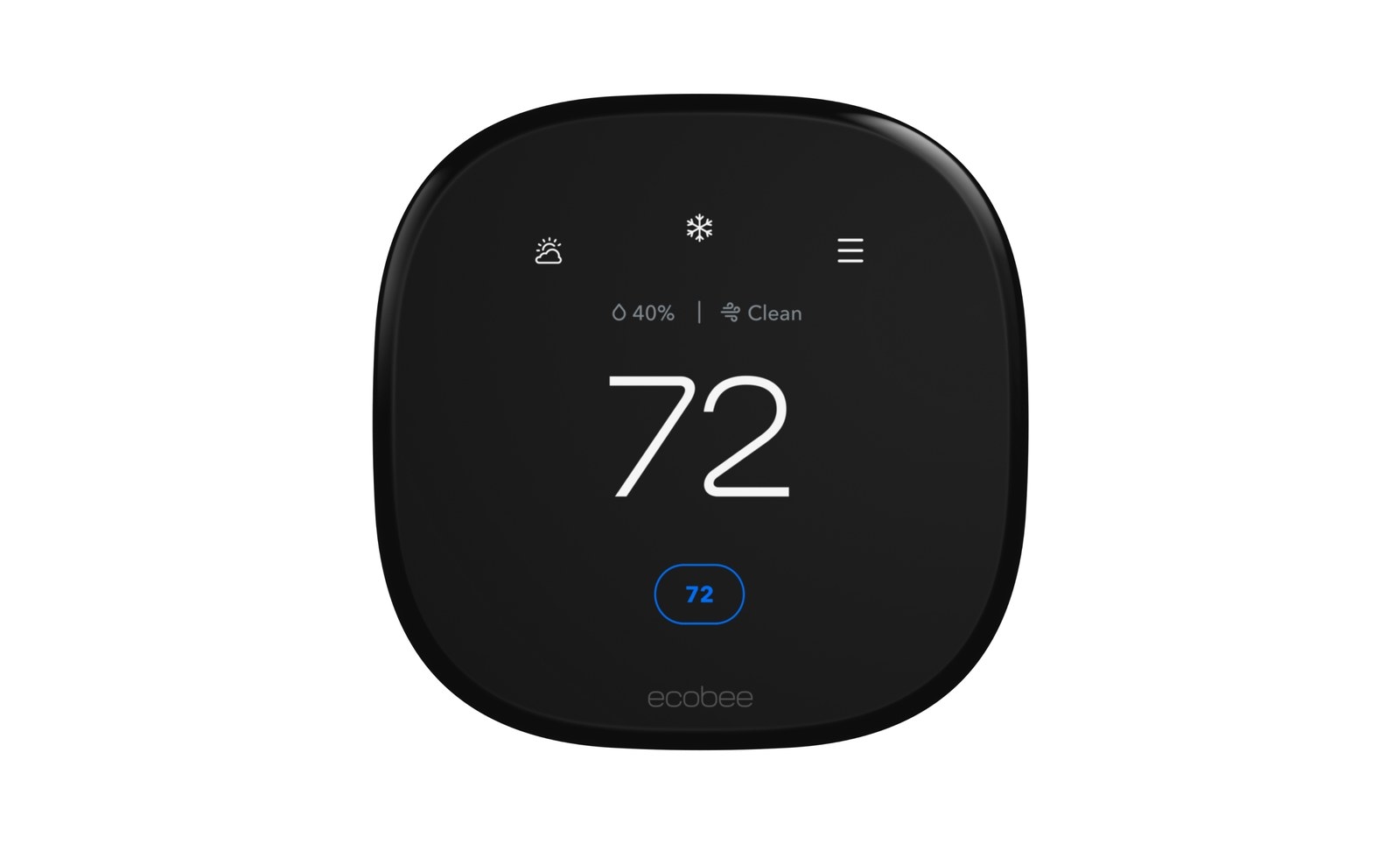
ecobee’s flagship lists at $259.99, with the mid-range Enhanced at $199.99 and the entry Essential at $139.99. The Premium justifies its position with the most complete package in the category: an included room sensor, a built-in air-quality monitor, and a built-in speaker for voice assistants, on top of the core scheduling engine that earns the certification.
The detail that matters most is in the box rather than on the spec sheet. ecobee includes its Power Extender Kit with the Premium and Enhanced models, an adapter that lets the thermostat run reliably in homes that have no C-wire, without paying an electrician to pull a new wire. The Essential does not include that kit, which narrows the gap between its $139.99 price and its siblings for older homes. ecobee’s savings claim is the “up to 26%” figure discussed above, with the Essential rated “up to 23%,” both against the assumed 72°F hold.
If the air-quality readout appeals to you, it pairs naturally with the measured approach in the air purifier brands guide, which applies the same skepticism to that category’s marketing numbers.
The famous learner: Nest Learning Thermostat (4th gen)
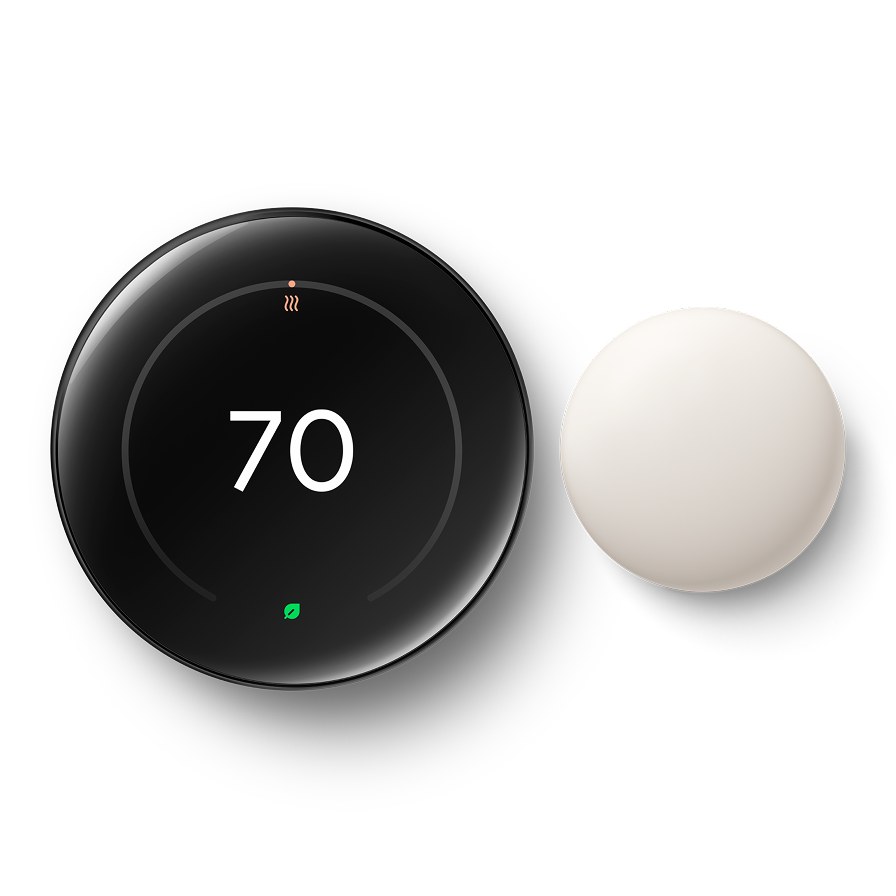
The product that created this category in 2011 is now in its fourth generation, listed at $279.99 with a second-generation Nest Temperature Sensor included, while the simpler non-learning Nest Thermostat holds the budget flank at $129.99. The Learning Thermostat’s pitch is unchanged: instead of programming a schedule, you adjust the dial for a week or two and the thermostat builds the schedule itself, then trims it with occupancy sensing and features like Seasonal Savings.
It remains the best-looking object in the category, and the borderless watch-face display is the one thermostat guests comment on. Whether that is worth roughly $200 over the Amazon pick is a question the payback table answers coldly, but the Nest has a practical advantage beyond aesthetics: Google pitches the Learning Thermostat as the Nest that works with the most HVAC systems, ventilation and humidifier control included, and a C-wire is not required in most homes. Some systems still need one, or Google’s Nest Power Connector, so run the compatibility checker before ordering. Google’s measured savings studies, 12% on heating and 15% on cooling on average, were run on exactly this product line.
Best touchscreen value: Sensi Touch 2
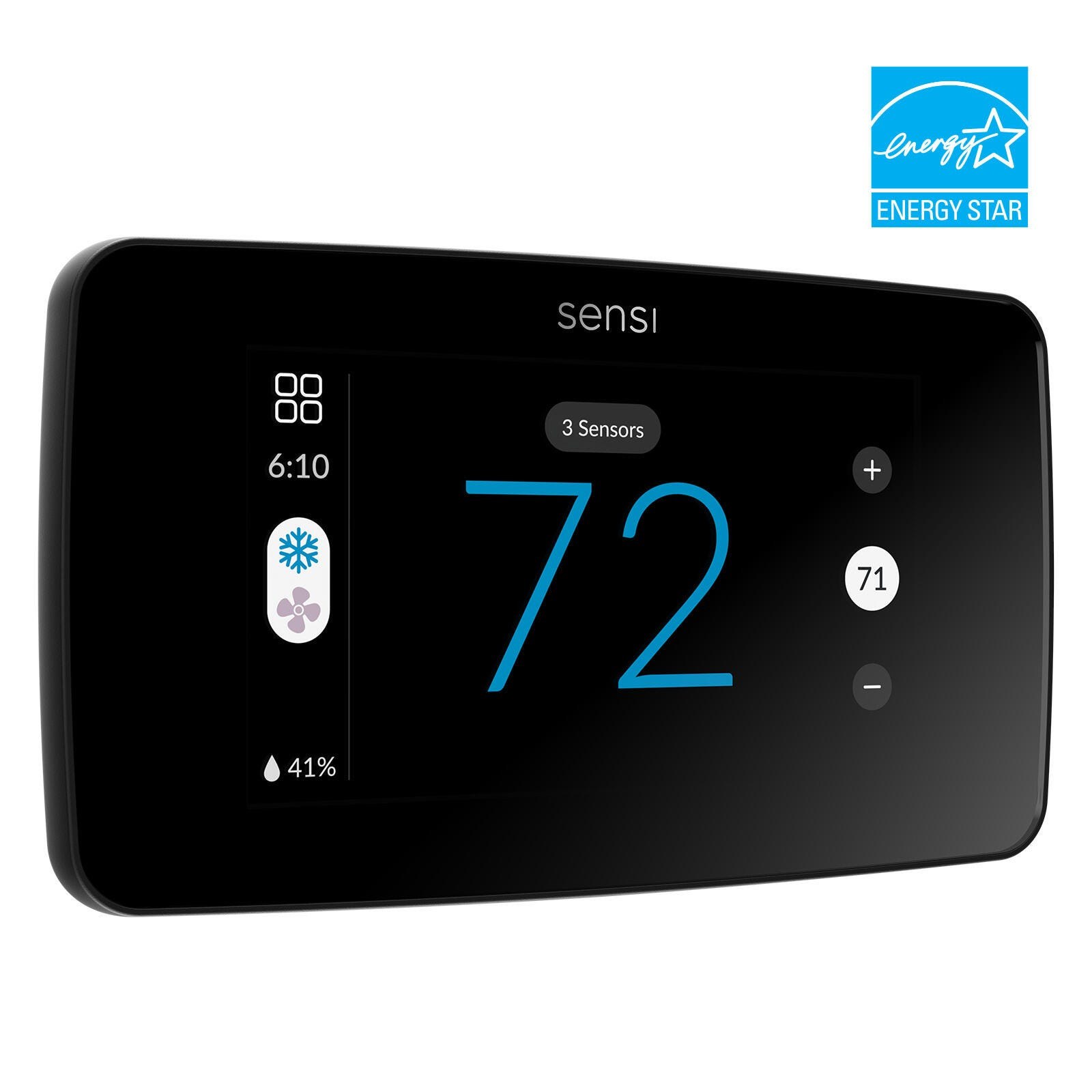
Sensi is the thermostat brand of Copeland, the HVAC (heating, ventilation and air conditioning) equipment giant, and the Touch 2 is its flagship at $209.99. It offers a big glass touchscreen, the most conventional and instantly legible display format in this group, straightforward scheduling, and an unusually blunt privacy stance for a connected device: “Sensi will not sell your personal information to third parties.”
The disqualifier hides in the fine print: “Common wire (c-wire) is required.” If your wall has the wire, the Touch 2 is a polished, HVAC-literate choice from a company whose day job is building the compressors your system runs on. If it does not, the ecobee picks above solve the same problem in the box, and Nest does it with a $24.99 Power Connector, and that difference alone should decide it.
Best for uneven rooms: Honeywell Home T9
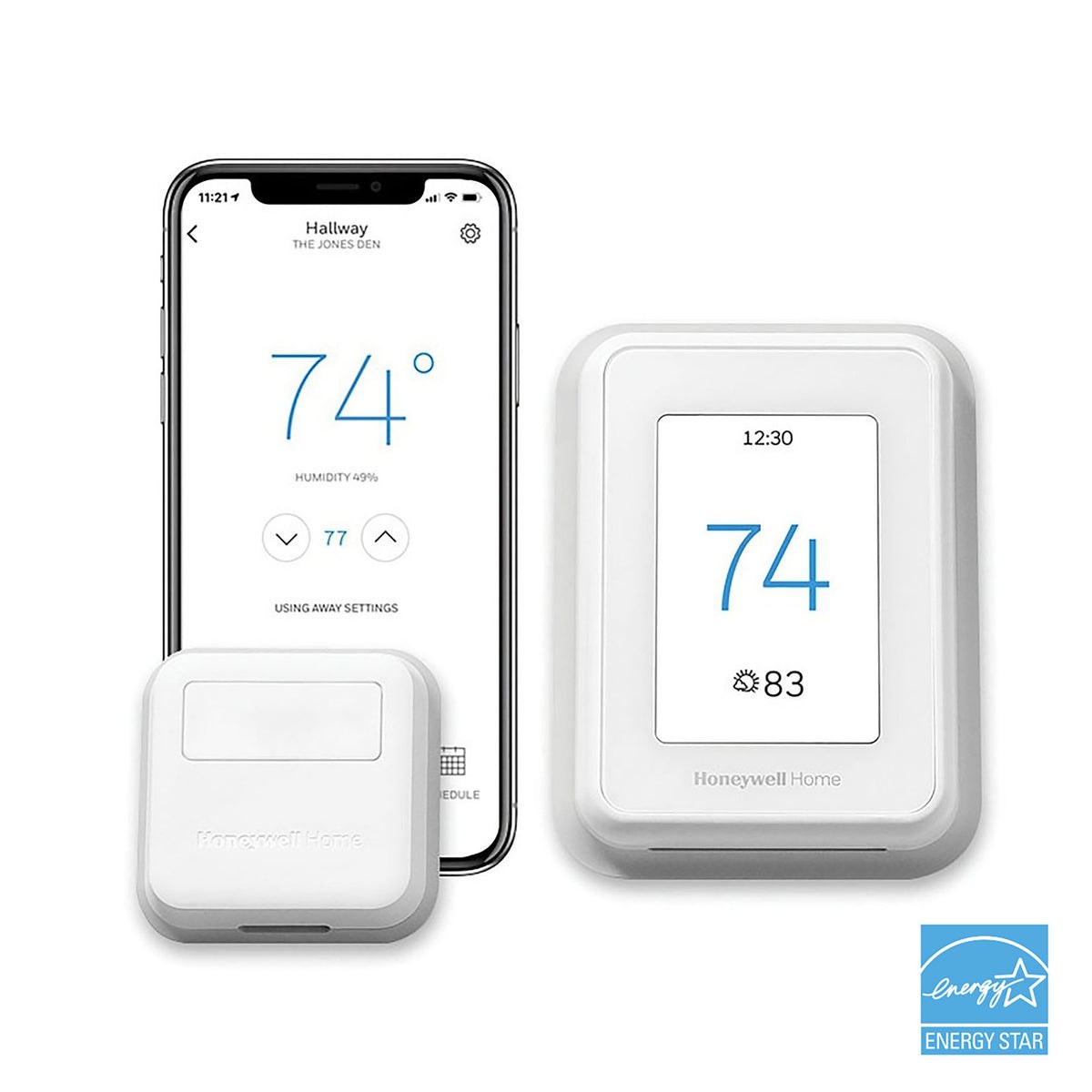
The T9 lists at $209.99 with a wireless room sensor in the kit and a C-wire adapter included for homes that need one. Its specialty is the problem every two-story house knows: the thermostat lives in a hallway nobody occupies, so the bedroom roasts while the hallway hits its target. The T9’s sensors report temperature and occupancy from the rooms you use, and the thermostat conditions to those readings instead, with support for multi-stage systems including heat pumps with auxiliary heat.
Against the ecobee Premium, the T9 is the plainer product: no air-quality monitor, no speaker, a more utilitarian app. It earns its slot when the room-imbalance problem is your main complaint and the ecobee’s extras leave you cold.
The compatibility trap: check the wire before the reviews
More smart thermostats get returned over wiring than over software. The C-wire question is the one to answer before buying anything, and the summary of this roundup is that the vendors have split into two camps on it.
| Model | No C-wire in the wall? | Included in the box |
|---|---|---|
| Nest Learning (4th gen) | Works in most homes without one | Temperature sensor |
| ecobee Premium / Enhanced | Power Extender Kit included | Room sensor (Premium), adapter kit |
| ecobee Essential | Kit sold separately | Thermostat only |
| Sensi Touch 2 | C-wire required on every system type | Thermostat only |
| Honeywell Home T9 | C-wire adapter included | Room sensor and adapter |
| Amazon Smart Thermostat | Power adapter sold separately | Thermostat only |
Every manufacturer runs a free online compatibility checker that asks what wires are behind your current thermostat’s faceplate; five minutes with a screwdriver and that checker is the single highest-value step in this entire purchase. Renters and owners of high-voltage electric baseboard systems should check twice: most models here are built for standard 24-volt (24 V) central systems, and line-voltage heating needs purpose-built hardware instead.
No C-wire? What works, what doesn’t
The wire question has a model-by-model answer, and every maker publishes it. A C-wire, or common wire, “doesn’t control heating or cooling functions. It only provides constant power to your thermostat,” in Google’s words; without one, a smart thermostat either draws power through the heating and cooling wires or needs an adapter at the furnace. The middle column below quotes the maker’s own page.
| Model | Runs without a C-wire? | What the maker says | What you need |
|---|---|---|---|
| Nest Thermostat | Usually, not always | “Works with 85% of systems”; “some systems, including heating-only, cooling-only, zone-controlled, and heat pump systems, require a C wire or a compatible power accessory, like the Nest Power Connector” | The $24.99 Nest Power Connector at the furnace or air handler (at the zone controller on zoned systems), or a spare wire |
| Nest Learning (4th gen) | Usually, not always | “The Nest thermostat that works with the most HVAC systems”; the same “some systems, including” list applies on Google’s C-wire page | Same as above |
| ecobee Premium, Enhanced | Yes, with the kit in the box | The Power Extender Kit is “included with your smart thermostat” and is “not compatible with Dual Transformer systems, or Heat Only systems” | At least four wires (R, G, Y, W) |
| ecobee Essential (and the contractor-channel Lite) | Only with a kit you buy | Lite and Essential “do NOT come with a Power Extender Kit” | The kit, sold separately |
| Sensi, Sensi Lite | Yes on most conventional systems | The $89.99 Lite is sold with “no common wire required with most systems”; a C-wire is needed for heat-only, cool-only and heat pump systems, and for Apple HomeKit | Nothing extra on most conventional furnace-and-AC systems; a C-wire for the exceptions |
| Sensi Touch 2 | No | “all system types require a common wire (c-wire)” | A real C-wire, the fan wire re-used as one, or a Common Wire Maker Kit (Sensi sells the SA11 Common Wire Kit) |
| Honeywell Home T9 | Yes, with the adapter in the box | Box contents list a “C-Wire Adapter” | Nothing extra on most systems; Honeywell says call a pro for 2-wire heat-only |
| Amazon Smart Thermostat | No | “C-wire required”; “You would likely need to purchase a C-wire adapter if you have an older HVAC system” | A C-wire adapter (Amazon bundles Honeywell’s), sold separately |
| Electric baseboards | Not with any model above | Mysa’s baseboard thermostat “Works with 120–240 VAC heating systems” and is “Not Compatible” with 24 V central furnace, air and heat pump systems | A line-voltage thermostat such as the $159 Mysa |
Which smart thermostat works without a C-wire?
Two patterns cover the table. Nest and the cheaper Sensi models install with no adapter on most systems and reach for one only on the system types the makers list; Nest’s page explains that its thermostats “can use your system’s heating and cooling wires to get enough consistent power,” Google’s app “will often tell you during setup if you need to connect a C wire,” and after installation a “Low power” error in its power test means “you can request a free Nest Power Connector.” Google also warns that “Some 3rd party C wire adapters can cause problems or damage your Nest thermostat, even if they claim to be Nest compatible.”
ecobee, Honeywell and Amazon solve it with an adapter instead; ecobee’s kit goes on the furnace control board and works “by combining the functionality of the Y and G into one wire,” which is why its guide wants “at least four wires at your thermostat” and a photo of the board before anything is disconnected. The difference is whether the adapter is in the box. Honeywell lists the “C-Wire Adapter” in the T9’s contents, ecobee includes it with the Premium and Enhanced but not the Essential, and Amazon sells it separately: the product page’s bundle with the adapter listed at $117.54 against $79.99 for the thermostat alone in September 2026.
Does a heat pump need a C-wire?
Usually, and this is the case that catches people. Google’s C-wire page lists heat pump systems among those that “require a C wire or a compatible power accessory,” and Sensi and Sensi Lite need a C-wire on heat pump systems; ecobee’s kit does cover heat pumps, since its stated exclusions are dual-transformer and heat-only systems. If a heat pump is what you have, budget for the wire or the adapter before you buy the thermostat.
Can a smart thermostat run electric baseboard heaters?
Not with the 24-volt thermostats above; baseboards are a voltage problem, not a wire problem. Honeywell lists the T9 as a “Low Voltage” thermostat, and Mysa draws the same line from the other side: its baseboard model, $159.00 on Mysa’s store, “Works with 120–240 VAC heating systems,” handles “3,800 Watts @ 240V,” “Requires a Neutral or L2 wire (3-4 wires total),” and is “Not Compatible” with “Low Voltage (24V) systems (Central Furnace, Central Air, Heat Pumps).” Ductless mini-splits are a separate hardware line again; Mysa’s app groups “baseboard heating, ductless mini-splits, central HVAC, and electric in-floor heating” from different thermostats. Renters should note that the furnace-side adapters above go inside the air handler, which is usually the landlord’s equipment.
When a smart thermostat saves you nothing
The case against this whole category deserves its own section. Some households will do better with the budget model, and some will do better with nothing at all.
If you already run a disciplined schedule on a working programmable thermostat, most of the 8 percent is already in your pocket. The certified savings measure run-time reduction against how people behave, and the marketing percentages measure against a house that never sets back at all; a household that religiously drops the heat at night and while at work has claimed the bulk of the benefit manually. The remaining upside is convenience, remote control from the phone, and the occupancy features catching the days your schedule lies.
If you heat with a heat pump backed by electric resistance strips, be careful with aggressive setbacks, and lean toward the models that manage auxiliary heat explicitly. A deep overnight setback can prompt the system to engage its resistance backup during the morning recovery, and resistance heat is far more expensive per unit of warmth than the heat pump it is backing up. This is precisely the scenario where thermostat intelligence about recovery ramps and auxiliary lockout earns its keep, and where a dumb schedule can cost money.
And if your heating and cooling bill is small, the payback is unbothered by features. At $400 a year of heating and cooling, 8 percent is $32, and even the Amazon pick takes two and a half years to break even without a rebate. In mild-climate, cheap-hydropower territory like the Puget Sound region, that is a real constraint, and it is also exactly where utility rebates flip the answer: $75 off an $79.99 thermostat leaves $4.99, at which point the payback question stops mattering. One check before assuming that exact pairing: PSE requires a qualifying model with a motion sensor on board or in the package, so confirm the model you want is on your utility’s approved list first.
Frequently asked questions
Do smart thermostats actually save money?
Yes, by a certified average of about 8 percent of heating and cooling costs, and EPA notes savings “may be greater depending on climate, personal comfort preferences, occupancy, and/or heating/cooling (HVAC) equipment.” Google’s own measured studies of the Nest Learning Thermostat found it “saved an average of 12% on heating bills and 15% on cooling bills.” The size of your bill decides how fast the savings cover the price.
Which smart thermostat pays for itself fastest?
The Amazon Smart Thermostat, listed by Amazon at $79.99 as of August 2026, the cheapest ENERGY STAR certified model from a major brand. At a $900 annual heating and cooling spend, 8 percent is $72 a year, so it earns its price back in about 1.1 years; the $279.99 Nest Learning Thermostat takes about 3.9 years on the same bill.
Do you need a C-wire for a smart thermostat?
Sometimes, and it is the first thing to check. The Sensi Touch 2 says it plainly: “Common wire (c-wire) is required.” ecobee includes its Power Extender Kit with the Premium and Enhanced models so they run without one, but not with the Essential. The Nest Learning Thermostat works without a C-wire in most homes, the Honeywell Home T9 ships with a C-wire adapter, and Amazon sells its power adapter separately.
Does the Nest thermostat need a C-wire?
Not in most homes, but in some. Google’s store says the Nest Thermostat “Works with 85% of systems,” and its C-wire page says that for both it and the Learning Thermostat (4th gen), “some systems, including heating-only, cooling-only, zone-controlled, and heat pump systems, require a C wire or a compatible power accessory, like the Nest Power Connector”; the $24.99 Power Connector is Google’s own adapter, it fits the 4th gen Learning Thermostat, and after installation a “Low power” error in the power test lets you request one free.
Are there rebates for smart thermostats?
Often, and they can cover most of a budget model. Puget Sound Energy offers a “$75 rebate” on qualifying smart thermostats, rising to a “$175 Efficiency Boost rebate based on your income” for income-qualified customers, for equipment purchased and connected by December 31, 2026, with the application due “within 60 days of equipment purchase date.” The thermostat must be ENERGY STAR certified, motion-sensor equipped and registered with the manufacturer over Wi-Fi, so confirm your own utility’s qualifying list before buying.
Is the Nest Learning Thermostat worth it?
For comfort features, maybe; for savings alone, slowly. The fourth-generation model lists at $279.99 with a Nest Temperature Sensor included, and Google’s measured 12 percent heating and 15 percent cooling savings were run on this product line. At an average bill it takes roughly four years to earn its sticker back on energy alone, against about a year for the Amazon pick.
When is a smart thermostat not worth it?
When you already run a disciplined schedule on a programmable thermostat, since the certified savings measure run-time reduction against how people behave, and a household that sets back religiously has claimed most of the benefit manually. Small bills stretch the payback too: at $400 a year of heating and cooling, 8 percent is $32, and even the Amazon pick takes two and a half years to break even without a rebate. Homes heated by a heat pump with electric resistance backup should also be careful with deep overnight setbacks, which can pull in the expensive backup heat during the morning recovery.
How to choose in sixty seconds
Answer three questions in order. Does your utility pay a rebate, and does it require a specific model list? Start there; free money outranks feature tables. Second, does your wall have a C-wire? If not, cross off the Sensi and factor the adapter into the Amazon pick, or buy the models that solve it in the box. Third, find your row in the payback table. In the top rows, buy the cheapest certified model that fits your wiring and let the rebate do the rest. In the bottom rows, the flagships pay back fast enough that comfort features, room sensors for uneven houses, learning if you refuse to program schedules, become legitimate tiebreakers rather than indulgences.
The thermostat is one of the few smart-home purchases with a certified, audited financial return; the rest of the category should envy it. For the gear that merely makes life pleasant rather than cheaper, the robot vacuum guide and the budget tech-gift list cover the fun side of the ledger honestly.
Sources (17)
- energystar.gov Smart Thermostats
- energystar.gov ENERGY STAR Technical Bulletin: Smart Thermostats
- energystar.gov ENERGY STAR Smart Thermostats FAQ
- store.google.com Google Store: Nest Thermostats
- store.google.com Google: Nest Thermostat Savings
- ecobee.com Smart Thermostats
- support.ecobee.com ecobee Support: Power Extender Kit
- sensi.copeland.com Copeland: Sensi Touch 2 Smart Thermostat
- honeywellhome.com T9 Smart Thermostat
- amazon.com Amazon Smart Thermostat
- pse.com Puget Sound Energy: Smart Thermostat Rebate
- support.google.com Google Nest Help: Learn about the common or C wire
- support.google.com Google Nest Help: Nest Power Connector
- sensi.copeland.com Sensi Support: Does my Sensi thermostat need a common wire
- sensi.copeland.com Sensi Support: Do I need a c-wire
- sensi.copeland.com Sensi Lite Smart Thermostat
- getmysa.com Mysa: Smart Thermostat for Electric Baseboard Heaters



🦋 Discussion on Bluesky
Discuss on Bluesky