


The adult electric scooter market just had its biggest week of 2026. On August 4, Segway opened pre-orders on the MAX G3 Plus, the follow-up to its best-selling commuter line, at an introductory $1,149.99 against a $1,499.99 list price, with units shipping August 25. The headline spec is a 56-mile range. The first independent instrumented test of that scooter measured 21.2 miles.
That gap is not a scandal unique to Segway. It is how the entire category advertises, and it is the reason most scooter buying advice is useless: nearly everything on page one of a scooter search is written by a company that sells scooters. This guide is built the other way around, on independent test data, physics, federal injury statistics, and the exact text of state law. Four scooters make the cut, spanning list prices from $799 to $1,499.99, with street prices frequently lower. Every one of them carries a UL 2272 safety certification, and the section on fire data explains why that line matters more than any spec on the box.
Quick picks
| If you want… | Buy | List price (Aug 2026) |
|---|---|---|
| The best all-around commuter | Segway MAX G3 Plus | $1,499.99 ($1,149.99 pre-order) |
| The most honest range claim | NIU KQi3 Max | $999 |
| A serious scooter on a budget | GOTRAX GMAX Ultra | $799 (listed at $549 on September 3, 2026) |
| Hills, rain, and two motors | Apollo Go Stellar | $1,299 (listed at $1,199) |
Prices are manufacturer list prices as of August 2026; scooters go on sale constantly, so treat them as ceilings, not quotes.
How far do electric scooters really go?
Range claims on scooter boxes come from laboratory-style conditions: a light rider, a flat course, the slowest power mode, no wind, no stops. Nobody commutes like that. Independent reviewers who ride the same scooter until the battery dies, with a normal-weight adult aboard at normal speeds, get numbers like these:
| Scooter | Claimed range | Independently tested range | Real share of the claim |
|---|---|---|---|
| Segway MAX G3 Plus | 56 mi | 21.2 mi (Rider Guide, demanding conditions) | 38% |
| Segway Max G3 | 50 mi | 24.9 mi (ERideHero, regular riding) | 50% |
| GOTRAX GMAX Ultra | 45 mi | 24 mi (Electric Scooter Insider, full throttle) | 53% |
| NIU KQi3 Max | 40.4 mi | 31.1 mi (ERideHero, 15.1 mph average) | 77% |
Across these four, reality lands between 38 and 77 percent of the sticker, and the middle of the pack sits right around half. The working rule: cut the advertised range in half, then decide if the scooter still covers your trip. A 40-mile claim is a 20-mile scooter with margin to spare; a 25-mile claim is a 12-mile scooter, which is fine for a short last-mile hop and nothing more.
Notice which direction the ranking runs. NIU claims the least and delivers the largest share of its claim; Segway claims the most and delivers the smallest share. The companies are not lying in different amounts; they are choosing test conditions with different levels of shame. Rider weight, speed, hills, wind, and cold all bite, and the faster the scooter, the harder the aerodynamics punish it, since drag power grows with the cube of speed.
Why UL 2272 is the one spec you should refuse to compromise on
The scariest failure mode of a cheap electric scooter is a lithium battery fire, not a dead battery, usually while charging, usually indoors.
The US Consumer Product Safety Commission’s April 2026 report counts 206 e-scooter deaths from 2017 through 2024 and an estimated 380,000 emergency-room visits. Most of those deaths are traffic, not fire: motor vehicle collisions and loss of control top the hazard list. But 15 of the 206 came from just 11 battery-fire incidents, and battery fires are the deaths that happen to people who were not even riding: they happen in apartments, overnight, to whole families.
New York City ran the natural experiment on how to stop them. In 2023, the city’s Local Law 39 made it illegal to sell e-mobility devices that are not certified to the relevant UL safety standards, including UL 2272 for the scooter’s electrical system and UL 2271 for the battery pack. Fire deaths from lithium-ion batteries in the city fell from 18 in 2023 to six in 2024. In 2025 the toll was one.
UL 2272 certification does not make a scooter fireproof. It means an independent lab has abuse-tested the whole electrical system, overcharged it, crushed it, soaked it, shorted it, and the design did not turn into a torch. Every pick below carries it, stated on the maker’s own product listing. When you comparison-shop beyond this list, treat a missing UL 2272 line the way you would treat a missing seatbelt in a car listing: not a discount, a disqualification.
Segway MAX G3 Plus: the best all-around commuter
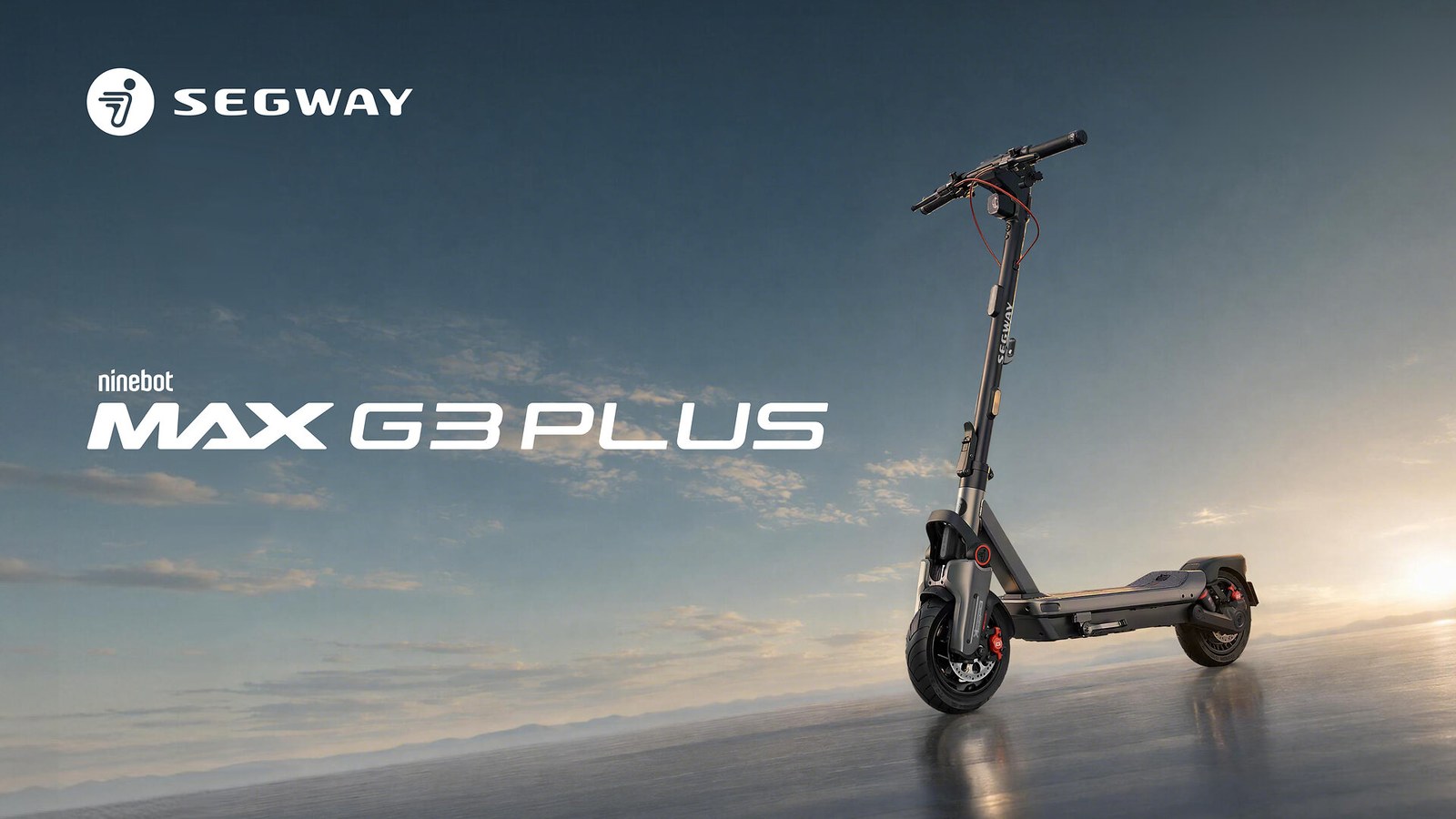
| Spec | Segway MAX G3 Plus |
|---|---|
| List price | $1,499.99 ($1,149.99 pre-order, ships Aug 25) |
| Top speed | 28 mph |
| Claimed range | up to 56 mi |
| Independently tested range | 21.2 mi (Rider Guide) |
| Motor | 2,200 W peak |
| Battery | 717 Wh |
| Weight / max load | about 55 lb / 286 lb |
| Water resistance | IPX6 |
| Certification | UL 2272 / UL 2271 |
The G3 Plus is what happens when the category’s dominant commuter scooter gets a 20 percent bigger battery, a 2,200-watt peak motor, and a safety-tech spree: traction control, anti-lock braking, turn signals, a gyroscopic riding-assist system, and Apple Find My built in. Charging is genuinely quick for a battery this size, around four hours on one cable and about three on two. Rider Guide’s early testing found it stops from about 16 mph in 13 to 14 feet and holds 25 to 27 mph up a sustained climb, and called it one of the best city scooters available for riders who prioritize comfort, hills, and safety technology.
The caveats: it weighs about 55 pounds, which is a real problem if your apartment has stairs, and that 56-mile sticker is a 38-percent-real number in hard riding. Treat it as a 20-to-25-mile scooter ridden the way adults ride, which still covers almost any urban commute twice over.
The outgoing Max G3 stays on sale while stock lasts, with the same frame, a 597 Wh battery, and a 50-mile claim that tested at 24.9 miles, and retailers have been discounting it since the Plus was announced; check Segway’s own store for the current price. If the discount is deep, it is the smarter buy.
Check price on Amazon | Max G3 on Amazon
NIU KQi3 Max: the most honest scooter in the lineup
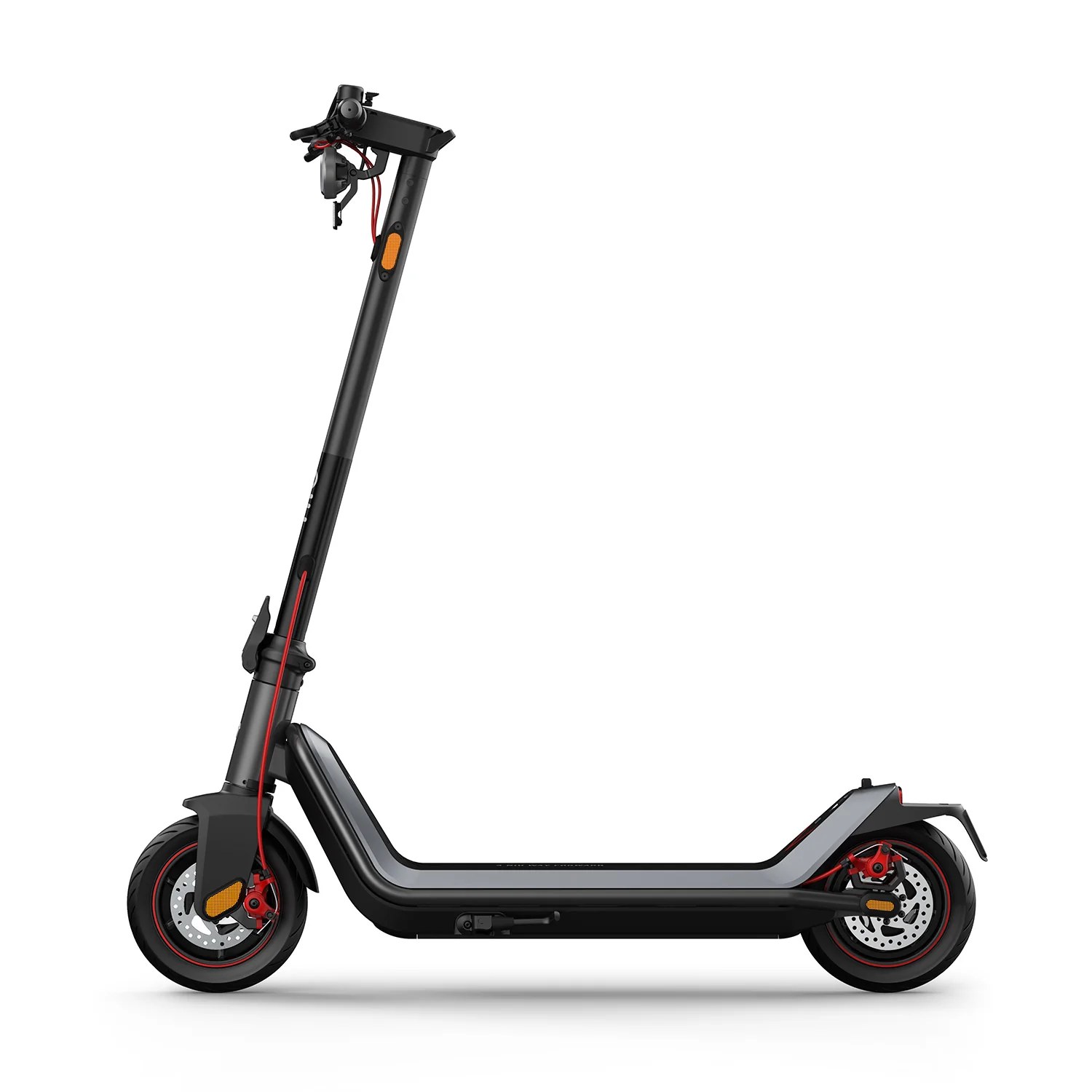
| Spec | NIU KQi3 Max |
|---|---|
| List price | $999 |
| Top speed | 20 mph |
| Claimed range | 40 mi |
| Independently tested range | 31.1 mi (ERideHero) |
| Motor | 450 W rated / 900 W max |
| Battery | 608.4 Wh |
| Weight / max load | 46.5 lb / 265 lb |
| Water resistance | IP54 |
| Certification | UL 2272 |
The KQi3 Max delivered 77 percent of its claimed range in ERideHero’s instrumented test, the best ratio of anything in this guide, and its 48-volt electrical architecture holds speed deeper into the discharge curve than the 36-volt systems common at this price. On ERideHero’s 8 percent test hill it held an average of 14.8 mph, which is what a 900-watt peak motor with a full-size adult aboard should do, and exactly what the physics section below predicts.
What you give up against the Segway: suspension (there is none, the 9.5-inch tubeless tires do all the cushioning), 8 mph of top speed, and the app-heavy feature list. What you get: a scooter about 9 pounds lighter, a 265-pound load rating, dual disc brakes, and the rare pleasure of a spec sheet that means what it says. For a flat-city commuter who wants to reach the advertised neighborhood of range, this is the pick.
GOTRAX GMAX Ultra: the budget pick with real credentials
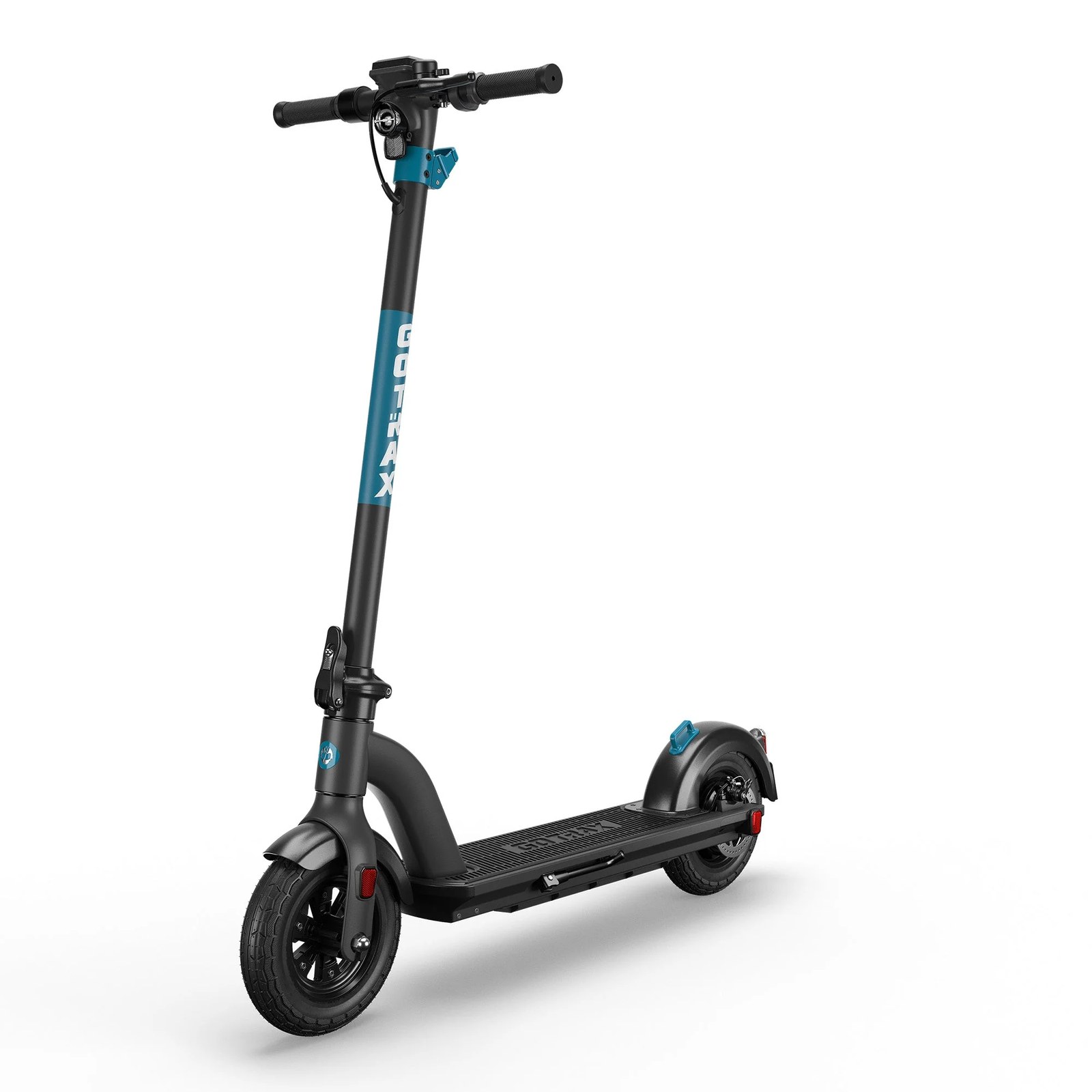
| Spec | GOTRAX GMAX Ultra |
|---|---|
| List price | $799 (listed at $649, Aug 2026) |
| Top speed | 20 mph |
| Claimed range | up to 45 mi |
| Independently tested range | 24 mi (Electric Scooter Insider) |
| Motor | 500 W |
| Battery | 36 V 17.5 Ah LG cells (630 Wh) |
| Weight / max load | 46 lb / 220 lb |
| Water resistance | IPX4 |
| Certification | UL 2272 |
The GMAX Ultra is an older design than the rest of this list, and that is precisely why it is cheap: GOTRAX has been selling and refining it for years while the flagship war moved upmarket. What survives the price cut is the part that matters. The battery is built from name-brand LG cells, the whole system is UL 2272 certified, and Electric Scooter Insider’s full-throttle test still returned 24 real miles.
The compromises are honest ones: IPX4 splash resistance rather than real rain-proofing, a 220-pound load limit that heavier riders will exceed, no suspension beyond the 10-inch pneumatic tires, and a single 500-watt motor that will slow visibly on real hills. On flat ground, for a rider under 200 pounds, at this price, nothing else on the market combines a certified electrical system, brand-name cells, and 20-plus tested miles.
Apollo Go Stellar: the one for hills and rain
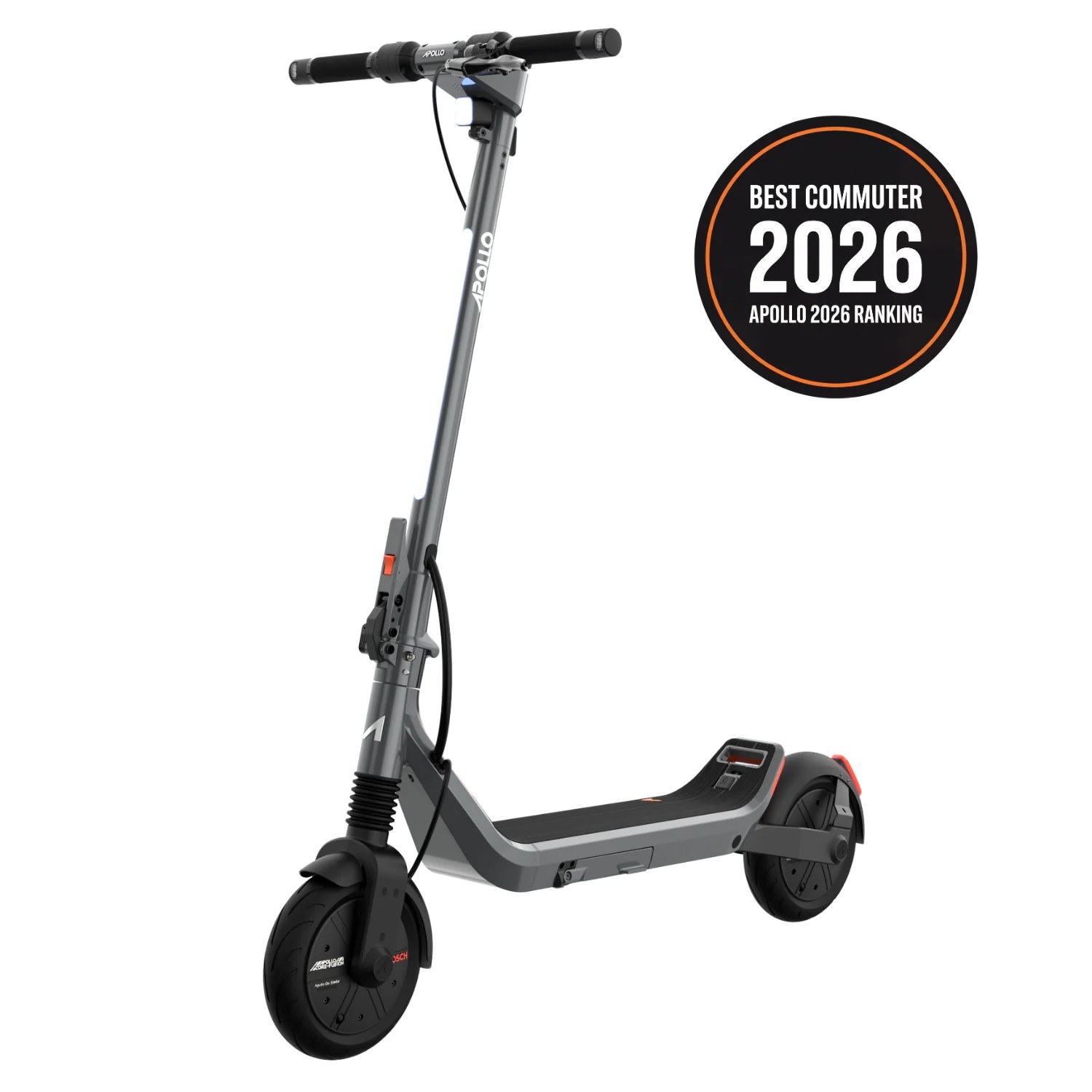
| Spec | Apollo Go Stellar |
|---|---|
| List price | $1,299 (listed at $1,199) |
| Top speed | up to 32 mph |
| Claimed range | up to 38 mi (Eco mode) |
| Independently tested range | not yet independently tested; Apollo’s own launch figure is 32 mi |
| Motor | dual Bosch motors, 2,000 W peak combined |
| Battery | 48 V 13.45 Ah (about 646 Wh) |
| Weight / max load | 55 lb / 265 lb |
| Water resistance | IP66 |
| Certification | UL 2272 / UL 2271 |
Two things justify the Go Stellar’s slot in this guide: the second motor and the IP66 rating. Dual motors mean the climbing power that a single-motor commuter delivers in bursts is available continuously, split across two wheels for traction. The IP66 rating is the highest water-resistance figure in this group by a wide margin, and it is the difference between a scooter that tolerates a surprise shower and one designed to be commuted through a wet season. Fast-charge support cuts the 7.5-hour standard charge to about 3 hours, and Apollo backs the scooter with a 12-month warranty plus lifetime frame coverage.
The caveat is in the range row above: the Go Stellar launched in early 2026 and the major test outlets had not published an instrumented range test as of this writing, so the 38-mile Eco claim should get the same haircut as everything else here. Apollo’s own launch materials describe 32 miles as the realistic figure. Its 32 mph top speed also exceeds the legal operating cap in several states, which the law section below covers.
How many watts do you need?
Motor wattage is the second-softest number on the box: the same scooter can carry a rated figure and a peak figure twice as high, and listings emphasize whichever looks stronger. Physics cuts through it. The power needed to lift a rider up a hill at steady speed is:
Take a 200-pound rider on a 50-pound scooter (about 115 kg combined), climbing at 15 mph (6.7 m/s), and add roughly 200 watts for rolling resistance and air drag at that speed. The wheel-power bill comes to:
| Hill grade | Power needed at 15 mph | What that means |
|---|---|---|
| 4% (gentle rise) | ~500 W | Any pick in this guide holds speed |
| 8% (serious city hill) | ~800 W | 900 to 1,000 W peak motors slow but climb |
| 12% (steep block) | ~1,100 W | Single-motor commuters crawl; dual motors earn their price |
Those are computed figures, not manufacturer claims, and the one available cross-check lands right on them: ERideHero measured the 900-watt-peak NIU holding 14.8 mph on an 8 percent grade. The practical translation: a 250-to-350-watt rated scooter is a flat-land machine no matter what its peak number says, a 500-watt rated single motor is the floor for a hilly commute, and anyone riding real grades daily, a Seattle or San Francisco commute, should be looking at the dual-motor end of the market. Heavier riders should shift every row up one bracket, because the power bill scales directly with total mass.
What does it cost to run?
Almost nothing, and that is the quiet economic case for the whole category. A full charge of the biggest battery in this guide, the G3 Plus’s 717 Wh pack, costs about 11 cents at the May 2026 Washington average residential rate of 14.95 cents per kilowatt-hour, and about 13 cents at the national average of 18.44 cents. The smaller packs here charge for about a dime.
Cost per mile, using the tested ranges above rather than the stickers:
| Mode of travel | Fuel cost per mile |
|---|---|
| Electric scooter (tested range, WA rate) | ~0.3 to 0.4 cents |
| EV charged at home (WA rate) | ~4.3 cents |
| 30-mpg gas car at $4/gallon | ~13 cents |
AAA’s national average for regular gasoline sits right around $4 a gallon as of early August 2026. Run a typical 8-mile round-trip commute 250 days a year and the scooter’s electricity bill is about $7 for the entire year; the same miles in a 30-mpg car burn roughly $270 of gasoline. The scooter pays for itself in avoided parking alone in most cities, and the full cost-of-charging math for four-wheeled EVs lives in the site’s EV charging guide.
Can you ride one in the rain?
Look at the IP column in the spec tables: the four picks span the whole spectrum. The second digit of an IP rating is the water score: IPX4 (the GMAX Ultra) certifies resistance to splashes, IPX6 (the Segways) certifies protection against powerful water jets, and IP66 (the Apollo) adds full dust-tightness on top. None of these ratings certifies submersion, and manufacturer warranties frequently exclude water damage regardless of the rating, so the practical wet-climate advice is: an IPX4 scooter is a dry-day machine, an IPX6-or-better scooter handles a rainy commute, and no scooter should ride through standing water deep enough to reach the deck. Wet pavement also lengthens braking distances substantially, which matters more at 28 mph than any spec on this page.
Is your scooter even street legal?
Mostly yes, with caps and quirks that vary by state, and the fine print matters: every pick in this guide can out-run California’s 15 mph operating cap. As of mid-2026:
| State | The short version |
|---|---|
| Washington | Defined as a device capable of no more than 20 mph on level ground; no driver’s license needed; sidewalks are off-limits; bike lanes and multipurpose trails are fair game unless locally restricted; reflectors or lights required after dark |
| California | 15 mph maximum operating speed on public roads; a driver’s license or permit is required; no sidewalk riding |
| New York | Allowed on streets posted 30 mph or less; no registration; no sidewalks except where local law allows; helmets required for 16- and 17-year-old riders in NYC |
Local rules layer on top of all three, and cities have wide authority to restrict where scooters go. The pattern to internalize: the 20 and 28 and 32 mph numbers in the spec tables are what the hardware can do, not what the road allows. Ride a 28 mph scooter in a 15 mph state and the excess is a ticket waiting to happen, so check your own city’s code before buying for top speed. If your commute connects to transit, as with the new light rail extensions around Seattle, the speed cap barely matters anyway; the scooter’s job is the first and last mile.
What about the $300 scooters?
Search any marketplace for “electric scooter for adults” and the results are dominated by sub-$400 machines from brands that did not exist two years ago. The discount comes from somewhere, and where it usually comes from is the battery and the certification budget. The CPSC’s proposed lithium-ion battery rule and New York’s sales law both exist because uncertified packs are the fire problem; the city’s death toll dropped by an order of magnitude within two years of forcing UL certification into the sales channel.
That does not make every cheap scooter a firebomb, and the GMAX Ultra above proves a certified scooter can sell for $549. It means the burden of proof is on the listing. No UL 2272 statement, no purchase, no matter the price. The same logic applies to the used market, which is genuinely good value for a commodity that depreciates fast: a two-year-old Max G2 or KQi3 from a reputable brand keeps its certification, but ask for proof the battery is original, because aftermarket replacement packs are exactly the uncertified hazard the fire data describes. Before any used purchase, run the model through the CPSC recall database; cheap scooters get recalled with some regularity.
Frequently asked questions
What is the best electric scooter for adults?
For most commuters, the Segway MAX G3 Plus: a 2,200-watt peak motor, a 717 Wh battery, traction control, anti-lock braking, and turn signals, at a $1,499.99 list price ($1,149.99 on pre-order). If you want the spec sheet that comes closest to reality, the $999 NIU KQi3 Max delivered 77 percent of its claimed range in ERideHero’s instrumented test, the best ratio in this guide.
How much does a good electric scooter cost?
A certified scooter with brand-name cells starts around $550 to $800: the GOTRAX GMAX Ultra lists at $799 and was listed at $549 on September 3, 2026, with LG cells and UL 2272 certification. The picks in this guide top out at $1,499.99 for the Segway MAX G3 Plus. Sub-$400 marketplace scooters usually save the money on the battery and the certification, which is the part you should not skip.
What does UL 2272 certification mean?
It means an independent lab has abuse-tested the scooter’s whole electrical system, overcharged it, crushed it, soaked it, and shorted it, and the design did not catch fire. It does not make a scooter fireproof. New York City’s 2023 Local Law 39 banned the sale of e-mobility devices not certified to UL standards including UL 2272 and UL 2271. Lithium-ion battery fire deaths in the city fell from 18 in 2023 to six in 2024, and to one in 2025.
How fast do electric scooters go?
The NIU KQi3 Max and GOTRAX GMAX Ultra top out at 20 mph, the Segway MAX G3 Plus at 28 mph, and the Apollo Go Stellar at up to 32 mph. The road may allow less: California caps operating speed at 15 mph on public roads, and Washington defines a motorized foot scooter as a device capable of no more than 20 mph on level ground.
Are electric scooters dangerous?
The US Consumer Product Safety Commission’s April 2026 report counts 206 e-scooter deaths from 2017 through 2024 and an estimated 380,000 emergency-room visits, with motor vehicle collisions and loss of control topping the hazard list. Fifteen of the 206 deaths came from just 11 battery-fire incidents, usually while charging indoors, which is why the certification question above matters more than any other spec.
How much does it cost to charge an electric scooter?
About a dime. A full charge of the largest battery in this guide, the G3 Plus’s 717 Wh pack, costs about 11 cents at the May 2026 Washington average residential rate of 14.95 cents per kilowatt-hour, and about 13 cents at the national average of 18.44 cents. A typical 8-mile round-trip commute run 250 days a year costs about $7 in electricity for the whole year, against roughly $270 of gasoline in a 30-mpg car at about $4 a gallon.
Which scooter to buy
Buy the NIU KQi3 Max if you want the spec sheet closest to reality. Buy the Segway MAX G3 Plus if you want the full feature list, and pretend the box says 22 miles, since that is what the test data says. Buy the GMAX Ultra if you are shopping at the bottom of this price range and your commute is flat. Buy the Apollo Go Stellar if your map has contour lines or your forecast has rain. Whatever you buy, make it UL 2272 certified, halve the range claim, and check your city’s speed cap before you fall in love with a 32 mph spec sheet. The fire statistics, the physics, and the statutes above will still be true long after this month’s sale prices are gone.
Sources (21)
- prnewswire.com Segway MAX G3 Plus press release (PR Newswire)
- electrek.co Segway MAX G3 Plus launch coverage
- riderguide.com Rider Guide MAX G3 Plus review
- eridehero.com ERideHero Max G3 specs and tested range
- eridehero.com ERideHero NIU KQi3 Max review
- shop.niu.com NIU KQi3 Max product page
- gotrax.com GOTRAX GMAX Ultra product page
- electricscooterinsider.com Electric Scooter Insider GMAX Ultra review
- apolloscooters.co Apollo Go Stellar product page
- prnewswire.com Apollo Go Stellar press release (PR Newswire)
- amazon.com Segway MAX G3 Plus Amazon listing
- store.segway.com Segway Official Store MAX G3
- cpsc.gov CPSC Micromobility Report 2017-2024
- ulse.org UL Standards & Engagement on NYC fire deaths
- firerescue1.com FireRescue1 FDNY lithium-ion fire trends
- wsp.wa.gov WSP Motorized Foot Scooter Resource Sheet
- app.leg.wa.gov RCW 46.61.710
- leginfo.legislature.ca.gov California Vehicle Code 22411
- trafficsafety.ny.gov New York GTSC Micromobility rules
- eia.gov EIA Electric Power Monthly, Table 5.6.A
- gasprices.aaa.com AAA National Average Gas Prices



🦋 Discussion on Bluesky
Discuss on Bluesky