


In June 2026, a projector brand called Vizony agreed to change the brightness specification on its RD830 model. The old number was 15,000 lumens. The corrected number is 370.
That is not a typo, and it is not an isolated case. Five months earlier a court found that HP-branded projectors sold by licensee Global Aiptek were falsely advertised, and the settlement cut the HP CC200 from 200 lumens to 100 and the MP2000 Pro from 2,000 to 600. In February 2026, Nomvdic’s L500 went from 2,500 lumens to 500.
So the first thing worth knowing about portable projectors is that the headline number is frequently not a measurement of anything. But there is a second thing, and it is the one that ruins backyard movie nights, because it applies to the brands too: on a portable projector the advertised brightness and the advertised battery life never belong to the same mode. One pick below is rated at 400 lumens and independently measured at 399 with the power supply attached, but the 2.5 hours printed on its box is an Eco-mode figure worth 145. And on two of the four, unplugging makes that choice for you.
Quick picks
- Best for a genuinely big backyard screen: Anker Nebula Mars 3. Independently measured at 959 lumens, with a 185 Wh battery.
- Best all-rounder: XGIMI MoGo 4. Small, well-built, and honest about being a dark-room projector.
- Best brightness you can watch: Anker Nebula Mars 3 Air. Loses only 4 percent of its peak going to a colour-accurate mode.
- Smallest, with the biggest asterisk: Anker Nebula Capsule 3 Laser. Two pounds, and it dims itself by about 36 percent the moment you unplug it.
Why the number on the box is often not a measurement
There is exactly one brightness spec that means something, and it has a name attached. ANSI lumens come from a procedure that requires “measuring nine specific points in a 100% white image and using the average of all nine to calculate brightness.” ISO 21118 is the modern international equivalent, and the American National Standards Institute has adopted it.
Everything else is marketing. The two common substitutes are “LED lumens,” a manufacturer-invented figure meant to capture perceived rather than measured brightness, and “light source lumens,” which measures the bulb before any of that light passes through the optics and reaches a wall. BenQ publishes a conversion table putting 1,000 light source lumens at roughly 60 ANSI lumens, and 1,000 LED lumens at about 417. A third trick is the centre-spot reading, which measures only the brightest point of the image instead of averaging nine.
ProjectorCentral’s guidance is blunt: “if a projector’s brightness spec is not clearly labeled ANSI or ISO lumens, you cannot properly judge its brightness against other projectors and the product or manufacturer should be viewed as suspect.”
Who is doing the suing, and why that matters
Every one of those corrected specifications came out of litigation brought by Epson, which has pursued a long run of cases against rival projector brands. Settlements have forced Formovie’s P1 portable from 800 lumens down to 250, XGIMI’s Halo and Elfin from 800 to 600 each, and Anker’s Nebula Cosmos Laser 4K from 2,400 to 1,840.
Epson is not a neutral referee here. It sells 3LCD projectors specified to ISO 21118, and is the only major brand still selling LCD projectors for home theatre. Every competitor forced to publish a smaller number is a competitor whose advertising advantage disappears. This is competitive litigation, and it should be read that way. What makes the record useful anyway is that the corrections are matters of settlement and judgment rather than opinion: the companies themselves agreed to the new figures. Two of Epson’s own targets, XGIMI and Anker, make all four of the picks below, which is a decent sign that the enforcement worked.
The honest brands mostly beat their specs
The useful conclusion is not “distrust every number.” It is nearly the opposite. When a projector carries a properly labelled ANSI or ISO figure, independent measurement tends to confirm it or exceed it. ProjectorCentral measured Epson’s EpiqVision Mini EF22 at 1,081 lumens against a 1,000-lumen claim. ProjectorReviews measured BenQ’s GP100A at 1,131 against the same claim, though by its own description that test used “3-4 readings about 15-20% out from the center of the lens” rather than a full nine-point average. The Nebula Capsule 3 Laser came in above its rating too.
The label is the whole signal. Find “ANSI” or “ISO” next to the number and the number is probably real. Find a bare “lumens,” a “lux” figure, or nothing at all, and you are looking at an advertisement.
How many lumens does a backyard movie night need?
This part is math, and it settles the question better than any adjective. Brightness arriving at your eyes is measured in foot-Lamberts, and the formula is straightforward: lumens = foot-Lamberts multiplied by screen area in square feet, divided by screen gain. SMPTE’s target for a darkened theatre is 16 to 22 foot-Lamberts.
Run that at the 16 foot-Lambert floor on an ordinary 1.0-gain screen and you get the table below. The second column is what has to land on the screen. The third is the rating to shop for, because a projector’s most colour-accurate picture mode delivers only about half to two-thirds of its headline figure.
| Screen size (16:9) | Screen area | Lumens needed on screen | ANSI/ISO rating to shop for |
|---|---|---|---|
| 60 in | 10.7 sq ft | 171 | 260 to 340 |
| 80 in | 19.0 sq ft | 304 | 460 to 610 |
| 100 in | 29.7 sq ft | 475 | 710 to 950 |
| 120 in | 42.7 sq ft | 684 | 1,030 to 1,370 |
| 150 in | 66.8 sq ft | 1,068 | 1,600 to 2,140 |
The headline consequence: a 100-inch screen, the size most people picture when they imagine a backyard movie, wants a projector rated somewhere around 700 to 950 lumens. Almost nothing marketed as a compact portable projector is rated that high. The Vizony RD830’s corrected 370 lumens tops out near 88 inches at cinema brightness. The HP CC200’s corrected 100 lumens tops out around 46 inches, which is smaller than a cheap television.
The catch nobody puts on the box: the runtime and the brightness are different modes
This is the part that no spec sheet and almost no review headline tells you. A portable projector’s brightness rating is measured with the power supply attached. Its battery life is quoted in the dimmest power mode the projector has. Both numbers are true. You can never have both at once.
Anker’s Nebula Mars 3 Air is the clearest case. ProjectorCentral measured it at 399 ANSI lumens at peak, essentially matching its 400-lumen rating, and 383 in a colour-accurate Standard mode. But the advertised 2.5 hours of playback is an Eco-mode figure, and in Eco the same reviewer found the projector “was more like a flashlight, with the ability to deliver just 145 lumens.”
On some projectors that choice is made for you. The Mars 3 Air has “an Auto setting that automatically puts the Mars 3 Air into Eco mode when it detects that it is not connected to its power supply.” The Nebula Capsule 3 Laser does it unconditionally: ProjectorCentral found that “pulling the AC power automatically puts the projector into Battery brightness mode, which reduced the brightness for any given picture mode by about 36% vs. the Standard brightness mode,” which takes its brightest mode from 341 lumens to 217. On the cheaper Nebula Capsule 3, ProjectorReviews warns that “brightness will automatically drop by about 40% when running the projector off the battery rather than plugging it into Power.” BenQ says the same plainly in its own GV50 documentation: “using battery mode may impact image brightness.”
On the other two it stays your decision, and the price is runtime rather than lumens. The Mars 3 holds its full output on battery for two hours in Standard power mode; Eco stretches that to five, at a brightness Anker caps at 300 lumens. The MoGo 4 got through a 90-minute film in Standard power mode, and its advertised 2.5 hours belongs to ECO, which measured 151. Neither one dims because you pulled the plug. Both dim because you asked for a longer evening.
Either way, the number that decides your evening is how big a screen the mode you are sitting in can fill at cinema brightness. Applying the figures from the previous section:
| Projector | Brightest usable mode, plugged in | Max screen | The mode its runtime figure assumes | Max screen | Does unplugging alone dim it? |
|---|---|---|---|---|---|
| Nebula Mars 3 | 686 lumens (Movie) | 120 in | 300 lumens (Eco, 5 h) | 80 in | No. Standard runs 2 h at full output |
| Nebula Mars 3 Air | 383 lumens (Standard) | 90 in | 145 lumens (Eco, 2.5 h) | 55 in | Yes, if you leave it set to Auto |
| XGIMI MoGo 4 | 258 lumens (Standard) | 74 in | 151 lumens (ECO, 2.5 h) | 56 in | No. Standard ran a 90-minute film |
| Nebula Capsule 3 Laser | 341 lumens (Custom) | 85 in | 217 lumens (battery mode) | 68 in | Yes, automatically, by about 36 percent |
Every one of these is sold on imagery of a huge screen in a garden. Run any of them in the mode its battery claim assumes and you have a 55-to-80-inch projector. So you get two levers, not one: stay in the brighter mode and accept a shorter evening, or run an extension cord and stop rationing lumens altogether. That second decision changes the result more than any purchase in this guide.
The newest portables are dropping the battery entirely
The market appears to agree. Anker’s newest and cheapest Google TV portable, the Nebula P1i, is 1080p with fold-out 10-watt speakers and a rated 380 ANSI lumens. Engadget calls it “an outstanding budget projector.” It also has no battery in it. Engadget’s review is direct about the trade: “unlike some portable models, it lacks a built-in battery for true portability,” and it measured the projector “at just over 300 lumens in standard mode” against that 380-lumen rating.
That is less a defect than a different bargain, and for a fixed backyard setup it is the better one. A mains-powered projector holds its measured output all night, so the P1i’s 300-odd lumens in a usable mode comfortably beat the 145 a Mars 3 Air delivers once it drops to battery. The step-up Nebula P1 is rated 650 lumens on the same no-battery terms.
So the split is this. If your movie nights happen in the same spot and an outlet is within reach, a battery is dead weight you are paying for, and something like the Nebula P1i is the better buy. If the projector genuinely has to travel, the four picks below are built for that, provided you accept the trade each one makes between brightness and runtime.
The picks
1. Anker Nebula Mars 3 - Best for Big Screens
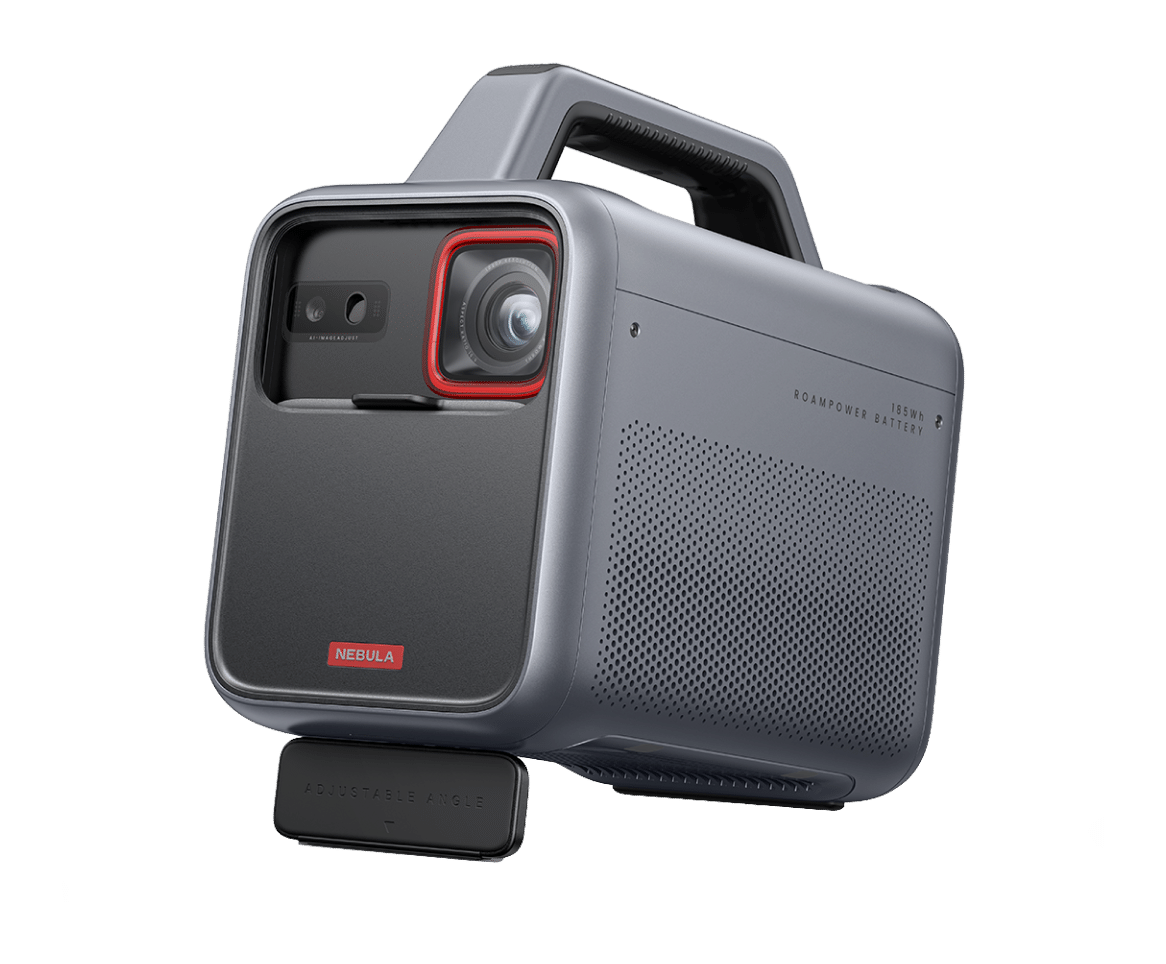
This is the only projector here that can light a 120-inch screen properly, and it is the one to buy if the backyard is the point rather than an occasional novelty. ProjectorCentral measured 959 lumens against a 1,000-lumen ANSI claim, calling it “only about 4% off spec,” and ProjectorReviews independently landed at 956. The brightest mode has a green cast, so the number to plan around is the 686 lumens of Movie mode or 785 in Standard.
It carries a 185 Wh battery, good for two hours in Standard power mode or five in Eco, and it will charge your phone. It is rated IPX3 for water resistance with 0.5 metre drop resistance and a camping light built in, which is a genuinely outdoor design rather than an indoor projector with a handle. The 40-watt three-way speaker system means you will not need a separate speaker, which is rare in this category.
The catch is price and bulk. ProjectorCentral listed it at $1,099 at review time in late 2023. It is also worth noting the projector is rated for images up to 200 inches while the same review advises “keeping it under 100 inches will insure a brighter picture, especially if there’s ambient light or you are running under battery power.” That advice matches the figures above exactly.
Buy it if: you want a 100-inch-plus outdoor screen and will accept the size and cost. Skip it if: you mostly want something to carry to a friend’s house.
2. XGIMI MoGo 4 - Best All-Rounder
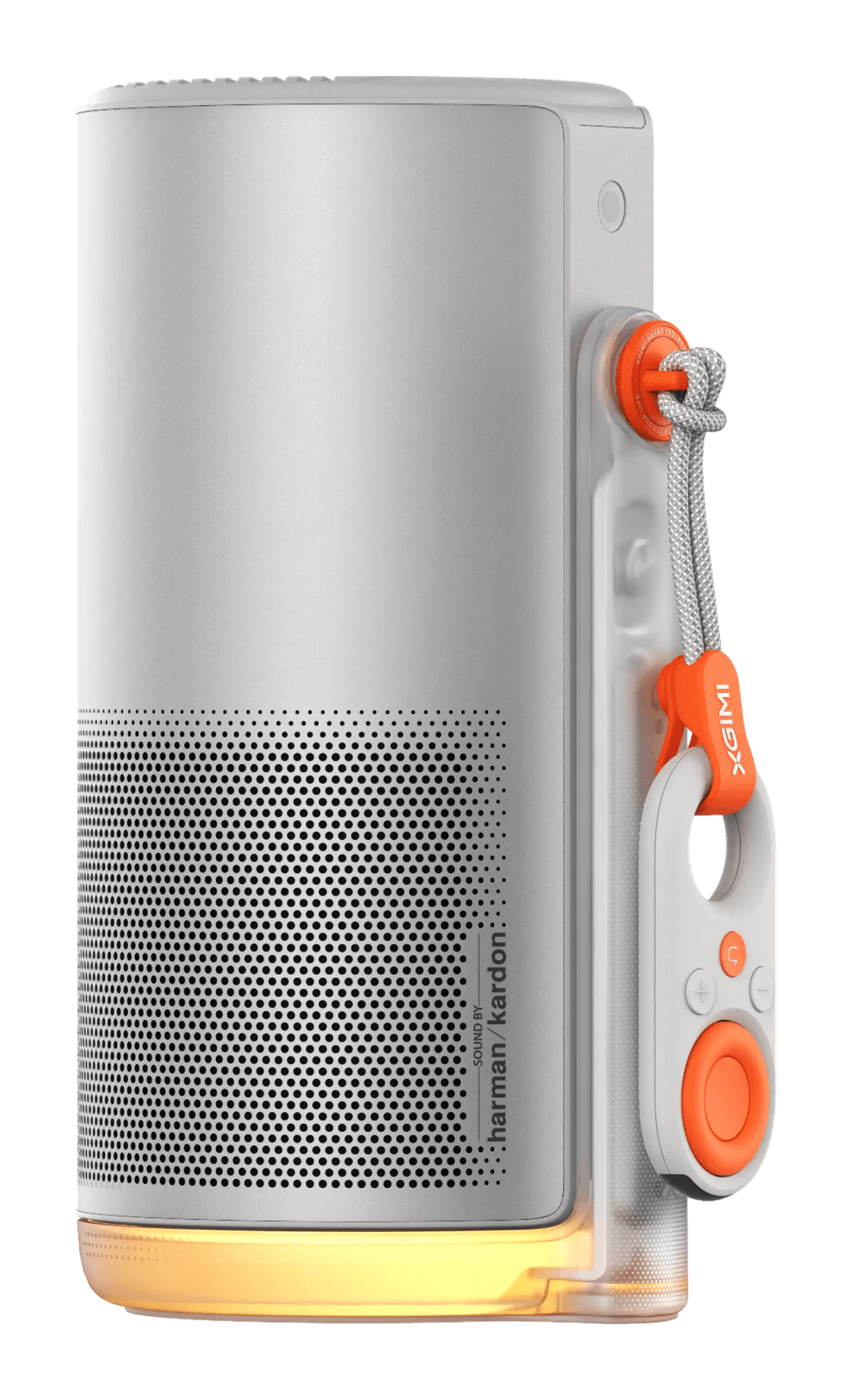
The MoGo 4 is roughly the size of a large thermos at 2.9 pounds, runs Google TV with a licensed Netflix app, and has a 360-degree gimbal stand that makes aiming it trivial. XGIMI rates it at 450 ISO 21118 lumens, and ProjectorCentral measured 404 using the nine-point ISO method.
That headline figure comes with a caveat the review is direct about: the brightest Performance power mode leaves “all modes looking quite green,” so the mode you will use is Standard, which measured 258 lumens, or Eco at 151. The advertised 2.5-hour battery life is the Eco figure. In Standard power mode the reviewer got through a 90-minute film. XGIMI advertises screen sizes up to 200 inches but recommends 60 to 120 inches, and the brightness maths says the lower half of that range is the one.
ProjectorCentral listed it at $499 at review time in 2025, with an optional PowerBase Stand at $129 that roughly doubles runtime. Dual 6-watt Harman Kardon speakers are better than the category norm.
Buy it if: you want one projector for a dark bedroom wall and occasional trips outside. Skip it if: your viewing space has any ambient light.
3. Anker Nebula Mars 3 Air - Best Colour Accuracy
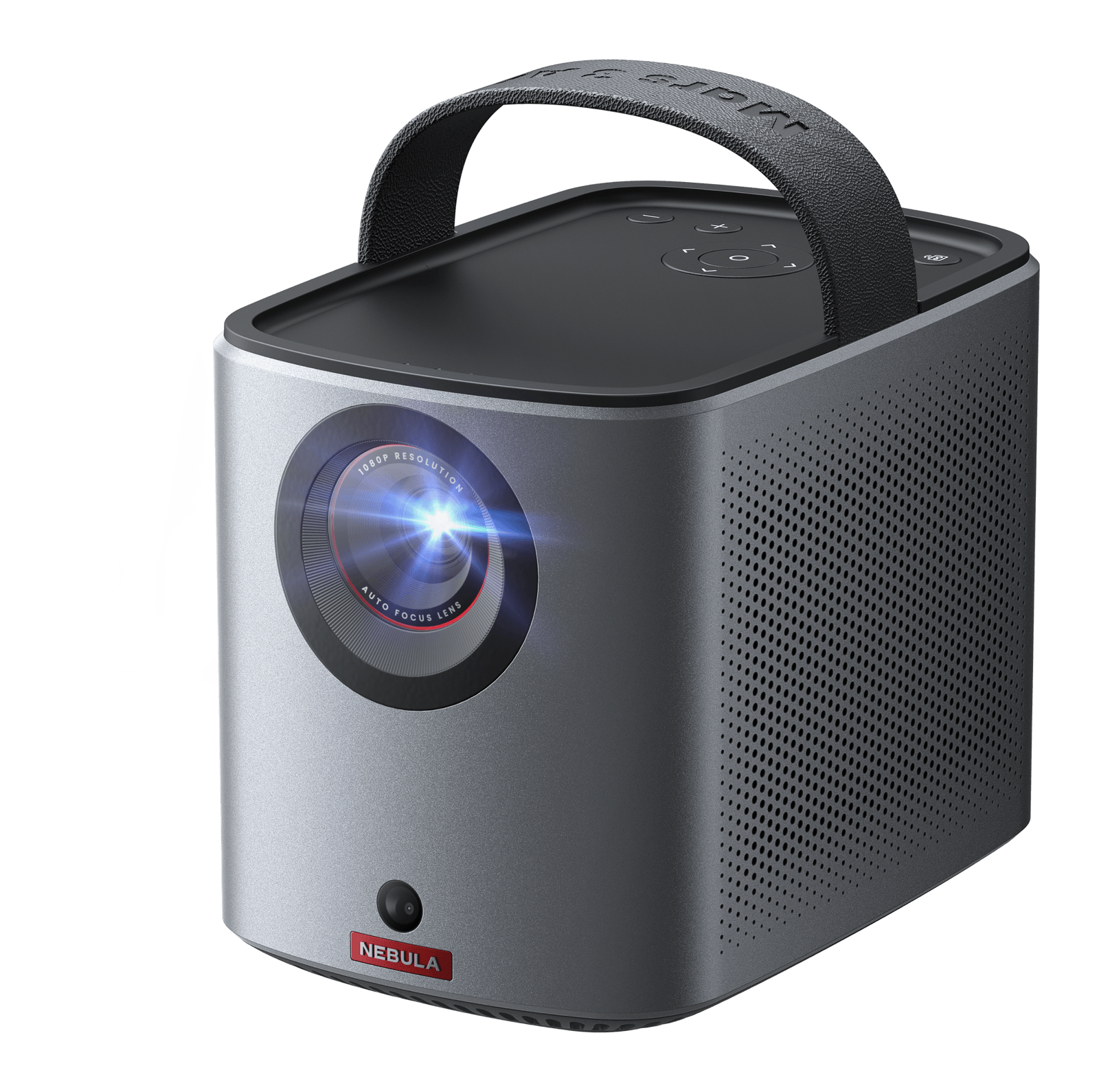
Most projectors pay a heavy brightness tax for accurate colour. The Mars 3 Air barely does, and that is the reason to pick it. Peak measured output was 399 ANSI lumens against a 400-lumen claim, and switching to the neutral Standard mode cost only 4 percent, landing at 383. For comparison, the same reviewer notes that others in its class “lose about one-third of their brightness” making that switch. Movie mode still delivered 372.
It runs Google TV with a licensed Netflix app, weighs under four pounds, and has a 52 Wh battery and a four-LED charge gauge on top. ProjectorCentral listed it at $600 at review time in early 2024.
Buy it with the battery caveat firmly in mind. Tested runtime was three hours and ten minutes, better than the 2.5-hour rating, but that was in Eco at 145 lumens. Plugged in it is a 90-inch projector. On its own battery it is a 55-inch one.
Buy it if: colour accuracy matters and you can reach an outlet. Skip it if: you need untethered brightness, which nothing in this class delivers.
4. Anker Nebula Capsule 3 Laser - Most Portable
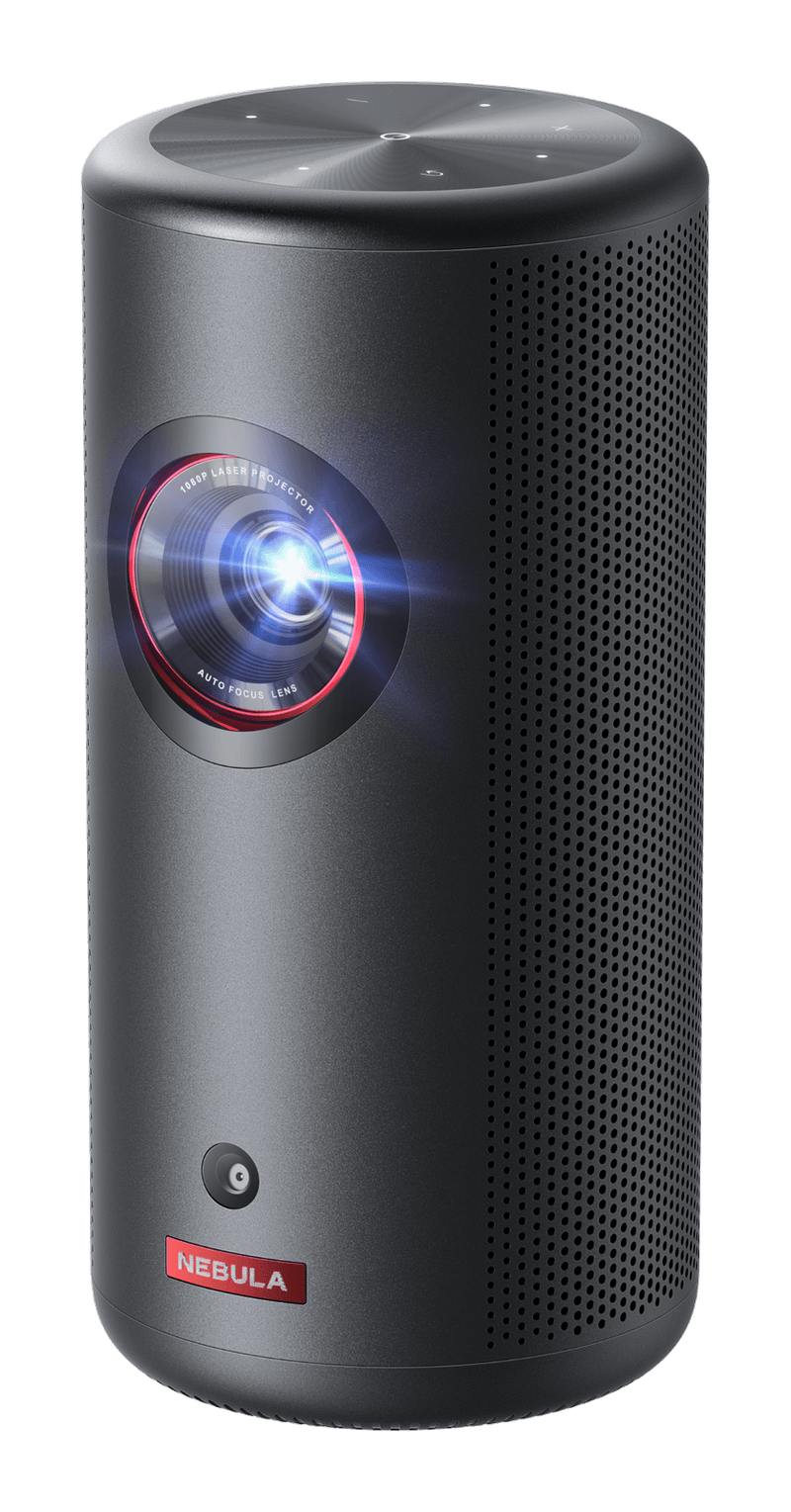
At 2.1 pounds and roughly the size of a drinks can, this is the one that genuinely disappears into a bag. Its laser light source is rated at 300 ANSI lumens and beat that in testing: ProjectorCentral recorded 341, “exceeding the projector’s 300 ANSI lumen spec by about 13%.”
Then you unplug it, and it dims itself without asking. ProjectorCentral found that “pulling the AC power automatically puts the projector into Battery brightness mode,” costing about 36 percent in every picture mode and taking the brightest one from 341 lumens to 217. That is still a roughly 68-inch image at cinema brightness, in a properly dark room, and the same review clocked 2 hours 4 minutes of playback in Standard mode.
Treat that battery figure as the softest number in this guide, though. ProjectorReviews tested the same projector by a different method and put the unplugged output far lower, at 126 lumens, workable only “as long as there’s not a hint of ambient light in the area.” Two labs disagreeing by that margin on one figure is worth knowing before you buy the smallest projector here to use away from an outlet.
Bought with clear eyes, it is still the right answer for a specific person: someone who wants a projector in a backpack for hotel rooms, tents and dorm walls, and who is projecting something small in the dark. Bought as a backyard cinema, it will disappoint.
Buy it if: size beats every other consideration. Skip it if: you are aiming at anything bigger than about 50 inches on battery.
Comparison table
| Model | Rated | Independently measured (peak) | Usable mode | On battery | Battery life | Weight |
|---|---|---|---|---|---|---|
| Nebula Mars 3 | 1,000 ANSI | 959 | 686 (Movie) | 300 (Eco, Anker spec) | 2 h Standard, 5 h Eco | Heaviest here |
| Nebula Mars 3 Air | 400 ANSI | 399 | 383 (Standard) | 145 (Eco) | 3 h 10 m tested in Eco | Under 4 lb |
| XGIMI MoGo 4 | 450 ISO | 404 | 258 (Standard) | 151 (Eco) | 90 min Standard, 2.5 h Eco | 2.9 lb |
| Nebula Capsule 3 Laser | 300 ANSI | 341 | 341 (Custom) | 217 (battery mode) | 2 h 4 m tested | 2.1 lb |
Every brightness figure above is ProjectorCentral’s, measured with the nine-point average defined in the ISO standard. Two entries are not measurements and are marked accordingly: the Mars 3’s 300-lumen Eco ceiling is Anker’s own specification as quoted by that review, and the battery-life column is runtime, not brightness. Where ProjectorReviews measured the same projectors its figures diverge in both directions, because it describes taking “3-4 readings about 15-20% out from the center of the lens” rather than a nine-point average. The two labs agree almost exactly on the Mars 3 at peak, 959 against 956, but not in the modes you would watch in: ProjectorReviews put its Movie mode at 540 lumens where ProjectorCentral measured 686. Treat every figure here as one lab’s reading, not a physical constant.
How far back does a portable projector need to sit?
All three of the smaller projectors here use a 1.2:1 throw ratio, which is the ratio of projector-to-screen distance divided by image width. Divide the distance by 1.2 to get image width, then multiply width by 1.147 for the 16:9 diagonal.
| Distance from screen | Image width | Diagonal |
|---|---|---|
| 8 ft | 80 in | 92 in |
| 10 ft | 100 in | 115 in |
| 12 ft | 120 in | 138 in |
Read this table against the brightness table and the practical advice writes itself. At 10 feet a MoGo 4 will happily throw a 115-inch image, and on battery it has enough light for roughly 56 inches of it. Moving the projector closer is free. Buying more lumens is not.
What about the very cheap ones?
The cheapest tier is where the fictional numbers live. TechRadar’s survey of the category found budget listings advertising 9,500 lumens, and 1080p units tagged “20000L,” a figure higher than that of large-venue projectors costing tens of thousands.
Applying BenQ’s published conversion, a genuine 9,500 light-source lumens would be somewhere in the region of 570 ANSI lumens, and that is the generous reading which assumes the underlying figure was measured at all. The corrected court and settlement figures suggest the pessimistic reading is closer: Vizony’s RD830 was advertised at 15,000 lumens “and/or 800 Lumens” and settled at 370.
This is the same pattern that runs through the site’s electric scooter buying guide, where advertised range and tested range diverge sharply: in a category where one headline number drives the purchase, that number is the one to distrust.
There is a simple screening test that costs nothing. Look at the listing for the letters ANSI or ISO immediately beside the brightness number. If they are absent, the number is not comparable to anything and the move is to assume the projector is dimmer than the cheapest name-brand model you can find. If you are shopping at the bottom of this market, a refurbished or last-generation unit from a brand that publishes ANSI figures will beat a new no-name projector with a five-figure lumen claim, every time.
Frequently asked questions
How many lumens do you need for an outdoor movie projector?
For a 100-inch screen at cinema brightness in full darkness, about 475 lumens need to reach the screen, which means shopping for a projector rated between roughly 700 and 950 ANSI or ISO lumens. Outdoors after dark with no streetlights you can work at the lower end. Any ambient light at all, including a porch light or a bright moon, pushes the requirement up.
Can you watch a full movie on a portable projector’s battery?
Sometimes, and rarely at full brightness. The Nebula Mars 3 manages two hours in its brighter Standard power mode. The XGIMI MoGo 4 got through a 90-minute film in Standard. The longer advertised runtimes are Eco-mode figures at roughly half the brightness or less. For a reliable two-hour film at a watchable size, plan on mains power or a portable power station.
Is a laser projector brighter than an LED one?
Not automatically. The laser-based Capsule 3 Laser measured 341 lumens while the LED-based Mars 3 measured 959. Light source technology affects colour range, lifespan and switch-on time more than it dictates raw output. Compare the ANSI or ISO figure, not the light engine.
Can you game on a portable projector?
Yes, and all four picks here run Android TV or Google TV with HDMI input for a console. The XGIMI MoGo 4 measured 22.1 ms of input lag in Game mode, which is fine for everything short of competitive shooters. The brightness math applies unchanged, so pair the expectations here with the site’s console buying guide if the projector is destined for a games room rather than a garden.
Do you need a projector screen?
A white wall works and costs nothing. A 1.0-gain screen is the baseline the calculations above assume, and a higher-gain screen multiplies the light coming back at you, so a 1.3-gain surface returns about 30 percent more brightness to a centre seat. For a battery-powered projector fighting for every lumen, that is a cheaper upgrade than a brighter projector.
What does ISO 21118 mean on a spec sheet?
It is the international standard defining how a projector’s white brightness is measured, and ANSI has adopted it in the United States. In practice ANSI lumens and ISO 21118 lumens are treated as near-equivalent and directly comparable. A brand that cites either one is submitting to a defined test. A brand that cites neither is not.
Which projector to buy
Before you compare a single feature, find the brightness number on the listing and look at the word next to it. If it says ANSI or ISO, the figure is a measurement and you can run the numbers in this guide against it. If it says nothing, or says lux, or says LED lumens, you are reading advertising copy, and courts have now repeatedly established that the gap between that copy and reality can be a factor of forty. Then find the runtime number and assume it belongs to a mode roughly half as bright as the one you want to watch in. Do those two things and this entire category becomes straightforward to shop.
Sources (24)
- news.epson.com Epson: Vizony Projector Brightness Lawsuit Settlement
- news.epson.com Epson: Global Aiptek HP-Branded Projector Brightness Judgment
- news.epson.com Epson: Nomvdic Projector Brightness Lawsuit Settlement
- news.epson.com Epson: Formovie Projector Brightness Lawsuit Settlement
- news.epson.com Epson: XGIMI Projector Brightness Settlement
- news.epson.com Epson: Anker Projector Brightness Settlement
- projectorcentral.com How to Buy a Home Theater Projector
- projectorcentral.com Spotlight on Lumens
- projectorcentral.com Anker Nebula Mars 3 Review
- projectorcentral.com Anker Nebula Mars 3 Air Review
- projectorcentral.com XGIMI MoGo 4 Review
- projectorcentral.com Anker Nebula Capsule 3 Laser Review
- projectorcentral.com Epson EpiqVision Mini EF22 Review
- projectorcentral.com Anker Nebula P1i Specs
- engadget.com Soundcore Nebula P1i Review
- projectorreviews.com Nebula Capsule 3 Laser Performance
- projectorreviews.com Nebula Capsule 3 Series Review
- projectorreviews.com Nebula Mars 3 Review
- projectorreviews.com BenQ GP100A Review
- benq.com ANSI Lumens vs Lumens Explained
- benq.com BenQ GV50 Specifications
- techradar.com Epson Can't Stop Suing Other Projector Manufacturers
- soundcore.com Nebula Mars 3 Air Official Specs
- soundcore.com Nebula Capsule 3 Laser Official Specs



🦋 Discussion on Bluesky
Discuss on Bluesky