


Buying a camera drone in 2026 means answering a question no other gadget category forces on you: not “which one is best,” but “which one can you still get, and for how long?” Since December 23, 2025, DJI and other Chinese drone makers sit on the Federal Communications Commission (FCC) Covered List, which means no new models can be authorized for sale in the United States. Existing, already-approved drones remain fully legal to buy, sell, and fly. Reuters summarized the practical effect in July: DJI, Autel and other Chinese drone companies cannot obtain approval to sell new drone models or key components in the US, though existing products can still be sold.
That one sentence reshapes the entire buying decision. The drones below are all excellent and all purchasable as of mid-August 2026. Several of them will not be replaced by a successor on American shelves, possibly for years. This guide covers the six worth buying, the federal rules that kick in at exactly 250 grams, and when a used drone is the smarter play.
Quick Picks
- Best Overall: DJI Mini 4 Pro, the most capable drone that skips FAA registration entirely
- Best Budget: DJI Mini 4K, real 4K and a real gimbal at an entry price
- Best Non-DJI Value: Potensic Atom 2, the closest thing to a Mini that avoids the DJI supply squeeze
- Best All-Rounder: DJI Air 3S, a 1-inch sensor and 45 minutes of flight for serious landscape work
- Best for Selfies and Sports: HOVERAir X1 PRO, a self-flying camera that needs no controller and no skill
- Best Professional: DJI Mavic 4 Pro, a triple-camera Hasselblad flagship whose FCC approval beat the cutoff, still in US retail stock
How the ban actually works (and what it does to prices)
The mechanism matters because it tells you what happens next. Congress gave national security agencies until December 23, 2025 to complete a formal review of DJI under the National Defense Authorization Act (NDAA). No agency completed it, so DJI landed on the FCC Covered List by default, alongside other foreign drone makers. Devices already holding FCC equipment authorization keep it: they can be imported, sold, and flown. New models cannot get authorization at all, which is why DJI now launches products globally that Americans cannot buy. Bloomberg reported in late July that DJI is pressing ahead with global launches while its products remain locked out of the US market following the federal ban.
Two later developments squeeze supply further. In July 2026, Washington tentatively decided to ban imports of some additional drone classes outright. Then in early August, Beijing retaliated: China’s Commerce Ministry tightened controls on drone exports to the US, with controlled drones and key components undergoing stricter case-by-case review. And on August 13, 2026, the White House announced new tariffs on drone imports: 100 percent on large or security-sensitive models, and 25 percent on smaller drones, the class every pick in this guide belongs to.
What this means for a buyer, as of mid-August 2026, is simple and a little uncomfortable. Inventory on current models is finite. Street prices on the most popular models drift above their original list prices as stock thins. Batteries, spare propellers, and repairs will get harder to source over time. None of this makes buying a mistake; a drone bought in August 2026 stays legal to fly indefinitely. It does mean the classic advice of “wait for the next generation” is dead for now. There is no next generation coming to US shelves until the policy changes.
What to look for in a photography drone
- The 250-gram line. This is the single most consequential spec. Drones under 250 g flown recreationally are exempt from Federal Aviation Administration (FAA) registration; everything heavier must be registered. The full rules get their own section below.
- Sensor size over megapixels. A 1-inch sensor gathers roughly four times the light of the 1/2.3-inch chip in a budget drone, which is what separates crisp dusk shots from noisy ones. Megapixel counts matter far less than the physical sensor behind them.
- A mechanical gimbal. Three-axis mechanical stabilization is the floor for usable video. Electronic-only stabilization crops your frame and falls apart in wind.
- Obstacle sensing. Omnidirectional sensing is what lets a beginner survive their first tree. Budget models often carry no obstacle sensors at all, which is a fair trade only if you know you’re making it.
- Availability reality. In 2026, “can I actually buy it at list price” is a spec. Every pick below was verified in stock at US retailers in August 2026.
The Top Picks
1. DJI Mini 4 Pro - Best Overall
Rating: 9/10
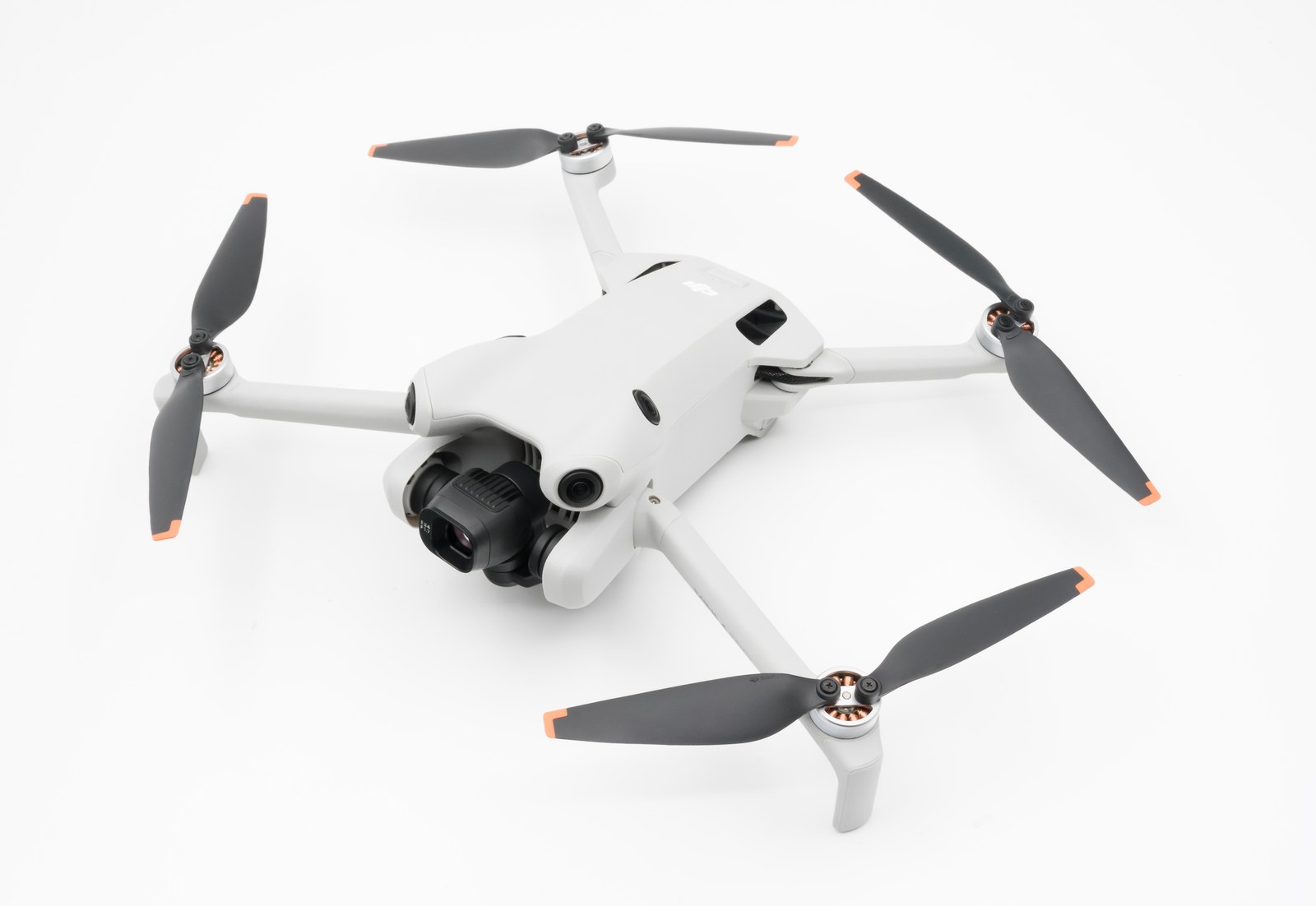
Key Features:
- Takeoff weight under 249 g with the standard battery, so recreational flyers skip FAA registration
- 1/1.3-inch CMOS (Complementary Metal-Oxide-Semiconductor) sensor with 48 MP effective pixels
- Up to 34 minutes of flight time on the standard battery
- Omnidirectional binocular vision obstacle sensing, supplemented by a 3D infrared sensor
Pros:
- The only sub-250 g drone in this list with true omnidirectional obstacle sensing, which is exactly the safety net a first-time pilot needs
- Sensor and image quality that embarrass drones twice its size
- Vertical shooting for social clips without cropping
Cons:
- The Intelligent Flight Battery Plus extends flight time but pushes the aircraft over 249 g, erasing the registration exemption
- At list it costs as much as some heavier drones with bigger sensors
Who It’s For: Anyone who wants the best photography-per-gram ratio in the sky, from beginners to traveling pros who need a second drone that stays under the registration line.
Why It Made the List: DJI launched the Mini 4 Pro in September 2023 at $759 for the standard remote-controller kit, and nearly three years later nothing under 250 g has dethroned it. Its successor, the Mini 5 Pro, exists globally, but already-authorized DJI stock in the US only lasts while inventory does, with scarce supply and prices drifting above old list. That leaves the Mini 4 Pro as the sub-250 g pick you can actually walk out of a store with.
2. DJI Mini 4K - Best Budget
Rating: 8/10
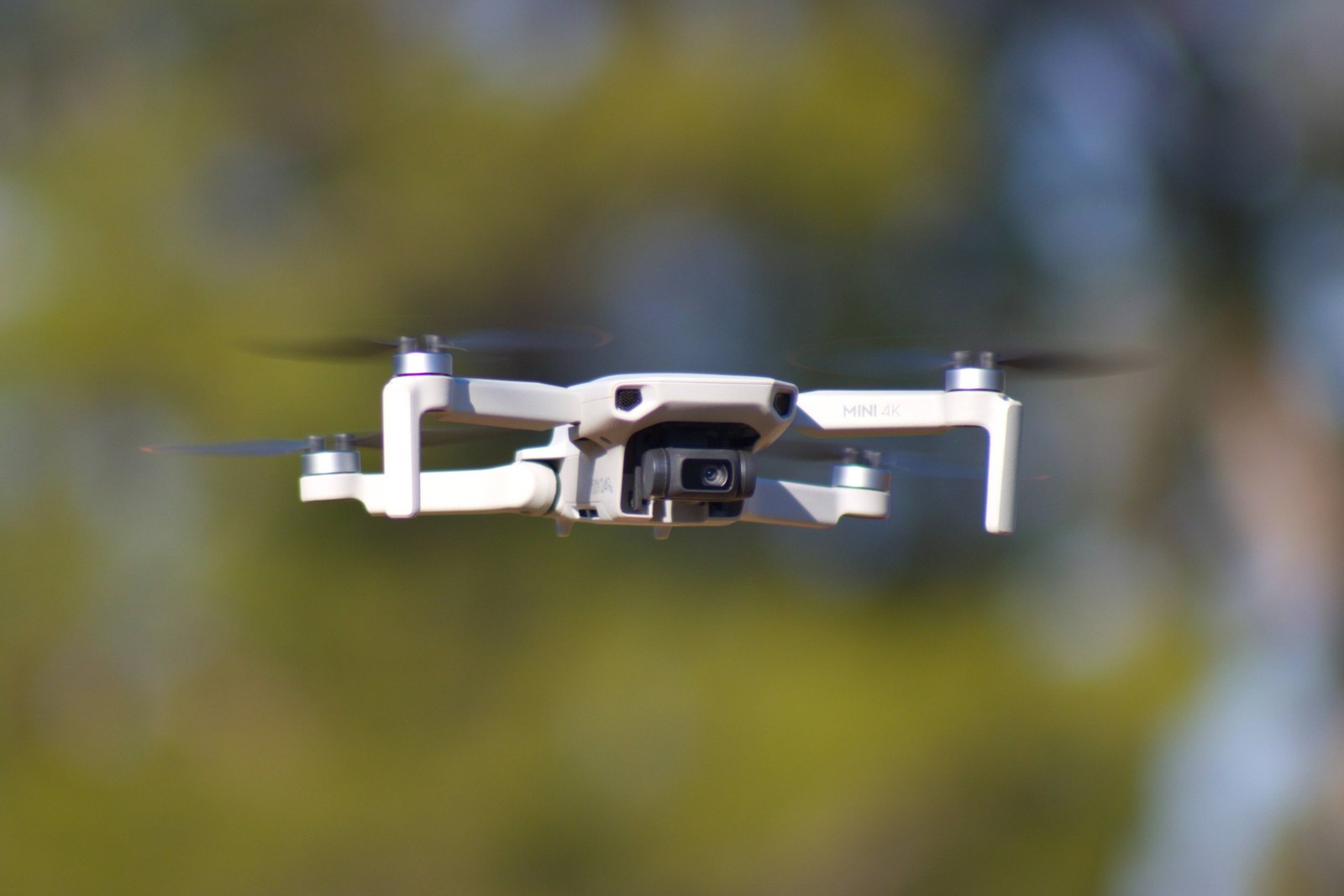
Key Features:
- Under 249 g takeoff weight, so no registration for recreational flights
- 4K/30fps video on a 1/2.3-inch sensor with a mechanical 3-axis gimbal
- Up to 31 minutes of flight time
- GPS auto-return to the takeoff point
Pros:
- A real mechanical gimbal at a price where competitors ship shaky electronic stabilization
- Same beginner-friendly flight software as DJI’s expensive models
- Level 5 wind resistance is unusual at this weight and price
Cons:
- No obstacle sensing in any direction, so tree branches are entirely your problem
- The smaller sensor gives up low-light quality; this is a daylight drone
Who It’s For: First-time pilots and gift buyers who want real aerial photography, not a toy that happens to have a camera taped to it.
Why It Made the List: DJI listed the Mini 4K at $299 at its April 2024 launch, and it routinely undercuts every drone above it in this list by hundreds of dollars. The catch is the missing obstacle sensing. If the pilot is a teenager or a known tree-magnet, spend up for the Mini 4 Pro or accept some propeller shopping.
3. Potensic Atom 2 - Best Non-DJI Value
Rating: 8/10
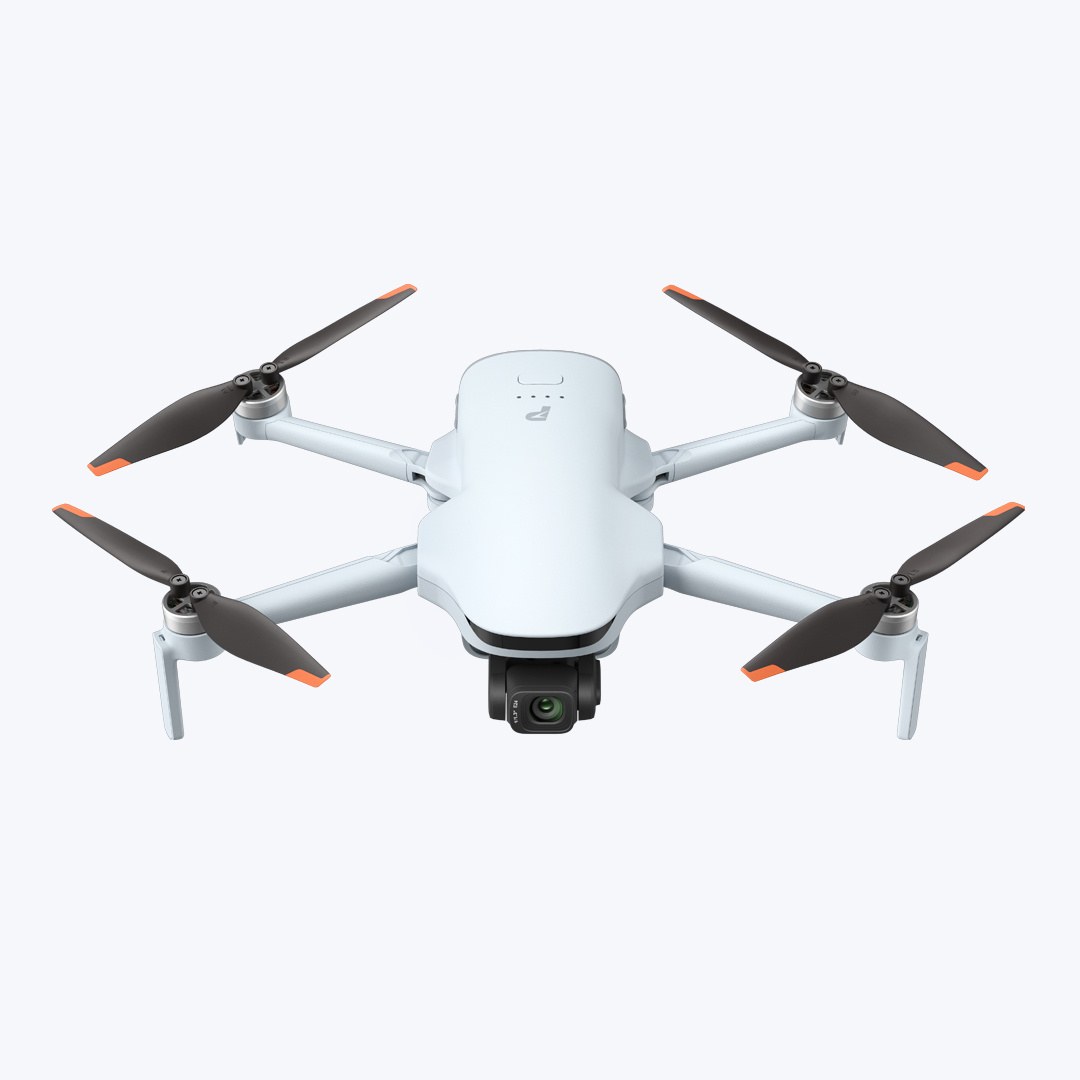
Key Features:
- Takeoff weight under 249 g including battery, propellers and microSD card
- 1/2-inch CMOS sensor, 4K HDR (High Dynamic Range) video and 48 MP photos on a mechanical 3-axis gimbal
- Up to 32 minutes of flight time per battery
- AI subject tracking and vertical shooting modes
Pros:
- The closest experience to a DJI Mini from a brand outside the heaviest regulatory crossfire
- Image quality that reviewers consistently rate just one notch below the Mini 4 Pro at roughly half the money
- Aggressive bundle pricing on the Fly More Combo with extra batteries
Cons:
- No obstacle avoidance sensors
- Potensic is still a Chinese manufacturer, so the new-model freeze applies to its future releases too; only its currently authorized models stay available
Who It’s For: Budget buyers who want sub-250 g freedom and modern tracking features, and anyone hedging against single-brand dependence on DJI.
Why It Made the List: Potensic launched the Atom 2 in February 2025 as a direct Mini competitor, and it is the rare challenger that reviewers treat as a genuine alternative rather than a compromise. One honesty note: the ban freezes new models from essentially every Chinese drone maker, Potensic included. Diversifying to a second brand spreads your accessory-supply risk; it does not exempt you from the policy.
4. DJI Air 3S - Best All-Rounder
Rating: 9/10
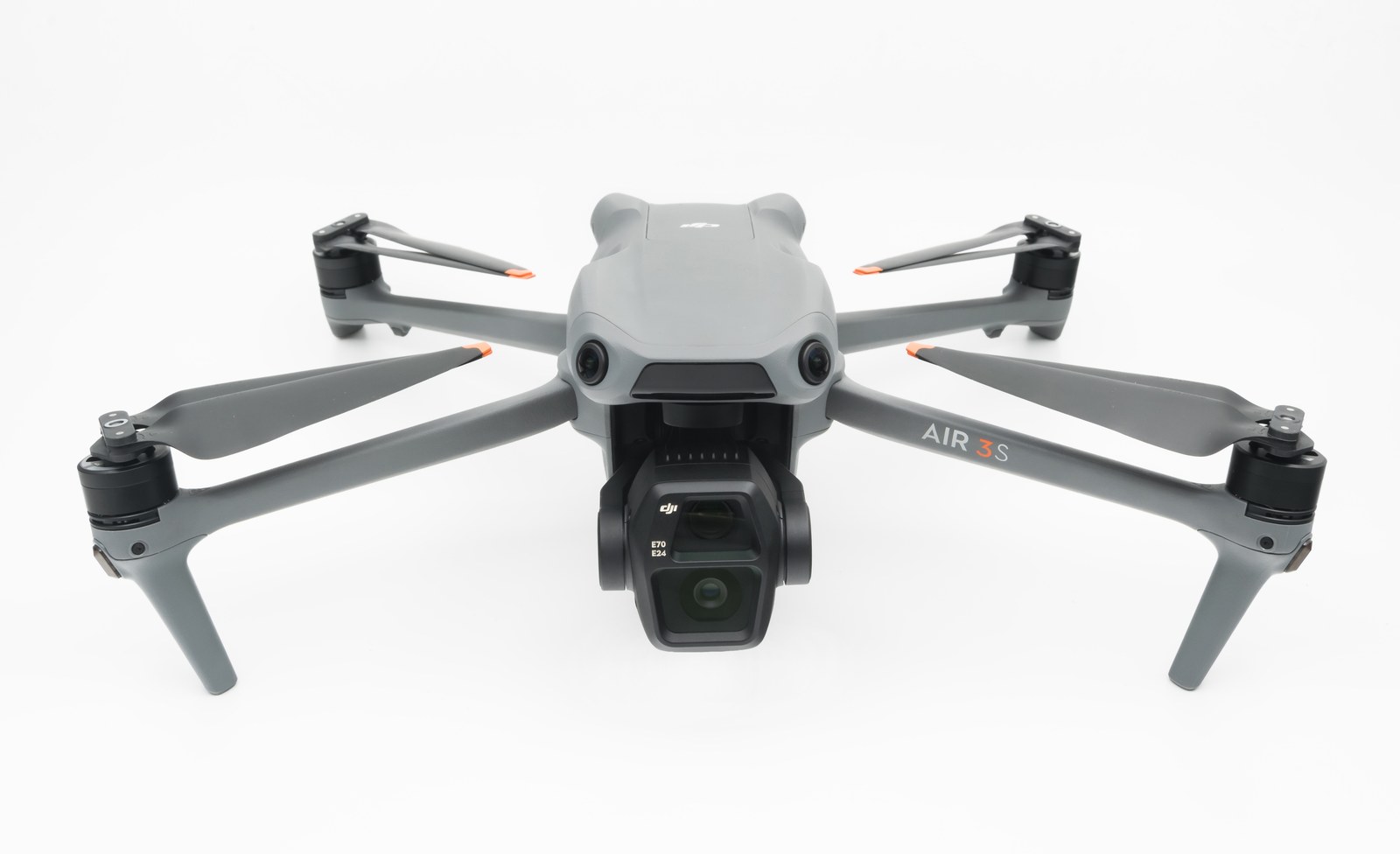
Key Features:
- 1-inch CMOS main camera with 50 MP effective pixels, paired with a second medium-telephoto camera
- Up to 45 minutes of flight time
- 724 g takeoff weight, which means FAA registration is mandatory
- Omnidirectional obstacle sensing
Pros:
- The 1-inch sensor is the real jump in image quality: cleaner dusk shots, better dynamic range, usable higher ISO
- The telephoto camera adds genuine compositional variety, not just digital crop
- Long flight time means you stop planning shots around the battery timer
Cons:
- Over 250 g, so registration, Remote ID, and TRUST rules all apply
- Big enough that it no longer disappears into a jacket pocket
Who It’s For: Enthusiast landscape and travel photographers who have outgrown a Mini and want the light-gathering of a 1-inch sensor without flagship money.
Why It Made the List: DJI launched the Air 3S in October 2024 at $1,099 for the base kit, and it hits the enthusiast sweet spot harder than anything else still on shelves: flagship-grade sensor, mid-range price, and the last Air-series body Americans may see for a while under the authorization freeze.
5. HOVERAir X1 PRO - Best for Selfies and Action
Rating: 8/10
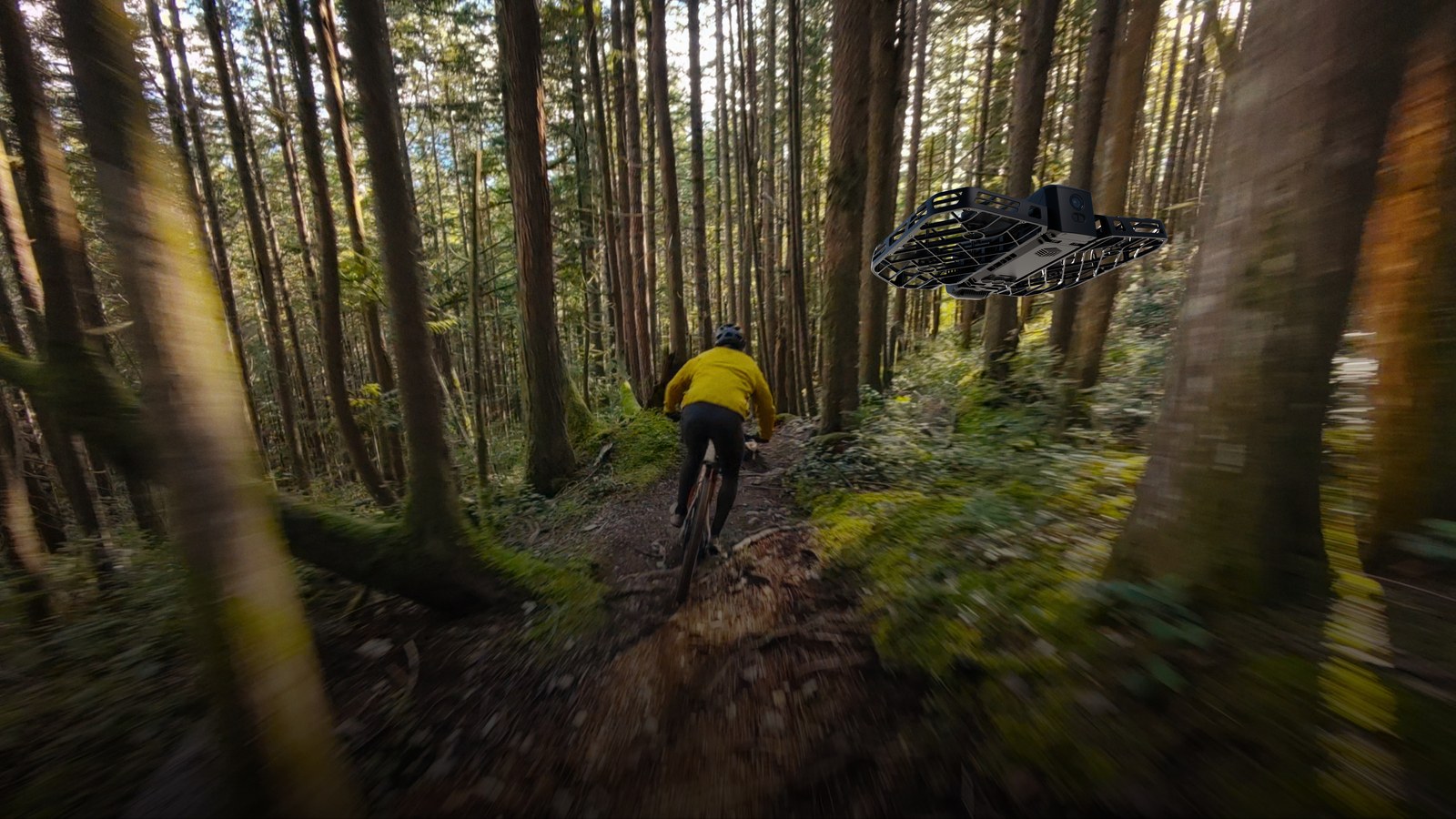
Key Features:
- 192 g pocket-size flying camera with fully enclosed propeller guards
- 4K/60fps video with follow speeds up to 42 km/h (26 mph)
- Launches from your palm and tracks you with no controller and no piloting skill
- 15+ fully automatic flight modes for orbits, reveals, and follow shots
Pros:
- The zero-skill option: it flies itself, which no DJI in this list truly does
- Enclosed props make it the safest drone here around kids, pets, and ski slopes
- Under 250 g, so no recreational registration
Cons:
- Roughly 16 minutes of flight per battery, the shortest in this list
- It is a tracking camera first; manual cinematography control is limited
Who It’s For: Runners, cyclists, skiers, and families who want aerial footage of themselves without learning to fly anything.
Why It Made the List: Zero Zero Robotics launched the X1 PRO in 2024 at a $499 list price, carving out the one niche DJI’s ban-era lineup serves least: a camera that films you hands-free. It is the only pick here you could hand to someone who has never touched a drone and get usable footage in five minutes.
6. DJI Mavic 4 Pro - Best Professional
Rating: 9/10
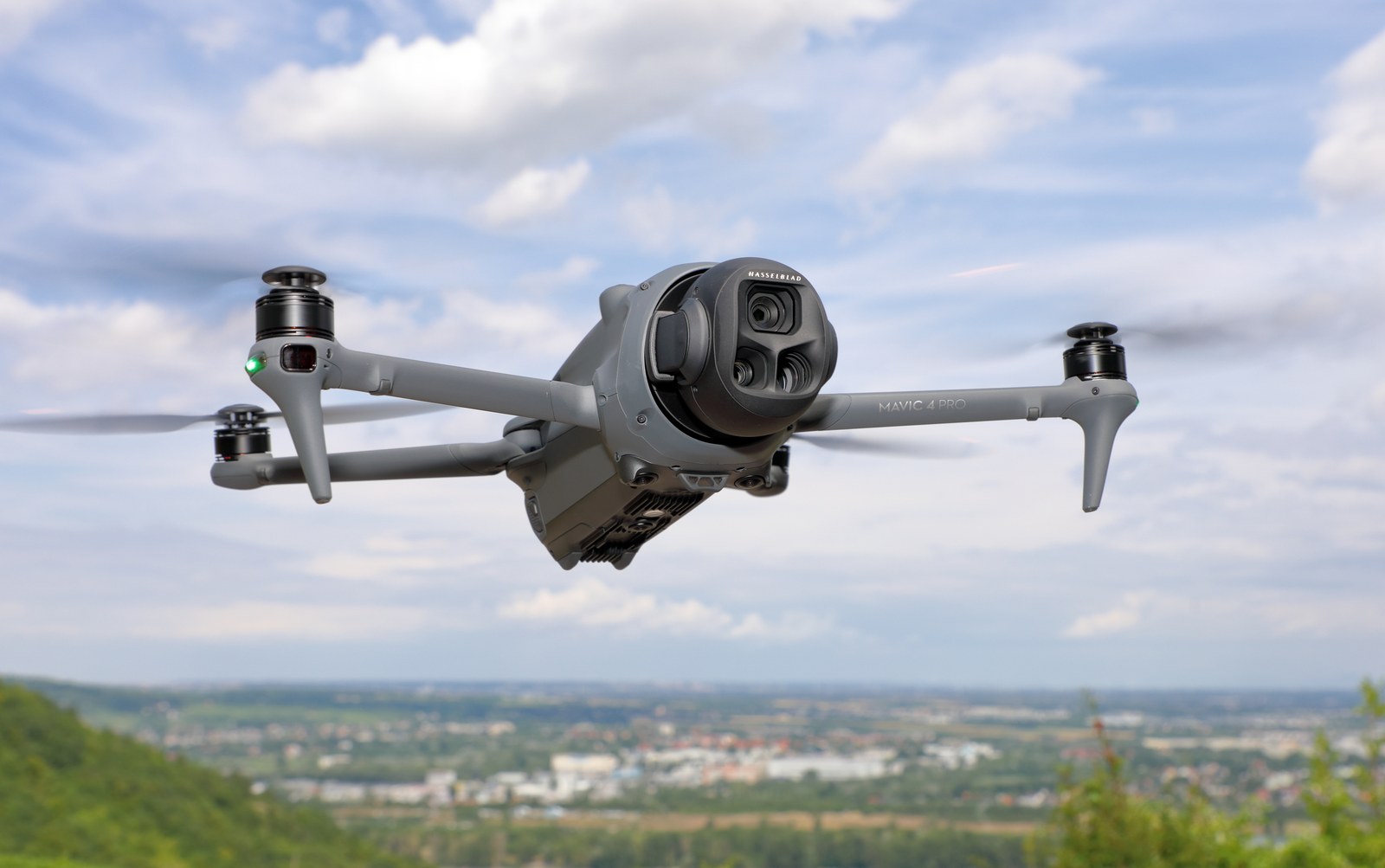
Key Features:
- Triple-camera system: 100 MP Four Thirds Hasselblad wide with 6K/60fps HDR, plus 48 MP medium tele and 50 MP tele cameras
- 51-minute maximum flight time, the longest of any drone in this list
- 360-degree Infinity Gimbal for rotated and portrait compositions
- Well over the 250 g line: registration and Remote ID are mandatory
Pros:
- The best camera ever strapped to a folding drone; the Four Thirds sensor is a different league from everything above
- Three real focal lengths turn one battery into a full location scout
- Flight time long enough to shoot golden hour twice
Cons:
- Long-term parts and battery supply depend on how the import restrictions and China’s export controls evolve
- B&H listed the base kit at $2,199 in mid-August 2026, and supply pressure pushes street prices upward over time
Who It’s For: Working photographers and videographers billing clients for aerial work, and serious enthusiasts who want the ceiling, not the sweet spot.
Why It Made the List: The Mavic 4 Pro squeaked through a closing door: its FCC equipment authorization was granted on December 4, 2024, roughly a year before the Covered List cutoff, so it remains fully legal to import and sell while any successor is frozen out. That makes it the best camera drone sold in America and, quite possibly, the last flagship of its class to reach US shelves for a while. Buy from a major retailer with a real return policy.
Comparison Table
| Spec | Mini 4K | Atom 2 | Mini 4 Pro | X1 PRO | Air 3S | Mavic 4 Pro |
|---|---|---|---|---|---|---|
| Weight class | Under 249 g | Under 249 g | Under 249 g | 192 g | 724 g | Over 250 g |
| FAA registration (hobby) | Not required | Not required | Not required | Not required | Required | Required |
| Main sensor | 1/2.3” | 1/2” | 1/1.3” | 1/2” class | 1-inch | Four Thirds |
| Max video | 4K/30 | 4K/30 HDR | 4K/60 HDR | 4K/60 | 4K/60 HDR | 6K/60 HDR |
| Flight time (max) | 31 min | 32 min | 34 min | ~16 min | 45 min | 51 min |
| Obstacle sensing | None | None | Omnidirectional | Rear + enclosed props | Omnidirectional | Omnidirectional |
| Rating | 8/10 | 8/10 | 9/10 | 8/10 | 9/10 | 9/10 |
Prices move weekly in the ban era, usually upward. Use the View on Amazon links to check the current price.
The FAA rules, by weight and by use
The rules pivot on two questions: how heavy is the drone, and are you flying for fun or for money?
Under 250 grams, flying for fun. No registration required. You must still pass TRUST (The Recreational UAS Safety Test), a free online test, and carry proof of completion when flying; that requirement applies to every recreational pilot regardless of drone weight.
250 grams or more, flying for fun. Registration is mandatory: $5, done once at FAADroneZone, covering every drone you own for three years. Registered drones must also broadcast Remote ID, an electronic license plate; every drone in this list that needs it ships with it built in.
Any weight, flying for money. The moment a flight is commercial, even a $50 real-estate shot with a Mini 4K, you need a Part 107 Remote Pilot Certificate: an FAA knowledge exam, plus per-drone registration at $5 each. Weight exemptions do not apply to commercial work.
Flying near airports. Controlled airspace requires authorization, and there’s an app for it: LAANC (Low Altitude Authorization and Notification Capability) grants near-real-time FAA approval to fly in controlled airspace below 400 feet, through FAA-approved apps, several of them free, and it is available at 726 airports. Checking the map before takeoff is the single habit that keeps new pilots out of federal trouble.
Should you buy used instead?
The ban era created a genuinely rational used market. A used Mini 3 Pro or Air 2S from a reputable reseller typically costs hundreds less than the closest current model, and since no new models are arriving, used inventory is where the deals concentrate. Three rules keep it safe. First, buy from platforms with real return windows rather than local cash deals, because battery health is invisible in a parking lot. Second, check the battery cycle count in the DJI Fly app on day one; lithium flight batteries are consumables, and replacements for older models will only get scarcer under the component freeze. Third, confirm the specific model still receives firmware updates before paying, because a drone cut off from updates will eventually lose app compatibility.
The used route makes the most sense for the middle of the market. At the bottom, a new Mini 4K is cheap enough that used savings are trivial. At the top, warranty and battery risk on a $2,000-class aircraft outweigh the discount.
Frequently Asked Questions
Are DJI drones banned in the US?
No, and the distinction matters: restricted is not banned. Every DJI drone already authorized and in the country is legal to buy, own, and fly, with no change to existing owners. What the FCC Covered List blocks, since December 23, 2025, is authorization of new models for import and sale. Reuters put it plainly: existing products can still be sold.
Should you buy a drone for photography at all?
If your photography lives on the ground and you’re curious, start with the Mini 4K tier before committing serious money. If landscapes, travel, or real estate are your subjects, a camera drone is the largest creative unlock per dollar in this hobby: perspectives that used to require a helicopter now weigh 249 grams.
What is the best camera drone for beginners?
The Mini 4 Pro if the budget allows, because omnidirectional obstacle sensing forgives beginner mistakes that would total a Mini 4K or Atom 2. If the budget doesn’t allow it, the Mini 4K with a strict open-field policy for the first ten flights.
Do you need a license to fly a camera drone?
For recreation: no license, but TRUST completion is legally required for everyone, and drones of 250 g or more must be registered for $5. For any paid work: a Part 107 certificate, regardless of drone size.
Final Verdict
The Mini 4 Pro is the answer for the most people: flagship-grade imaging, real obstacle sensing, and a weight class that keeps the paperwork at zero. The Air 3S is the pick when image quality starts paying for itself, and the Mavic 4 Pro is the ceiling for professionals who accept its odd gray-zone warranty situation as the cost of the best flying camera in America.
The ban-era advice compresses to one line: the drone on shelves in August 2026 is not guaranteed to be on them next quarter, so if one of these fits your work or your hobby, hesitation is the only expensive choice. Register if you’re over 250 grams, take the free TRUST test either way, check LAANC before flying anywhere interesting, and go point a Hasselblad at a sunrise.
For more gear decisions in the same spirit, see the honest look at whether a smartwatch is worth it at all and the field-tested Apple Find My tracker roundup.
Top Recommendations:
- Most Users: DJI Mini 4 Pro (View on Amazon)
- Budget Buyers: DJI Mini 4K (View on Amazon)
- Professional Work: DJI Mavic 4 Pro (View on Amazon)
Sources (20)
- reuters.com US tentatively decides to ban imports of some military-grade drones
- bloomberg.com DJI debuts long-awaited Osmo 4P camera, but US creators can't buy it
- reuters.com China targets US firms, drone exports after FCC, Xinjiang actions
- uavcoach.com The DJI Ban, Everything You Need to Know
- faa.gov How to Register Your Drone
- faa.gov Recreational Flyers and Community-Based Organizations
- faa.gov UAS Data Exchange (LAANC)
- dji.com DJI Mini 4 Pro official specs
- dji.com DJI Air 3S official specs
- dl.djicdn.com DJI Mini 4K user manual (DJI official)
- potensic.com Potensic ATOM 2 official parameters
- hoverair.com HOVERAir X1 PRO and PROMAX official page
- bhphotovideo.com B&H Photo: DJI Mavic 4 Pro listings
- techradar.com HoverAir X1 Pro and X1 Pro Max launch
- uavcoach.com DJI Launches the Mini 4 Pro at the Same Price as the Mini 3 Pro
- tomsguide.com DJI Air 3S review
- dronedj.com The new DJI Mini 4K drone is only $299
- potensic.com Introducing the ATOM 2
- droneauthority.org Is DJI banned in the US? 2026 status
- reuters.com Trump administration to impose tariffs on drone imports



.jpg)
.jpg)
.jpg)

🦋 Discussion on Bluesky
Discuss on Bluesky