


Quick picks
- Best cheap starter: Anbernic RG35XXSP, a $58 Game Boy Advance SP lookalike that plays everything through PlayStation 1
- Best all-rounder: Retroid Pocket 6, the current sweet spot for GameCube, PS2 and Wii emulation in your hands
- Best for purists: Analogue 3D, which plays your real Nintendo 64 cartridges on a 4K television with no emulation at all
- Best zero-hassle, zero-gray-area option: Evercade EXP-R or a $70 Super Pocket, running fully licensed cartridges
- Best if you still own Atari carts: Atari 2600+, which takes the originals over HDMI (High-Definition Multimedia Interface)
The year retro got expensive
Retro gaming was supposed to be the cheap corner of the hobby. In 2026 the bill arrived. Valve raised the Steam Deck OLED from $549 to $789 for the 512 GB model on May 27, 2026, a jump of up to $300 across the line, while changing nothing inside the box. Evercade announced UK and EU price rises on its cartridges and Super Pocket handhelds in July 2026, citing component costs. Retroid’s flagship handheld now lists at $244, up from the $229 the company itself still shows crossed out on the product page.
Meanwhile the used market kept climbing on pure nostalgia. A loose Super Nintendo now trades around $125, and the upscaler it needs to look right on a modern TV runs another $140, so the sentimental path costs roughly $265 before you own a single game. That is more than four times the price of the $58 handheld that plays the same library better on a built-in screen, and that math is the single most useful fact in this guide.
That flip is the story of this guide. The cheap tier of retro hardware has never been this good, the premium tier has never been this expensive, and the gap between “sane purchase” and “sentimental purchase” has never been wider. Here is every way to play the classics in 2026, what each path honestly costs, and where the traps are.
Transparency note: this guide is built from manufacturer spec sheets and measured testing published by dedicated retro reviewers (Retro Game Corps, Time Extension, Retro Dodo, GamesRadar), not from hands-on lab testing. Every price is the maker’s list price as of August 2026 unless stated otherwise; street prices move constantly.
Retro gaming console reviews: every way to play, compared
| Device | Type | What it plays | List price (Aug 2026) | Best for |
|---|---|---|---|---|
| Anbernic RG35XXSP | Emulation handheld | Through PS1 comfortably | $57.99 (sale, reg. $64.99) | First device, GBA and SNES nostalgia |
| Retroid Pocket 6 | Android handheld | Through GameCube, PS2, Wii | $244 | One device for (almost) everything |
| Analogue Pocket | FPGA handheld | Real GB/GBC/GBA carts | $239.99 (often out of stock) | Cartridge owners |
| Analogue 3D | FPGA home console | Real N64 carts, 4K out | $269.99 | N64 loyalists with a 4K TV |
| Evercade EXP-R | Licensed handheld | Evercade carts only | $99.99 | Collectors who want it legal and physical |
| Super Pocket | Licensed mini handheld | Built-in + Evercade carts | $69.99 | Gifts, stocking stuffers |
| Atari 2600+ | Modern original console | Real 2600 + 7800 carts | $129.99 | Atari-era cartridge owners |
| Steam Deck OLED | Handheld PC | Everything, plus your PC library | $789 (512 GB) | People who also want modern games |
Prices are manufacturer list prices in August 2026; check the retailer links for the live street price.
The chipset decides what you can play
Emulation devices all look similar in marketing photos. The silicon inside sorts them into hard tiers, and no software update moves a device up a tier. This is the single most useful fact when reading a spec sheet:
| Chip class | Example device | Runs well | Falls apart at |
|---|---|---|---|
| Budget ARM (Allwinner H700) | Anbernic RG35XX family | NES, SNES, Genesis, GBA, PS1 | N64, Dreamcast, PSP |
| Flagship Android (Snapdragon 8 Gen 2) | Retroid Pocket 6 | GameCube, PS2, Wii | Nothing pre-2007, realistically |
| FPGA (field-programmable gate array) | Analogue Pocket, Analogue 3D | The exact consoles it recreates | Everything else, by design |
| PC-class (AMD APU) | Steam Deck OLED | All of the above plus PC games | Your battery life |
Time Extension’s review of the RG35XXSP found PS1 emulation runs great on the $58 tier, while N64, Dreamcast and PSP performance falls apart, which matches Retro Game Corps’ testing of the same Allwinner H700 chip family. An FPGA (field-programmable gate array) is different from emulation in kind, not degree: the chip is configured to behave like the original console’s circuitry, which is why Analogue markets it as lag-free and why an FPGA machine will never “add” PS2 support with an update.
Best cheap starter: Anbernic RG35XXSP
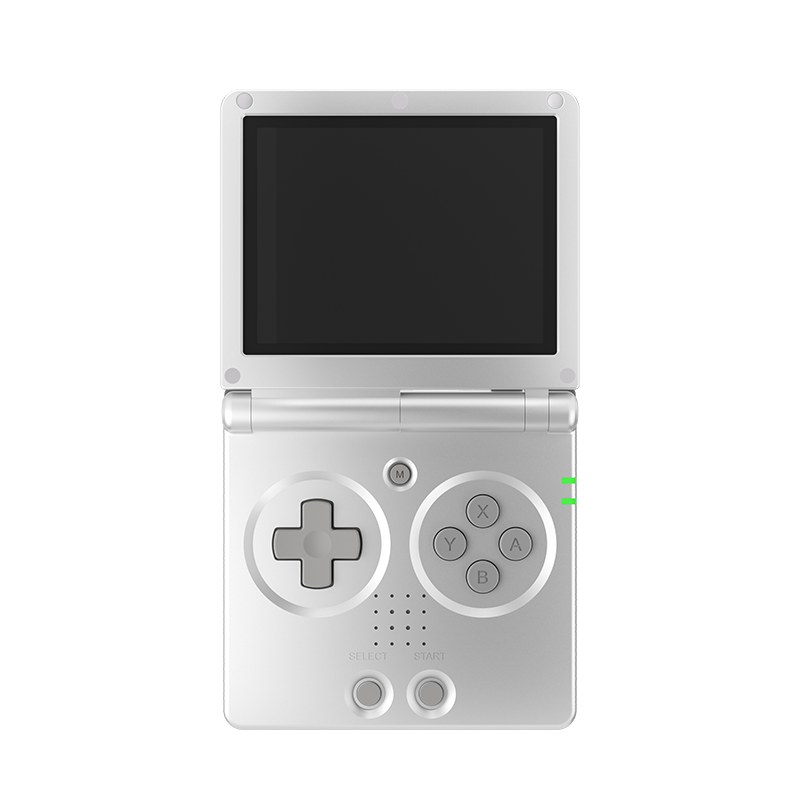
If you grew up on a Game Boy Advance SP, this is that muscle memory for $57.99 on sale ($64.99 list) direct from Anbernic. It is a clamshell with a 3.5-inch 640×480 IPS (in-plane switching) screen, a 3,300 mAh battery Anbernic rates at eight hours, and a magnetic lid that sleeps the device when you close it, exactly like the SP you had in 2004.
Time Extension called it “worth every penny at $70,” and the consensus across reviewers is the same: through PlayStation 1, everything just runs. Anbernic has teased a slimmer successor called the RG SP, with no price or release date announced as of early September 2026, so the RG35XXSP is still the one you can order. The catches are the tier ceiling (no N64, no Dreamcast, no PSP worth playing) and the lack of analog sticks, which rules out some 3D-era games entirely.
Two honest warnings. First, nearly every marketplace listing, including Anbernic-branded ones, ships with a memory card advertising 5,532 preloaded games; those libraries are unlicensed, and the bundled cards are notoriously unreliable, so the standard community advice is to treat the stock card as a throwaway and load a fresh card with files you have the rights to (see the legality section below). Second, the cult-favorite alternative at this tier, the Miyoo Mini Plus, is a fine device with a maze of a retail channel: multiple lookalike storefronts claim to be official, which makes the Anbernic the safer first buy.
Best all-rounder: Retroid Pocket 6
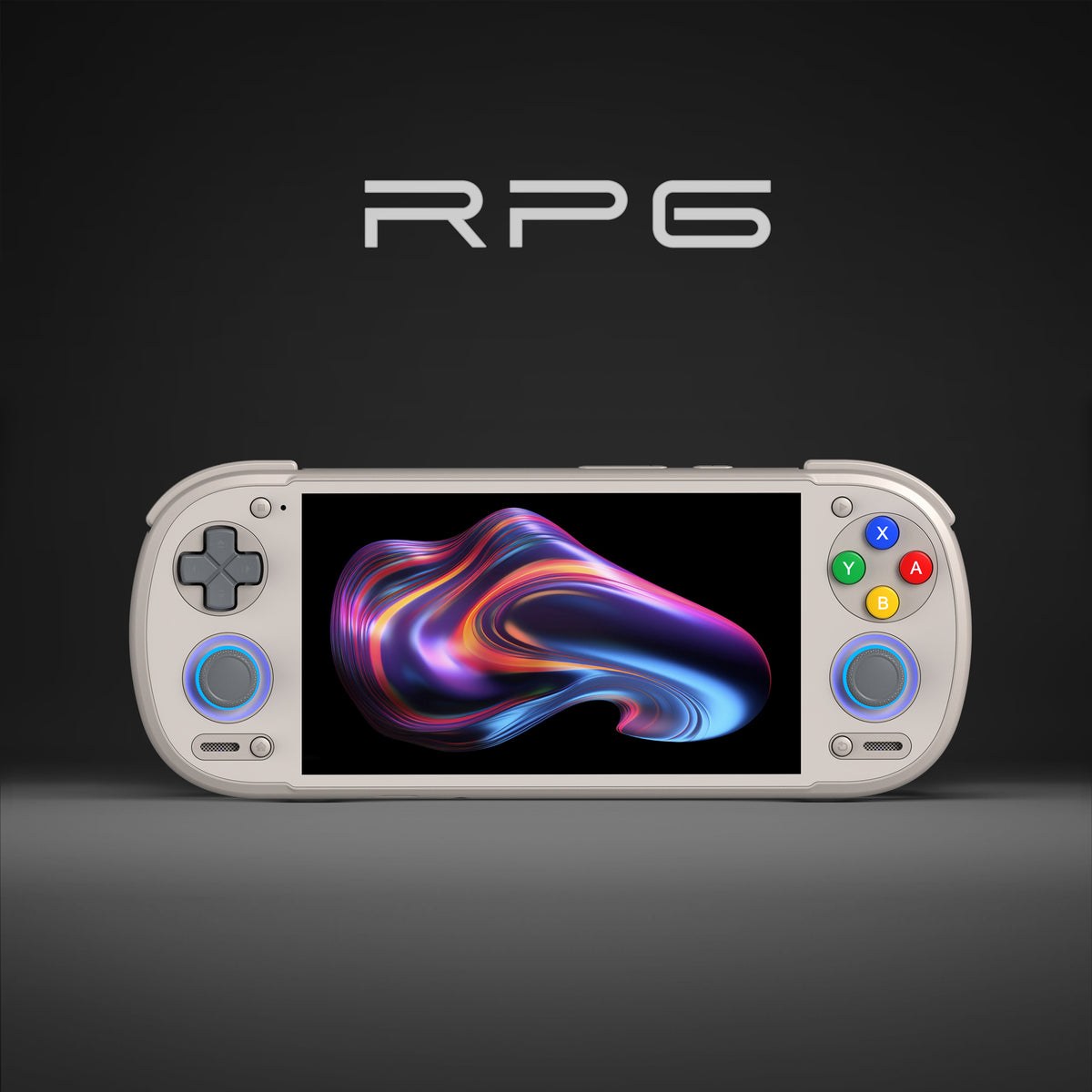
The Retroid Pocket 6 is what the hobby’s reviewers currently converge on for a single do-everything handheld. It pairs a Snapdragon 8 Gen 2, the 2023 flagship phone chip, with a 5.5-inch 1080p AMOLED (active-matrix organic light-emitting diode) screen at 120 Hz, a 6,000 mAh battery and Android 13, for $244 direct from Retroid.
That chip is the difference between “plays old games” and “plays the hard stuff”: Retro Dodo’s review found GameCube and PS2 run smoothly, with PS2 needing occasional per-game settings tinkering, territory the $58 tier cannot touch at all. Worth knowing before you order: Retroid also sells the Pocket Nova, a $239 sibling with the same-class QCS8550 chip on a 4.5-inch 4:3-shaped AMOLED, the screen shape most pre-widescreen consoles were designed for; the 6 remains the pick if PSP, GameCube and Android games matter to you. The trade-offs are the price, the do-it-yourself setup (Android emulation means installing and configuring emulators yourself), and availability: at the time of writing, Retroid’s own store showed the base configuration sold out.
Buy it direct from Retroid’s store; the company does not sell through Amazon.
The purist lane: Analogue Pocket and Analogue 3D
Analogue builds the opposite philosophy: no emulation, no downloaded libraries, just your original cartridges running on FPGA hardware that recreates the original console’s behavior.
The Analogue Pocket ($239.99) plays real Game Boy, Game Boy Color and Game Boy Advance cartridges natively on a 3.5-inch 1600×1440 display, with adapters available for Game Gear, Neo Geo Pocket, Atari Lynx and TurboGrafx-16 carts. The catch is buying one: at the time of writing, both colors sat out of stock at Analogue’s store, a recurring pattern for the company’s hardware.
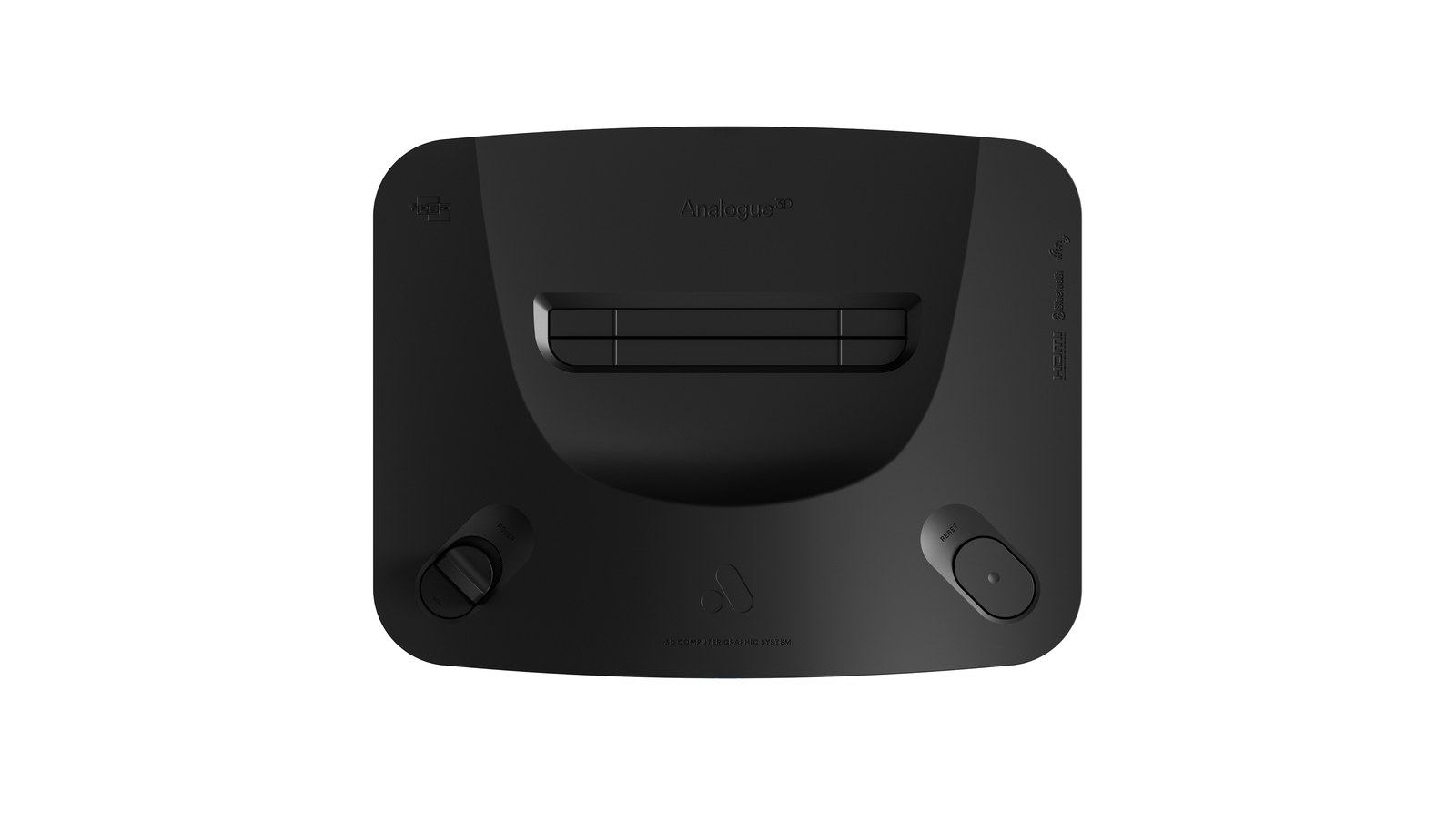
The Analogue 3D ($269.99, in stock) is the newer machine and the bigger deal. Released November 18, 2025, it takes original Nintendo 64 cartridges, claims 100% compatibility with every N64 game ever made, region free, and outputs to 4K over HDMI. GamesRadar’s review concluded it “sets a new bar for both N64 gameplay and future retro console remakes.” N64 is historically the console emulators handle worst, which makes this the one machine on this list solving a problem software still has not solved.
The honest caveat for both: you need the cartridges. If your childhood collection is long gone, add the used-cart market’s prices (below) before comparing this lane to a $244 Android handheld.
Both sell direct at Analogue’s store.
Zero gray area: Evercade and the Super Pocket
Evercade is the only ecosystem on this list where every game is licensed, physical and purchasable new. The EXP-R handheld lists at $99.99 and ships with a bundled cartridge collection; its sibling VS-R ($99.99) plays the same carts on your TV. The cartridge library spans officially licensed collections from publishers and studios like Atari, Taito, and Rare, and one cartridge works across all current Evercade hardware.
The budget entry is the Super Pocket line from sister brand HyperMegaTech: $69.99 in the US, with themed editions carrying built-in licensed libraries that also accept Evercade carts. The newest, a Rare edition announced for June 2026, packs that studio’s classic catalog. Worth knowing before the holidays: Evercade raised UK and EU prices on cartridges and Super Pockets in July 2026 while holding US pricing, so the US $69.99 is the best deal in the lineup.
The trade-off is scope: you play what Evercade licenses, and that catalog is built from third-party publisher and studio collections rather than the console makers’ own classics.
Check the EXP-R price on Amazon · Check the Rare Super Pocket on Amazon
Your old Atari carts still work: Atari 2600+
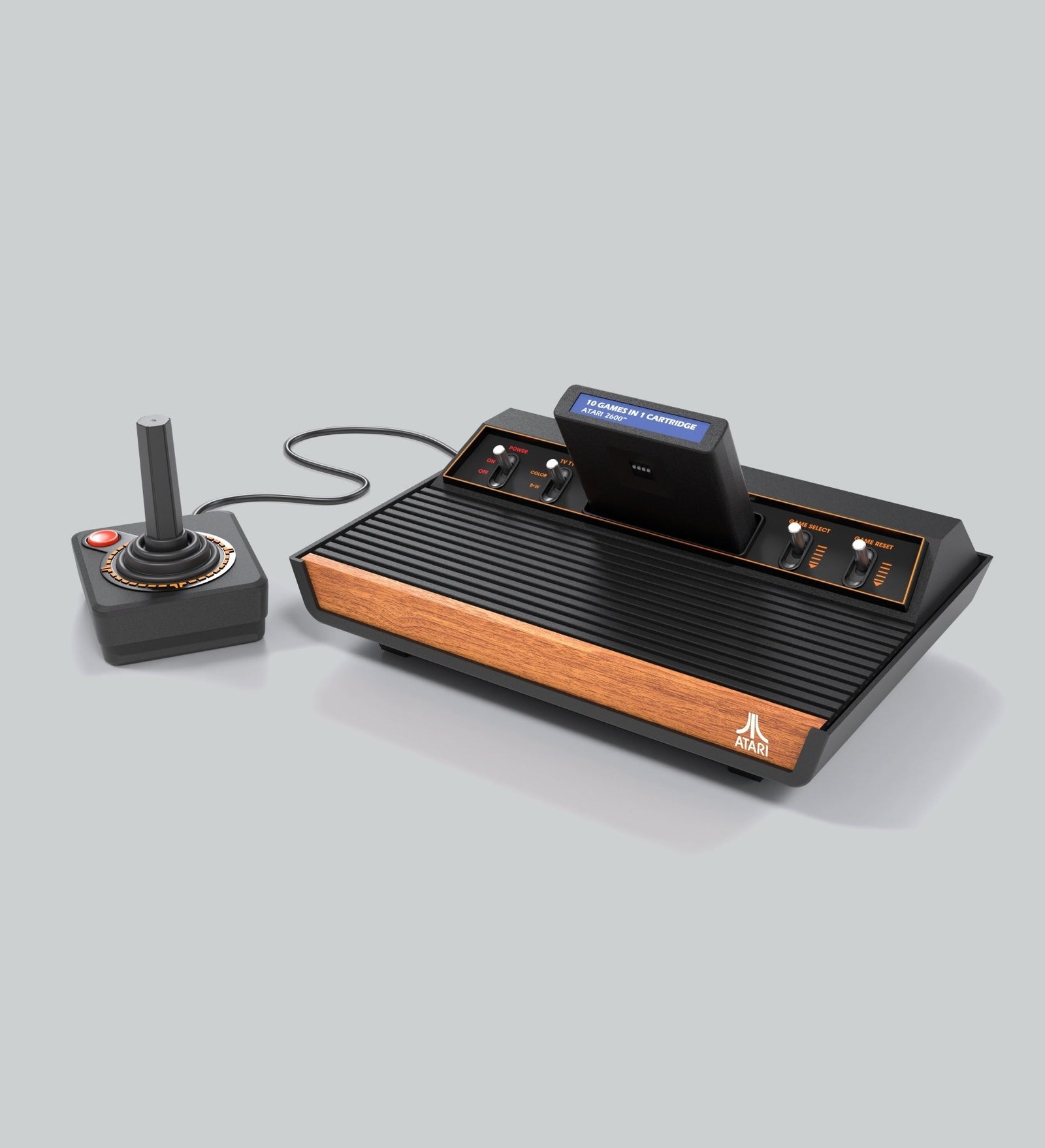
The Atari 2600+ ($129.99) is a modern-build 2600 that plays original Atari 2600 and 7800 cartridges over HDMI, ships with a CX40+ joystick and a 10-in-1 cartridge, and connects with USB-C power. If a shoebox of Combat and Missile Command cartridges survived your attic, this is the cheapest way on this list to put real vintage plastic back on a modern TV. A sibling 7800+ exists for those who lean later-Atari. There is no version of this pitch for people without cartridges; the 10 included games are the whole out-of-box library.
The PC-class option got a lot pricier: Steam Deck OLED
The Steam Deck OLED remains the ceiling of this category: a handheld PC that runs everything the devices above run, plus a modern PC library. But the value math changed on May 27, 2026, when Valve raised the 512 GB model from $549 to $789 and the 1 TB from $649 to $949, attributing the increase to “the current state of component costs and other global logistical challenges” while changing no hardware.
At $549 the Deck was an easy over-buy for retro purposes. At $789 it is only worth it if you genuinely want the PC side too; for pure emulation, the Retroid Pocket 6 now does the through-PS2 job for $545 less.
The subscription nobody counts: Nintendo Switch Online
If a Switch is already in the house, the official path is cheaper than any hardware on this page: Nintendo Switch Online includes NES, Super NES and Game Boy libraries at $19.99 a year, and the $49.99 Expansion Pack tier adds Game Boy Advance, Nintendo 64, Virtual Boy and Sega Genesis, plus GameCube titles on Switch 2. The libraries are curated rather than complete, games rotate in slowly, and you rent rather than own, but it is legal, effortless and $20.
The console you already own: your phone
The boring alternative deserves its section: a spare phone plus a telescopic controller like the Backbone One is a legitimate emulation rig running the same emulator apps the Android handhelds use. As covered in the $150 phone guide, even bargain-tier phones now carry chips comfortably ahead of the budget handhelds here. The dedicated-handheld pitch over a phone comes down to buttons that are always attached, no notifications mid-boss-fight, and sleep-and-resume that works like a Game Boy. If those do not move you, spend nothing: the phone route runs the same emulators, and money saved is money for a controller.
Check the Backbone One price on Amazon
Buying used original hardware: the real cost
The romantic option is real hardware from the era, and it deserves real numbers instead of vibes. PriceCharting’s tracked sale averages for loose consoles (hardware only, no box) as of early August 2026:
| Console | Loose average | Complete-in-box average |
|---|---|---|
| Super Nintendo | $124.97 | $379.98 |
| Nintendo 64 | $75.00 | $280.06 |
| GameCube | $94.12 | $214.96 |
| PlayStation 2 | $89.03 | $217.76 |
Loose is the tier most buyers land in, and loose means the hardware alone: no box, and often no cables or controller. Now add the parts nobody prices in:
- Getting it onto a modern TV. These consoles output analog video that 2026 flat panels handle badly or not at all. The clean fix is an upscaler: RetroTINK’s 2X-Pro runs $139.99 and its enthusiast-grade 5X-Pro runs $325, both frequently more than the console itself. Cheap $20 composite-to-HDMI dongles work but look like it.
- Age. Many SNES and N64 cartridges save your progress to a coin-cell battery now long past its design life, and disc consoles like the PS1, PS2 and GameCube read games with lasers that weaken with age. A “tested, working” listing describes the moment of sale, not next year.
- The refurb-store markup. The largest retro storefront, DKOldies, became a cautionary tale: repair channels and reviewers documented units arriving dirty or faulty, and its list prices routinely run well above eBay sold averages. A class-action investigation into its advertising and warranty practices followed. Check PriceCharting’s sold data before paying any store’s sticker.
When does original hardware still win? Three honest cases: you already own the cartridges (then an Analogue or an upscaled original is playing your library, not a downloaded one); you play light-gun games, which need a CRT television and simply do not work on modern panels; or the point is the object itself, the click of the cartridge, in which case no spec sheet matters and none of this math applies.
Are ROMs legal? The rules in plain English
The part of the hobby everyone mumbles through, stated plainly. Emulator software itself has repeatedly survived legal challenge in US courts; writing and running an emulator is not the crime. Dumping your own cartridge with your own hardware is the clearly defensible version of ownership; downloading that same file from a ROM site instead rests on an untested fair-use argument, and distributing ROMs to others is what reliably gets people sued.
Nintendo, meanwhile, is not a theoretical enforcer. In February 2024 it sued the developers of the Switch emulator Yuzu; the complaint argued, “With Yuzu in hand, nothing stops a user from obtaining and playing unlawful copies of virtually any game made for the Nintendo Switch.” The developers quickly settled for $2.4 million, shut the project down entirely and accepted a permanent injunction.
Which reframes those “5,532 games included” listings and the gray-market ROM sticks all over marketplace search results: the devices are legal, but the preloaded libraries are unlicensed. Note where the Yuzu hammer fell: on the people distributing the tools and games, not on the people playing them, and sellers keep bundling cards on exactly that bet. The clean ways to play are the ones above: licensed carts (Evercade), official subscriptions (Nintendo Switch Online), your own dumped backups, and the surprisingly large world of free homebrew built for these devices.
What to avoid
- “Every game ever, included” TV sticks and consoles. The preloaded-card problem in its cheapest wrapper: unlicensed libraries on dropshipped hardware with bargain-bin emulation. Half of page one of any marketplace search is this product wearing different cases.
- Trusting the preloaded card. Even on legitimate hardware, bundled cards are low-quality and fail; back up saves early, replace the card.
- Refurb-store sticker prices. Check PriceCharting sold averages first.
- “Supports 4K” on budget devices. Output resolution is not rendering capability; the chip tier table above is what decides.
- Buying an FPGA machine without cartridges. An Analogue 3D with zero N64 carts is a $270 paperweight; that lane is for people with a library.
How this list was built
Selection started from the devices with measured, published testing from the retro community’s established reviewers (Retro Game Corps, Time Extension, Retro Dodo) plus specialist press (GamesRadar), then narrowed to hardware purchasable new from its maker in August 2026 with a verifiable list price. Every spec and price cites the manufacturer’s page as of publication in August 2026; every performance claim cites a named published review rather than in-house testing, because no in-house testing was performed. Devices whose only retail path is gray-market storefronts were mentioned but not recommended.
Frequently asked questions
Do these devices come with games?
The emulation handhelds legally should not, and the bundled “thousands of games” cards that ship anyway are unlicensed (see the legality section). Evercade hardware and the Super Pocket include licensed games, the Atari 2600+ includes a licensed 10-in-1 cartridge, and Analogue machines include nothing because they play your cartridges.
Is a used SNES cheaper than an emulation handheld?
No, and it is not close anymore. A loose Super Nintendo, the hardware-only tier of the used market, averages about $125, while the $58 Anbernic plays the same library on a built-in screen. The used console wins on authenticity, not economics.
What is the difference between FPGA and emulation?
Software emulation is a program imitating a console and always approximating its timing; an FPGA (field-programmable gate array) is a chip configured to behave like the original console’s circuitry. In practice: FPGA machines play original cartridges with effectively no input lag but only do the systems they were built for, while emulation devices play anything their chip tier allows, with occasional per-game quirks.
Which one should a parent buy as a gift?
The Super Pocket at $69.99: licensed games built in, nothing to configure, no ROM questions, and it grows into the Evercade cartridge ecosystem. The RG35XXSP is the better device but assumes someone in the house will set up its software. More gift-sized ideas live in the tech gifts under $100 guide.
Final verdict
For most people the answer is two-tiered. Start at $58: the Anbernic RG35XXSP covers the NES-through-PS1 decades that most nostalgia points at, and if it gathers dust you learned that cheaply. Step up to the $244 Retroid Pocket 6 only if your nostalgia is specifically GameCube-and-PS2 shaped.
The purist lane is narrower but real: cartridge owners with a 4K TV will not find a better N64 than the $269.99 Analogue 3D, and nothing else here matches playing your own carts lag-free. Families and gift-buyers should skip the gray areas entirely with the $69.99 Super Pocket or $99.99 Evercade EXP-R. And the used-hardware romance survives contact with the prices only when you already own the games; otherwise you are paying eBay collector prices to play a library the $58 device carries in its pocket.
Top recommendations:
- Most people: Anbernic RG35XXSP (check price on Amazon)
- Power users: Retroid Pocket 6 (direct from Retroid)
- Gifts, no setup: HyperMegaTech Rare Super Pocket (check price on Amazon)
- Cartridge loyalists: Analogue 3D (direct from Analogue)
Sources (30)
- anbernic.com RG35XXSP product page
- retrododo.com Anbernic reveals new slimlined RG SP
- goretroid.com Retroid: Pocket 6 product page
- goretroid.com Retroid: Pocket Nova product page
- store.analogue.co Analogue Store
- analogue.co 3D
- analogue.co Pocket
- evercade.co.uk EXP-R and VS-R announcement
- evercade.co.uk cartridge and Super Pocket UK and EU price increase
- evercade.co.uk Rare Super Pocket press release
- atari.com 2600+ product page
- nintendo.com Compare Nintendo Switch Online memberships
- tomshardware.com Valve hikes Steam Deck OLED prices
- timeextension.com Anbernic RG35XX SP review
- retrogamecorps.com Anbernic RG35XX Family Starter Guide
- retrogamecorps.com Is Downloading Retro Game Files (ROMs) Illegal?
- retrododo.com Retroid Pocket 6 review
- gamesradar.com Analogue 3D review
- en.wikipedia.org Wikipedia: Analogue 3D
- pricecharting.com Super Nintendo system
- pricecharting.com Nintendo 64 system
- pricecharting.com GameCube system
- pricecharting.com PlayStation 2 system
- retrotink.com RetroTINK Store: video processors
- svg.com The Shady Side of DKOldies
- legalclarity.org DKOldies lawsuit claims and class action
- chiplawgroup.com Nintendo reaches $2.4 million settlement
- amazon.com Anbernic RG35XXSP listing
- backbone.com Backbone One
- en.wikipedia.org Wikipedia: Steam Deck



🦋 Discussion on Bluesky
Discuss on Bluesky